SUMMARY
Explore teaching general music through a culturally responsive lens. Part 2 identifies how to create student-centered, social, and emotionally supportive learning environment.
by Manju Durairaj





Explore teaching general music through a culturally responsive lens. Part 2 identifies how to create student-centered, social, and emotionally supportive learning environment.
by Manju Durairaj
The ideas, notes, and materials are the intellectual property of Manju Durairaj. Please use and adapt them for use in your music room. However, you do not have permission to share without the express permission of the author.
Regardless of the teaching situation we find ourselves in, the most critical objective we must remember is creating a learning partnership with our students. We accomplish this goal by recognizing and utilizing the teaching practices found in the Responsive Classroom.
The responsive classroom philosophy is a student-centered, social, and emotional learning approach to teaching and discipline-based research following four key domains.
* Definitions have been taken directly from the Responsive Classroom Website.
When designing your music classes, utilizing responsive classroom principles will ensure a positive learning partnership with your students. Each of the following areas will focus our teaching and keep students engaged and feel valued.
* Hyperlinked definitions are connected to articles expanding on each of these Responsive Classroom strategies.
In Part 1: Detangling the Terminology, we clarified interchangeably and incorrectly used terminology. In this article, we are using the Responsive Classroom philosophy to build learning partnerships with our students. Next, Part 3: Technology will examine the technology that will help us connect with students and deepen their understandings.
About responsive classroom. Responsive Classroom. (2021, August 23). https://www.responsiveclassroom.org/about/ .
Part 1: Detangling the Terminology
Part 2: Creating a Learning Partnership
Part 3: Technology and the Music Room
Part 4: Opening Routines – Creating Connections
Part 5: Teaching Singing the Virtual Way
Part 6: Chanting and Hand-Clapping Games from a Distance
Part 7: Integrating Dance in an Online Setting
Part 8: Playing & Performing With Online Musical Tools
Part 9: Video – Sing, Say, Dance and Play in a Responsive Way
Contributor
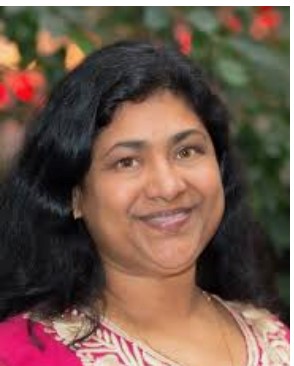
Manju Durairaj was born and raised in India, studied in Pune, India, and was involved in graduate research projects on comparative pedagogical practices of Indian (Carnatic) and Western Music at Middlesex University, London, UK. She graduated with her second…
Discover more from Manju Facebook
 Twitter
 Pinterest
 LinkedIn
 Email
Email Print
Print