SUMMARY
Explore teaching general music through a culturally responsive lens. Part 6: Learn “Saam Seem Soom,” a hand-clapping game from Keralal, India.
by Manju Durairaj





Explore teaching general music through a culturally responsive lens. Part 6: Learn “Saam Seem Soom,” a hand-clapping game from Keralal, India.
by Manju Durairaj
The ideas, notes, and materials are the intellectual property of Manju Durairaj. Please use and adapt them for use in your music room. However, you do not have permission to share without the express permission of the author.
Before we delve into the hand-clapping game that I have chosen to share, I want to take a moment to emphasize the difference between Cultural Appreciation and Cultural Appropriation. From my perspective, one comes from a place of entitlement and the other from a place of humility.
Cultural Appropriation: “Taking intellectual property, traditional knowledge, cultural expressions, or artifacts from someone else’s culture without permission. Including unauthorized use of another culture’s dance, dress, music, language, folklore, cuisine, traditional medicine, religious symbols, etc. It’s most likely to be harmful when the source community is a minority group that has been oppressed or exploited in other ways or when the object of appropriation is particularly sensitive, e.g., sacred objects.” (From, Who Owns Culture? Appropriation and Authenticity in American Law, by Susan Scafidi).
Cultural Appreciation: Honoring another culture and its practices to gain a genuine knowledge and understanding and connect with others. There is respect, and credit is given for inspiration. It includes the source group-culture bearers from the start.
Saam Seem Soom is a hand-clapping game from my mother’s home state of Kerala in India. It is often referred to as “God’s own state” because it is known for its incredible natural beauty.

In the linked Google slide deck, I have included the notation for the chant, a video clip of the hand-clapping game, and slides breaking down the pronunciation of the text. Once students have learned the chant and game, an extension would be to create an eight-beat pattern either independently or with their partners.
In an online setting, it is incredibly valuable to give our students opportunities to work together. Allowing them to work together in break-out rooms is a perfect time to allow these interactions.
We have explored singing and saying. Part 7: Integrating Dance in an Online Setting will explore dancing in a responsive way while working with our students online and in person.
Scafidi, S. (2005). Who owns culture?: Appropriation and authenticity in American law. Rutgers University Press.
Part 1: Detangling the Terminology
Part 2: Creating a Learning Partnership
Part 3: Technology and the Music Room
Part 4: Opening Routines – Creating Connections
Part 5: Teaching Singing the Virtual Way
Part 6: Chanting and Hand-Clapping Games from a Distance
Part 7: Integrating Dance in an Online Setting
Part 8: Playing & Performing With Online Musical Tools
Part 9: Video – Sing, Say, Dance and Play in a Responsive Way
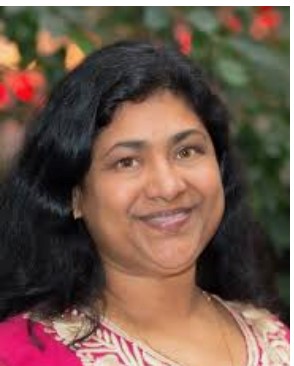
Contributor
Manju Durairaj was born and raised in India, studied in Pune, India, and was involved in graduate research projects on comparative pedagogical practices of Indian (Carnatic) and Western Music at Middlesex University, London, UK. She graduated with her second…
Discover more from Manju Facebook
 Twitter
 Pinterest
 LinkedIn
 Email
Email Print
Print