SUMMARY
Explore teaching general music through a culturally responsive lens. Part 1 identifies and distinguishes the different terminology educators encounter in their work.
by Manju Durairaj





Explore teaching general music through a culturally responsive lens. Part 1 identifies and distinguishes the different terminology educators encounter in their work.
by Manju Durairaj
The ideas, notes, and materials are the intellectual property of Manju Durairaj. Please use and adapt them for use in your music room. However, you do not have permission to share without the express permission of the author.
As I make my journey (which will take my professional lifetime) as a music educator, I find myself encountering various terms and phrases that sound similar or used interchangeably and sometimes erroneously. I am committed to these titles and roles: Diversity, Equity, and Inclusion (DEI) educator, a social justice educator, a culturally proficient educator, and a culturally responsive music educator.
I have added some resources and descriptions below to untangle and clarify the differences between these critical roles. It is also essential to share that my aperture and perspectives on culturally responsive teaching continue to evolve as I continue my education journey.
Learn the Difference:
If you have questions about the nuances or definitions of terms when learning about or researching multiculturalism, here are two resources to assist you:
An education model based on four anchor standards provides teachers with a “road-map” for anti-bias education for all grade levels.
Learn More:
Culturally responsive teaching (CRT) makes intentional and deliberate differentiations to instruction that tailor learning to aspects of the student’s culture. This approach centers around the affective and cognitive aspects of teaching and learning.
CRT focuses on using familiar cultural information and processes to scaffold learning. Second, it emphasizes communal orientation. Finally, it focuses on relationships, cognitive scaffolding, and critical social awareness.
For me, this involves moving my students from being dependent learners to developing skills and habits of mind to accelerate their learning (that is, they know how to learn new content and improve weaker skills). There is a particular focus on leveraging culturally and linguistically diverse students’ learning systems to close the learning gaps, the opportunity gaps, and the achievement gaps.
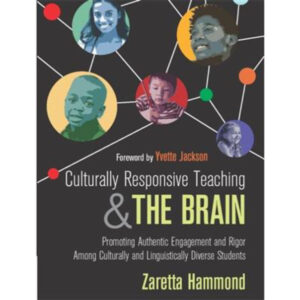
Zaretta Hammond, the author of Culturally Responsive Teaching and the Brain and the facilitator of the CRE by Design PLC, refers to CRT as developing a mindset – a way of thinking about and organizing instruction to allow for great flexibility in teaching.
Zaretta Hammond also offers four strategies to help move students through the brain’s three stages of information processing (input, elaboration, and application).
Why is it important to understand the subtle and not-so-subtle differences between these terms? To answer, I will leave you with the famous quote by Maya Angelou:
I’ve learned that people will forget what you have said, people will forget what you did, but people will never forget how you made them feel.
Maya Angelou
Now that we have a better grasp of the terminology, in Part 2: Creating a Learning Partnership we will examine how to build a learning partnership with your students.
Adams, J. (n.d.). What critical race theory is and what it means for teachers. Learning for Justice. https://www.learningforjustice.org/sites/default/files/2020-09/TT-Social-Justice-Standards-Anti-bias-framework-2020.pdf.
Equity, diversity & Inclusion glossary of terms. Pacific University. (2021, July 1). https://www.pacificu.edu/life-pacific/support-safety/office-equity-diversity-inclusion/edi-resources/glossary-terms.
Glossary of Diversity, Equity, and Inclusive Terms. Diversity Best Practices. (n.d.). https://www.diversitybestpractices.com/sites/diversitybestpractices.com/files/attachments/2020/10/dei_glossary_of_inclusive_terms_updated_for_2020_1.pdf.
Hammond, Z. (2015). Culturally Responsive Teaching and the Brain (pp. 128-138). Thousand Oaks, CA: Corwin.
Social justice Standards. Learning for Justice. (n.d.). https://www.learningforjustice.org/professional-development/social-justice-standards-the-learning-for-justice-antibias-framework.
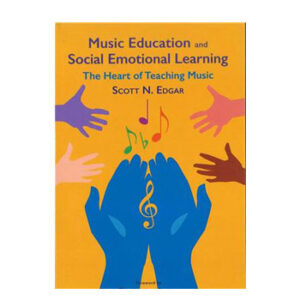
Edgar, S., Kelly-McHale, J., & Rawlings, J. (2017). Music Education and Social Emotional Learning. GIA Publications.
Gay, Geneva. (2000). Culturally Responsive Teaching: Theory, Research, and Practice. Teachers College Press.
Ladson-Billings, Gloria. (2014). Culturally Relevant Pedagogy 2.0: aka The Remix. Harvard Educational Review, 84 (1), 74-84. www.teachingworks.org/images/files/CRP_remix_HER.pdf.
Paris, D., & Alim, S.H. (Eds.). (2017). Culturally Sustaining Pedagogies: Teaching and Learning for Justice in a Changing World. Teachers College Press.
Part 1: Detangling the Terminology
Part 2: Creating a Learning Partnership
Part 3: Technology and the Music Room
Part 4: Opening Routines – Creating Connections
Part 5: Teaching Singing the Virtual Way
Part 6: Chanting and Hand-Clapping Games from a Distance
Part 7: Integrating Dance in an Online Setting
Part 8: Playing & Performing With Online Musical Tools
Part 9: Video – Sing, Say, Dance and Play in a Responsive Way
Contributor
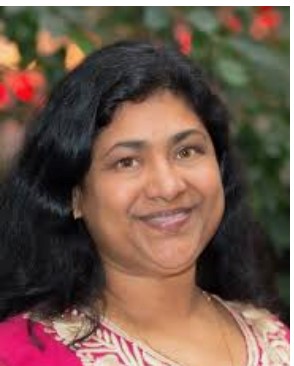
Manju Durairaj was born and raised in India, studied in Pune, India, and was involved in graduate research projects on comparative pedagogical practices of Indian (Carnatic) and Western Music at Middlesex University, London, UK. She graduated with her second…
Discover more from Manju Facebook
 Twitter
 Pinterest
 LinkedIn
 Email
Email Print
Print