SUMMARY
Explore teaching general music through a culturally responsive lens. Part 7: Use the book Fortunately as a starting point to teach composition using Chrome Music Lab, recorders, ukulele, and Garage Band.
by Manju Durairaj





Explore teaching general music through a culturally responsive lens. Part 7: Use the book Fortunately as a starting point to teach composition using Chrome Music Lab, recorders, ukulele, and Garage Band.
by Manju Durairaj
The ideas, notes, and materials are the intellectual property of Manju Durairaj. Please use and adapt them for use in your music room. However, you do not have permission to share without the express permission of the author.
I have used the book Fortunately by Remy Charlip with many grade levels and different objectives over the years. I want to showcase this book and the possibilities of incorporating creative composition on various instruments, including ukulele, recorder, barred instruments, found sounds, or digital and online instruments.

$8.99Add to cart
The book is color-coded and provides an excellent sequence for fortunate and unfortunate events. My lesson spring-boarded from a lesson presented by Dr. Leigh Ann Garner where she had little motifs for fortunately and unfortunately in major and minor modes. I expanded her original idea to have students create their own motifs for fortunately and unfortunately.
In person, I gave students a pitch set that they could use to create their motifs on barred instruments. Online, students were able to use the given pitch sets on the recorder to create their motifs. Other options for virtual teaching include using online xylophones and Google Slides to craft their ideas. (See Part 3 for more information about these and other useful applications.)
I use Xylo with my students. I like this application because it has the option to have solfege appear on the bars. There are also additional scales and pitch sets that students can work in.
My students would work alone or with a partner to create two short motifs. Next, in Seesaw, students would draft their story ideas using drawing or text and then record themselves playing their motifs with each fortunate or unfortunate event that takes place.
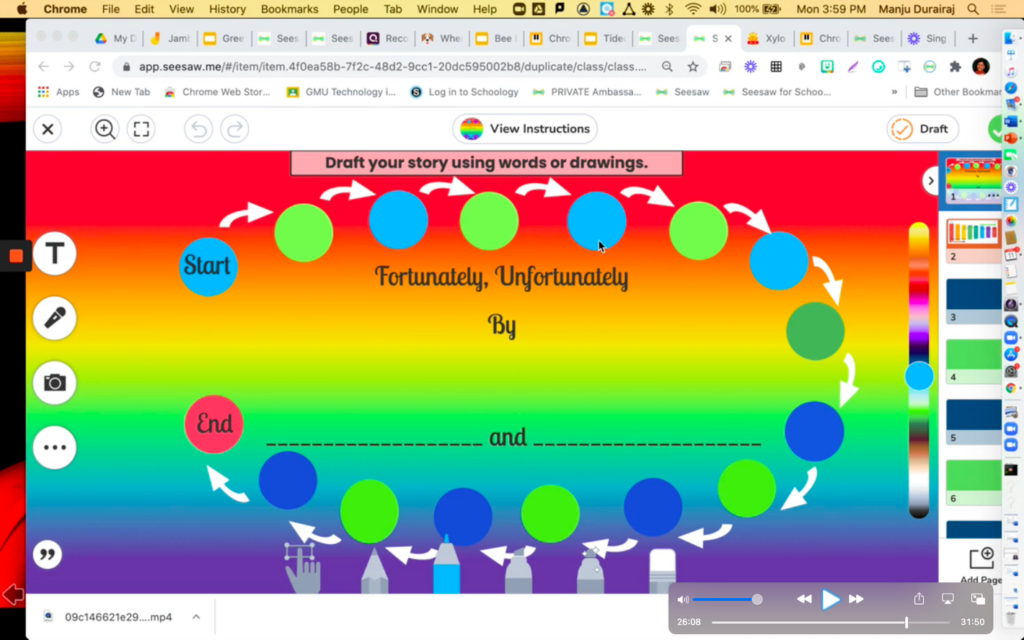
Additionally, students can create their motifs in Chrome Music Lab: Song Maker. In this instance, I would provide a template and an example of a motif for the students to listen to. Then, students would create their own based on my example, save their work, and send me the link.
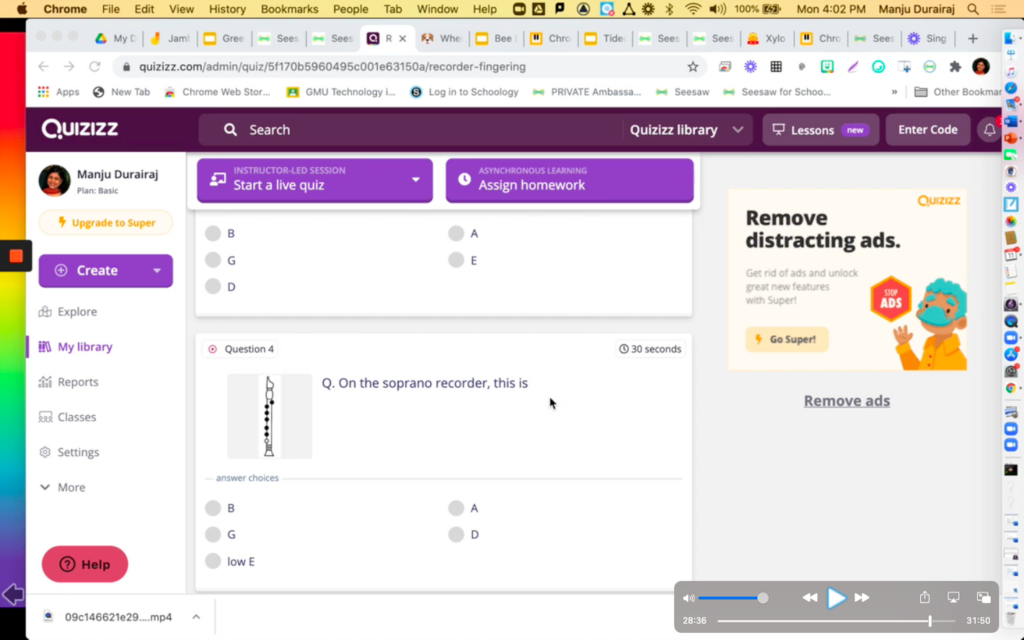
Incorporating recorders instead of barred instruments, students can create motifs in G pentatonic for both fortunately and unfortunately. I like to use the app Quizizz for assessing recorder playing. Students think of these activities like games, even though they are diagnostic assessments.
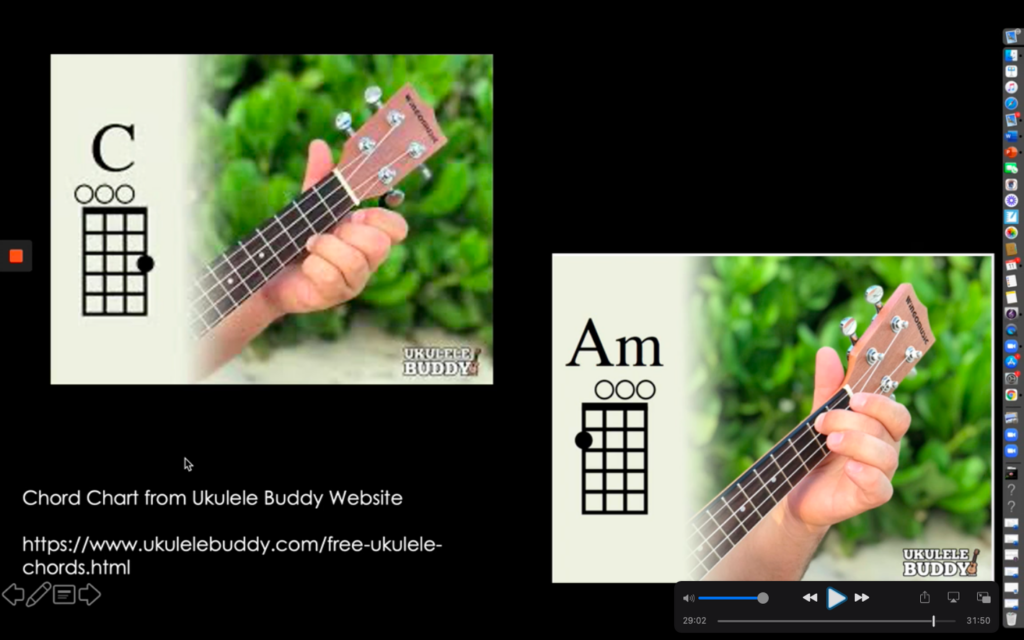
Finally, when using ukuleles, students create a rhythmic strumming pattern using two different chords for the fortunate and unfortunate events in the book.
In this instance, I utilize the Explain Everything App to create a template where students can use Garage Band to create a backing track, notate their melody, or just play their melody on the xylophone. This app allows for differentiation in assignments letting students pull in their garage band tracks and record over the top. The process of using multiple apps to create or share a project is called App Smashing.

There are countless ways to respond to our students’ needs regardless of whether we are in-person or teaching remotely, both synchronously or asynchronously. In addition to this series of articles, I have also included a video recording to help you Sing, Say, Dance, and Play in a Responsive Way (Part 9 – coming soon!) with your students.
Part 1: Detangling the Terminology
Part 2: Creating a Learning Partnership
Part 3: Technology and the Music Room
Part 4: Opening Routines – Creating Connections
Part 5: Teaching Singing the Virtual Way
Part 6: Chanting and Hand-Clapping Games from a Distance
Part 7: Integrating Dance in an Online Setting
Part 8: Playing & Performing With Online Musical Tools
Part 9: Video – Sing, Say, Dance and Play in a Responsive Way
Contributor
Manju Durairaj was born and raised in India, studied in Pune, India, and was involved in graduate research projects on comparative pedagogical practices of Indian (Carnatic) and Western Music at Middlesex University, London, UK. She graduated with her second…
Discover more from Manju Facebook
 Twitter
 Pinterest
 LinkedIn
 Email
Email Print
Print