



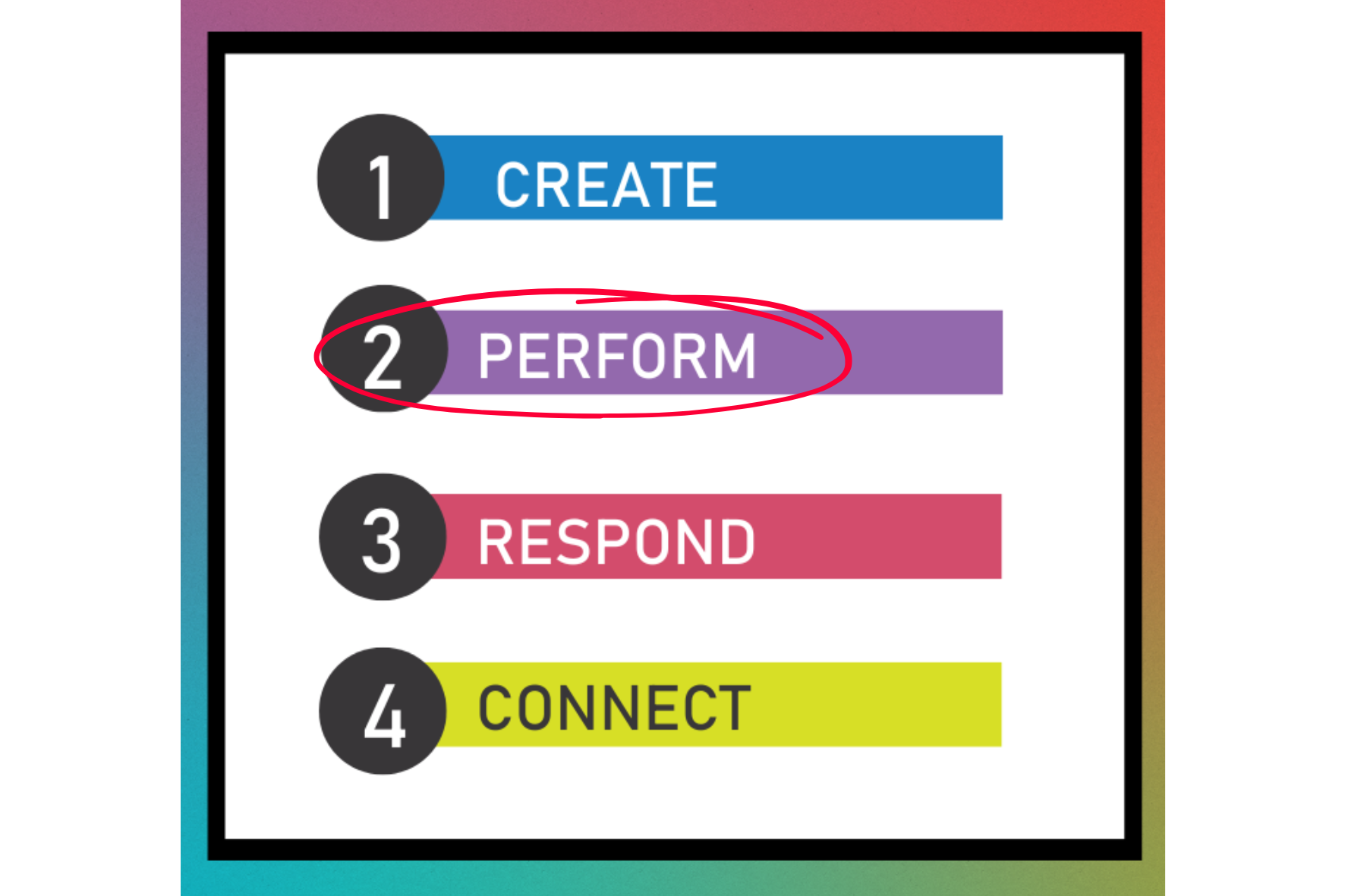
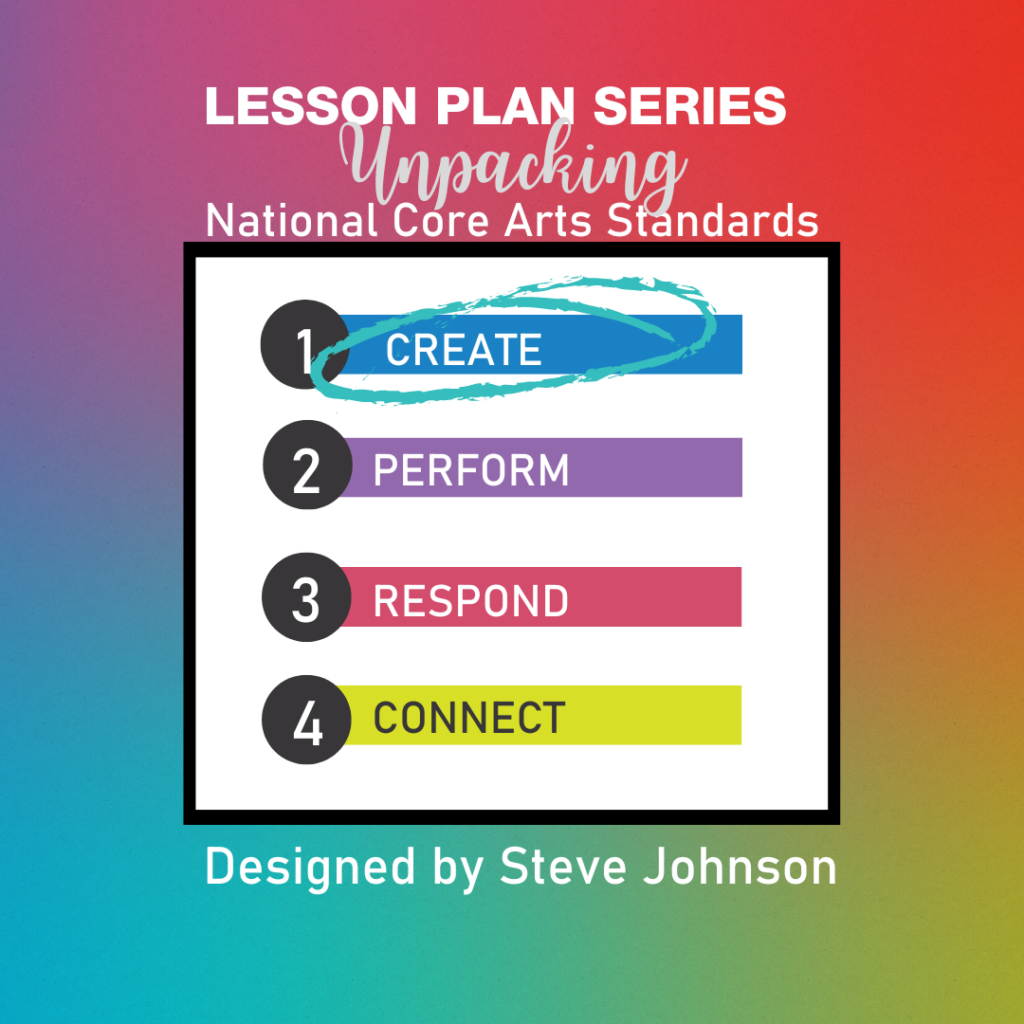
The National Core Arts Standards (NCAS) provide a framework for teaching critical elements of the artistic processes. In music, these include Creating (Cr), Performing (Pr), Responding (Re), and Connecting (Cn). Each is organized using anchor and performance standards incorporating the base concepts of selecting, analyzing, rehearsing, evaluating, refining, and presenting music material.
The National Core Arts Standards (NCAS) were released in 2014 but still feel “new” to many music educators. It can seem like a daunting challenge if you are in the process of aligning your music curriculum to the NCAS. The NCAS can appear wordy, complex, and vague, but a change in perspective will reveal they are actually intuitive and in step with activities you are already doing!
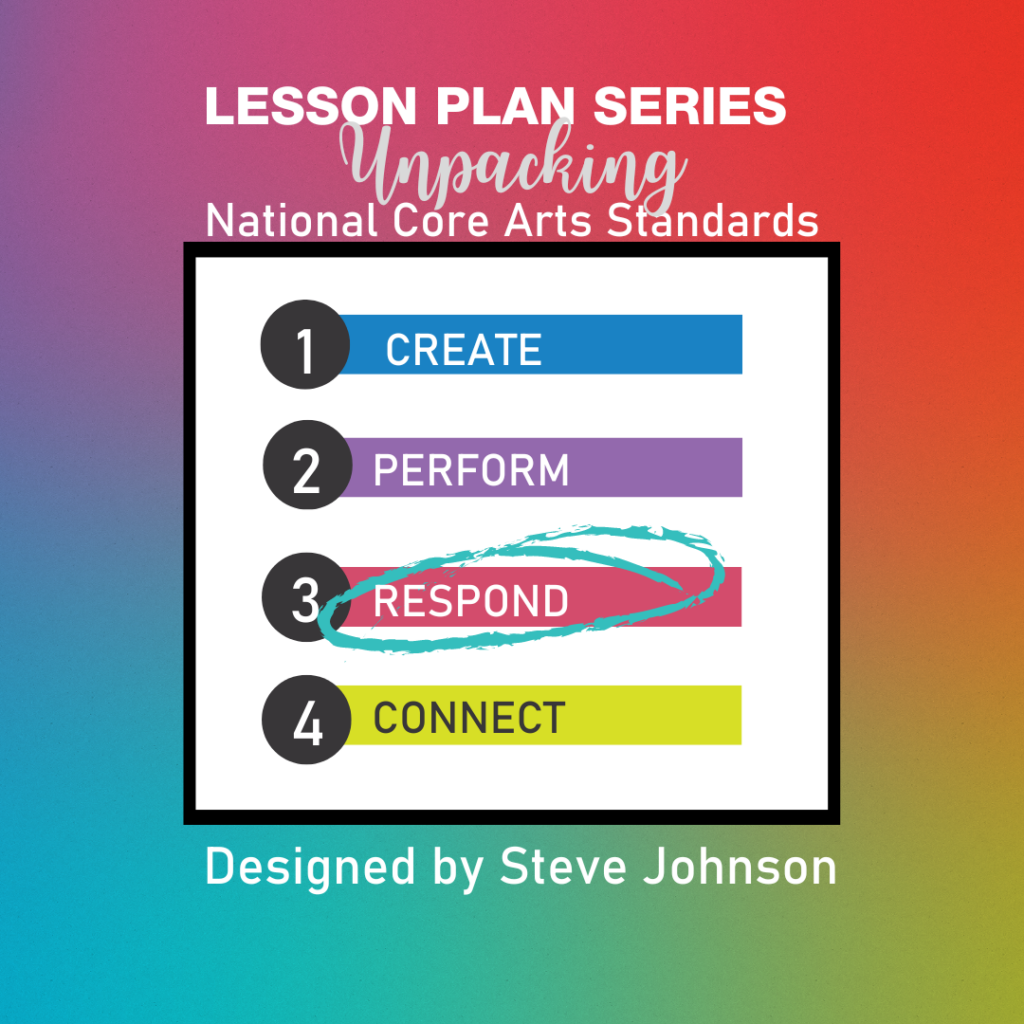
In this Lesson Plan Series, Steve Johnson decipherers the National Core Arts Standards and demonstrates how to weave the same materials through grades K-4 and expand the same materials yearly to meet the increasingly complex expectations for students within the standards. The author clearly identifies the Enduring Understandings, Essential Questions, and I CAN Statement for each section. The included visuals allow for easy incorporation in your classroom.
The arts contribute to discovering who we are. The arts inform our lives with meaning and have shaped every culture and individual on earth. Education standards aim to identify the learning and drive improvement in the system that delivers that learning.
Standards for arts education are important for two fundamental reasons. First, they help define what a good education in the arts should provide: a thorough grounding in a basic body of knowledge and the skills required both to make sense and to make use of each of the arts disciplines—including the intellectual tools to make qualitative judgments about artistic products and expression. Second, when states and school districts adopt the standards, they take a stand for rigor, informed by a clear intent. A set of standards for arts education says, in effect, “An education in the arts means that students should know what is spelled out here, reach specified levels of attainment, and do both at defined points in their education.” (NCAS Conceptual Framework, p. 5)
In 2014, the New National Core Arts Standards were adopted. They consist of a Conceptual Framework in narrative form that outlines the philosophy, primary goals, dynamic processes, structures, and outcomes that shape student learning and achievement in dance, media arts, music, theatre, and visual arts.
To highlight the nuances of each grade level performance standard, I have designed five lessons using the same performance piece for grades K-4. As you read through each lesson, look for the similarities in the process while remembering the sequence inherent in the organization of the standards – select, analyze, interpret, rehearse, evaluate & refine and present.
Get Back to the Music is an original pop tune that will engage the audience and performers and get everyone clapping to the beat. The lyrics celebrate live music with a spirit appropriate for all ages. I wrote this song to “get back” to the joys of performing music after enduring the struggles of distance learning.
I have highlighted the performing standards throughout each lesson providing details and suggestions on specific activities at each grade level.
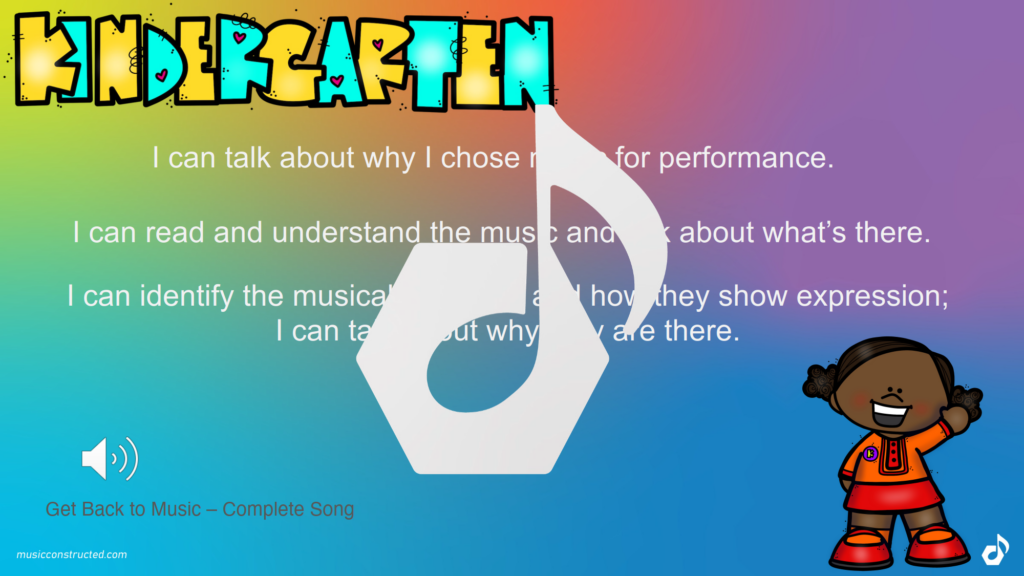
| Kindergarten | Perform percussion echoes and sing the refrain, striving for expression in performance. |
| Grade One | Same performance options as K, incorporating written notation to show a greater understanding of musical elements and purpose. |
| Grade Two | Perform rhythmic echoes with pitch (barred instruments or solfege), continue reading notation, and strive for technical and expressive accuracy. |
| Grade Three | Identify the song’s structure and perform all melodies while considering the intent and context of the performance. |
| Grade Four | Perform all melodies, singing, or instrumentally, considering the individual and/or ensemble. |
$15.00Add to cart
If you are ready to unpack the National Core Arts Standards,
this lesson series is for you!
Contributor
Steve Johnson Jr. is a music educator, composer and performer. He holds a B.S in Music Education from Rhode Island College, a Master’s of Music Education from the University of Rhode Island and Orff level I certification. He has been teaching…
Discover more from Steve
Contributor
Kate Hagen currently teaches in the Iowa City Community School District. She has 20 years of experience working with K-6 students in public schools. Kate has a license in Music Therapy from the University of Iowa, and a Masters of Music Education from University of…
Discover more from Kate Facebook
 Twitter
 Pinterest
 LinkedIn
 Email
Email Print
Print