SUMMARY
In this article, Dawson Davenport, a member of the Meskwaki peoples, shares knowledge about the cultural significance of music to Native Tribes and the connection between the natural world and the spirit realm.
by Dawson Davenport





In this article, Dawson Davenport, a member of the Meskwaki peoples, shares knowledge about the cultural significance of music to Native Tribes and the connection between the natural world and the spirit realm.
by Dawson Davenport
In order to teach students about music from Native peoples, you first have to understand that it is close to the hearts and spirit of a Native person. A non-Native person needs to realize that there are many different tribes in the United States, and with that comes many different stories of a songs’ origin: How did the tribe get the song? How is the song used? When is the song used?
Music is a vital part of a Native person’s life and way of life. A story common to many tribes is that of the drum replicating the heartbeat, which sets the tempo for a sacred hymn or chant. Sometimes there is no drum, and only a rattle is used. Even instruments have a story and origin; some instruments are gifts from the natural world for mortal beings to communicate with the spiritual world.
Like many things, music evolved, and today young people champion music despite the changing world. Music has a powerful influence connecting the non-secular component of it to a Native person or society. As you can see, many things go along with understanding where music comes from and its relationship to the many Native peoples in this country.
Music for Native peoples comes from a balance of both the natural world and the human world. Music for Native peoples is different for each tribal Nation, as there are over 560 federally recognized tribes. But, there are and were more, and for this article, I will focus on the Indigenous people of what is known as America and Canada.
Music is a connection, and an understanding between the two worlds used both secularly and non-secularly. However, music evolved with colonization. Today, the music combines both as younger generations are trying to revitalize this connection due to the loss of their languages and elders. Furthermore, music is ultimately a vital aspect of the lives of Native peoples and their way to pray and celebrate.
Native peoples and music have a unique relationship since time immemorial. There are so many cool stories of where and how music played a role in a person’s way of life. We grow up with songs in our lives, hearing old hymns sung by grandmothers in their native tongue.
Even before these songs, music is a spiritual thing, being there at the very origin of our existence. Some stories reference the creator giving us songs in order to connect to the spiritual world. These stories describe gifts that came from the natural world, animals, and even rocks, to humans.
However, for Native peoples, songs have evolved. It has moved from prayer and ceremonies to a celebration to the spirits. Songs have changed to be more societal, and over time became popularized and mainstream, much like the evolution of the Native peoples and their course of history on this continent.
While once sang in harmonious moments under trees and by fires made of flint and dry wood, music became a crime for Native peoples. Colonization changed music for Native peoples by making it a crime to sing our ceremonial songs.
Natives were denied the right to practice their religion until 1978, when they were finally allowed to “practice, protect and preserve their inherent right of freedom to believe, express, and exercise their traditional religious rights, spiritual and cultural practices.”
Yet, music is central to ceremony and celebration for many Native peoples. And so Native people evolved and started singing more secular songs, eventually leading to what is now called “Pow-Wow” music. Thus, our songs became mainstream, even making appearances on the Grammy’s.
Since Natives can no longer be persecuted for their race or culture, young people are trying to revitalize their language and traditions. They want to bring back what was lost when our ancestors were kept from sharing and passing along our language, and with that our songs. Along with this quest comes an interest in singing Pow-Wow songs, which then sparks an interest in singing ceremonial songs because of their origins.
There are many teachings in those songs and some Native peoples learn to sing while growing up. Children learn songs as it is passed down through the generations. Younger generations who have grown up are now trying to pass down what they know to their children, and so forth. Song is vital to the preservation of Native peoples, and the popularity of Pow-Wow music can be a way to keep the language alive, or even regenerated.
Music was once was a pathway to the spiritual realm, a telephone line to the creator. Gifts came from the natural world, for example hides (to make a drum) and birdsong (to give us a blueprint to sing). Natives have a unique relationship with music since time immemorial. While tribal nations each possess different and unique stories about their songs and their relationship to it, one thing is certain; music is vital to all Native people’s way of life.
Even with all the changes that Native people have faced, such as colonization, the loss of language, and persecution of Natives for practicing their cultural traditions, Native peoples have carried their love for music with them through it all.
The evolution is beautiful to watch. As the younger generations try to regenerate their language thorough the love of song and carry on the way of life without fear of being killed, music is a piece of thread that is holding together the cloth of Native life.
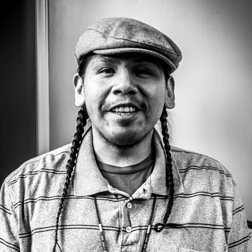
Contributor
Dawson Davenport has been working to create a space specifically for Indigenous Art and Artists and was working on opening an art gallery in Iowa City pre-covid. He has used his non-profit, the Indigenous Art Alliance, to create a…
Discover more from Dawson Facebook
 Twitter
 Pinterest
 LinkedIn
 Email
Email Print
Print