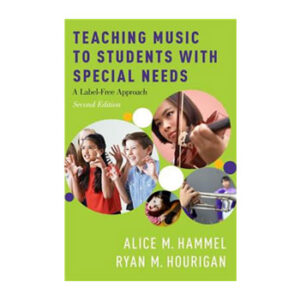
Fostering inclusive music teaching and learning in the general music classroom is essential to meeting diverse student needs. Learn peer-reviewed strategies that you can use to create a culture of inclusivity for you and your students.
Making, performing, and appreciating music is part of the human experience. As music teachers, we are lucky enough to share this with our students every single day. We are also one of the first subjects in which inclusion is practiced, and we frequently get to share our love of music with the entire student body.
Music education has a rich history of inclusion and a commitment to ensuring excellent music education for all students (Dunbar, 2016). With the privilege of teaching a diverse student population comes the responsibility of ensuring that our classes foster inclusivity and support the learning of all students, including those with special needs.
To this end, let’s explore a few ways to foster inclusivity in the general music classroom.
Techniques and Tools
Classroom Design
A well-organized classroom free of physical boundaries to learning is an essential first step in creating an inclusive classroom (Darrow, 2009). Take some time to explore your classroom setup and routines from different perspectives: stand on a chair, sit on the floor, turn the lights off, etc. During this exploration, consider how spaces in the classroom are used, what pathways are frequently traveled, where visual aids are placed, and how instruments are stored and played.
Are there any barriers students may face that would impede learning or cause frustration? How can you rearrange your room and teaching aids to eliminate or minimize these barriers?
Multi-Sensory Instruction
Multi-sensory instruction, including audio, visual, and tactile experiences, is an excellent way to promote inclusion and engage learners with special needs in the general music classroom (Obaid, 2013). Providing a variety of sensory experiences to teach a concept or skill can help learners find different routes to understand the material and give students the opportunity to demonstrate understanding by using their strengths. A multi-sensory approach to music education can also facilitate additional opportunities for repetition and practice, which research shows to be beneficial for students with special needs (Gerrity et al., 2013).
Multi-sensory activities are not only valuable in instruction but can also be a fantastic way to assess students. For example, students could share their understanding of musical form through music performance, a movement piece, a musical composition, verbal explanation creating a musical map, or using cards with images or textures. Using multi-sensory approaches at each step of instruction and assessment can help all students gain a deeper understanding of the material and make the music classroom more inclusive.
Frontloading or Pre-Teaching
Frontloading or pre-teaching is a widely used technique in learning support and has grown in popularity in music education. Frontloading is a form of scaffolding where concepts or vocabulary are introduced in advance of a unit or lesson so that students can be successful in the unit and deepen their understanding. Frontloading should pique student interest and allow students more time to interact with and begin to understand essential vocabulary and concepts before applying them in class.
Attitudes and Mindsets
Positive Learning Environment
A positive learning environment is crucial for all students to feel safe and successful. As teachers, we can help build and encourage an inclusive and supportive environment through direct interaction with students with diverse learning needs. Research shows that both students and teachers benefit from meaningful interaction with students with learning disabilities, leading to decreased prejudice and increased understanding (Gooding et al., 2013). We can model for our students using positive language and an assumption of capability (Abramo, 2012). We can spend time learning more about different disability classifications, our students’ strengths, and approaches that work for students with these learning needs.
Additionally, we can reflect on how our classroom arrangement and routines promote meaningful interaction for all students. Do students work independently or in partners and small groups? Are the groups fixed, or do they change? Collaboration in the music classroom can be a fantastic instructive technique for students with disabilities and a way to increase understanding and decrease prejudice (Merck & Johnson, 2017). Flexible groupings and frequent collaboration will allow students to teach each other the material and foster strong social skills and inclusivity (Merck & Johnson, 2017).
Music Learning Support Systems
Collaboration with Learning Support Teams
Collaboration is one of the best tools to ensure that we can meet all our students’ needs. By collaborating with the special education teachers, paraprofessionals, and other service providers in the school, we can learn more about our specific students and support developing successful interventions.
Music teachers are encouraged to read their students’ IEPs or 504 plans and attend meetings (Merck and Johnson, 2017). If you cannot attend these meetings, then connect with the special education team to review these documents and see how you can help meet goals and support your students in the music classroom.
If your students are accompanied by a paraprofessional or teaching assistant, liaise with them to find ways that they can genuinely support student learning in class. This may include providing additional practice time for physical modifications to instruments or classroom spaces or additional multi-sensory supports. In addition to the special education teacher, see if you can arrange a meeting with a school/district music therapist to discuss techniques and specific goals. While the aims of music therapy and music education are different, therapists can be a phenomenal resource for music teachers. They may have novel ways to approach a skill or concept.
Reflection
The most incredible tool we have to foster inclusion is ourselves: our passion for music, our love of teaching, and our care for our students. Setting aside time each week to reflect on inclusive practices and attitudes ensures that it is always a focus and that we continuously work to improve.
Inclusion is an action — and we are never done being inclusive. It’s an ongoing process that changes with our students’ needs. Creating an inclusive classroom starts with our attitudes, education, and understanding of our students and continues with our reflective process, which continuously renews our commitment to excellent instruction for all students. Every student entering our classroom deserves an excellent education that allows them to develop as learners and human beings. We can ensure this happens by fostering inclusive music teaching and learning in the music classroom.
References
Darrow, A. (2009). Barriers to effective inclusion and strategies to overcome them. General Music Today, 22-29.
Dunbar, L. L. (2016). Mainstreaming in American music education journals. Journal of Historical Research in Music Education, 37(2), 150-161.
Gerrity, K. W., Hourigan, R. M., & Horton, P. W. (2013). Conditions that facilitate music learning among special-needs students: A mixed-methods inquiry. Journal of Research in Music Education, 61(2). 144-159.
Gooding, L., Hudson, M., & Yinger, O. (2013). Students with special needs in the 21st century music classroom: Practices and perceptions of Orff and non-Orff trained educators. Approaches: Music Therapy and Special Music Education, 5(2), 166-174.
Merck, K. A. & Johnson, R.M. (2017). Music Education for students with disabilities: A guide for teachers, parents, and students. The Corinthian, 18(6).
Obaid, M. (2013). The impact of using multi-sensory approach for teaching students with learning disabilities. Journal of International Education Research 9 (1).
Rebecca Brink is a vocalist and performing arts teacher raised in Rochester, NY. After completing a MusB in vocal performance and a BA in linguistics at Boston University, she went on to complete a Masters in Music in Music…





 Facebook
 Twitter
 Pinterest
 LinkedIn
 Email
Email Print
Print