SUMMARY
Bucket drumming is an exciting and resourceful way for students to explore and express their creativity. When drumming, students build rhythmic vocabulary, develop gross and fine motor coordination, and more.
by Danielle Shaub





Bucket drumming is an exciting and resourceful way for students to explore and express their creativity. When drumming, students build rhythmic vocabulary, develop gross and fine motor coordination, and more.
by Danielle Shaub
Bucket drumming is an exciting and resourceful way for students to explore and express their creativity. When drumming, students meet all four domains in the National Core Arts Standards – Create, Perform, Respond, and Connect.
National Core Arts Standards
#2 — Organize and develop ideas and work.
#3 — Refine and complete artistic work.
#5 — Develop and refine artistic techniques and work for presentation.
#7 — Perceive and analyze artistic work.
#10 — Synthesize and relate knowledge and personal experiences to make art.
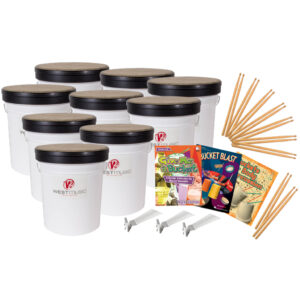
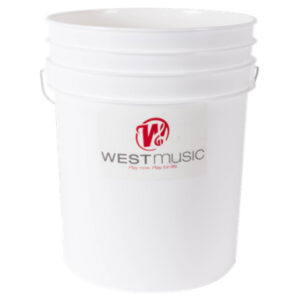
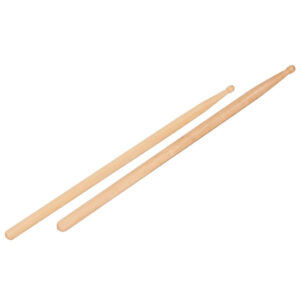
Get older students excited about music by introducing this new instrument. Bucket drumming is inexpensive. All you need is a pair of drumsticks and empty five-gallon buckets. To reduce the sound, you can wrap a gel pencil grip around the tip of the drumstick. Frequently, teachers can get buckets donated, which reduces the cost even more.
When introducing bucket drumming to students, it is essential to set expectations. These are the expectations I have for my classroom.
Once students have their buckets and sticks, I teach basic skills first.
First, how to hold the sticks – pitch the stick and wrap their hands around with their knuckles at an angle. Second, resting and ready positions – each teacher will have their preferred positions. Finally, where students hit the drum – center, rim, side, and click the sticks together.
Once I have covered the basics, we are ready to play. I always start with echo patterns. Echo patterns can vary depending on the goal you are working on with your students. I encourage students to practice playing when I speak rhythms using words, rhythm syllables, or counting. I also will play a pattern, and students will echo on drums.
Once students become familiar and comfortable with the basics, we add stick tricks, drum roll combinations, and student improvisations.
Due to accessibility, bucket drumming has become increasingly popular in schools and at home. As a result, tutorial and play-along videos now pepper the internet. These are excellent tools to utilize with your students, keeping students’ attention while you can walk around the room as assist individuals. Some channels are bucket drumming exclusively with tips and tricks, while others provide fun play along.
In addition to these resources, you can quickly transfer any rhythmic play-along to bucket drums. Rather than using a variety of percussion instruments, assign each percussion part one of the different places on the drum to play: center, rim, side, and clicking the sticks together.
In addition to play-along, you can use buckets to practice rhythmic chain canons. I call this “Simon Says.” The teacher plays a four-beat pattern, and the students echo. While the students are playing the echo, the teacher plays another pattern, which the students must attend to while playing the first pattern and then echo this second pattern. This rhythm echo chain can be short – or better yet, challenge your students to see how many patterns they can echo before making a mistake!
Bucket drumming builds student rhythmic vocabulary, develops gross and fine motor coordination, and teaches any other rhythmic skill you want to your students to learn.
Participating in a drumming ensemble increases student attention, impulse control, and decision-making skills. Bucket drumming provides an opportunity to teach and practice turn-taking and sharing. Additionally, it helps students feel they are part of a group due to the collaborative, interactive processes. Hard work and practice give students a sense of accomplishment.
Bucket drumming is an exciting and resourceful way for students to explore and express their creativity.
Sammy Foster. (2011, October 21). Bucket Drumming. YouTube. Retrieved April 13, 2022, from https://www.youtube.com/channel/UCwLQrcQCrOtt3wYOOjME32w
Kids play along songs. YouTube. (2019, March 20). Retrieved April 13, 2022, from https://www.youtube.com/c/KidsPlayAlongSongs
Chris Bove. (2019, December 14). In Unison Music Lessons. YouTube. Retrieved April 13, 2022, from https://www.youtube.com/channel/UCwHBGpmobNVGYU57XAZ0n8w
Kaselyn Gibbs. (2020, September 10). Music with Mrs. Gibbs. YouTube. Retrieved April 13, 2022, from https://www.youtube.com/channel/UCkide6AQAr7wjc4f9xoRORg

Contributor
Danielle Shaub is currently in her 20th year of teaching Music Education in the Lake Local School District located in Uniontown, Ohio. She teaches elementary general music and 5th and 6th grade choirs. Danielle is the OMEA President for…
Discover more from DanielleHello (not ? Log out)
 Facebook
 Twitter
 Pinterest
 LinkedIn
 Email
Email Print
Print
Anna
April 28, 2024
Thank you so much