Summary
An argument for teaching students to sing all genres of music and keeping them singing beyond general music in elementary school.
by Victoria Rogers






An argument for teaching students to sing all genres of music and keeping them singing beyond general music in elementary school.
by Victoria Rogers
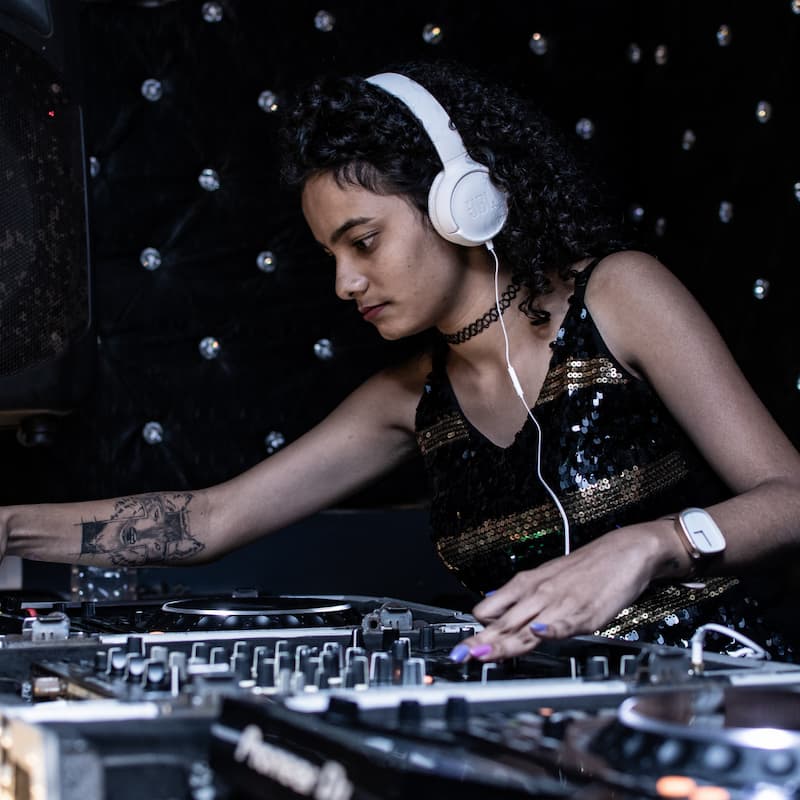
By incorporating the music students are familiar with, we build a bridge between the music students engage with at home and school. When students feel valued, they are more likely to keep an open mind when you ask them to listen to other genres.
by Maria Del Valle
When I was in elementary school, there was a bias towards European Music and American Folk Music. I was fortunate to have the opportunity to join a local choir. There I learned the classical, choral sound, and additional skills to work independently with music (sight-reading skills, music theory, multicultural music, etc.). My experience in choir taught me that I could use my voice in new way and exposed me to music beyond what I was learning in my general music class.
Has teaching changed or do we still hold the belief that students should only sing choir and folk music because “Children should never sing pop music.” I am guessing there are still many instances where instead of embracing our students’ desire to sing modern music, we are shutting them down.
Choir is not an option available to many children; therefore, it becomes the responsibility of general music teachers to ensure that students learn how to sing other genres of music safely.
On the most superficial level, social learning theories teach us that children learn by copying others. This typically applies to elementary-aged children but can also be seen throughout adulthood. Students mimic adults looking for positive validation. Children do not have the critical thinking abilities to understand that if a teacher tells them they should not sing pop music, their teacher is expressing an opinion.
Students are watching our reactions. So, when we hype up the song “We Don’t Talk About Bruno” from Encanto and act indifferent about “Defying Gravity” from Wicked, our students notice our preferences. This observation can influence their preferences both in the classroom and beyond.
Music is everywhere, the opinions people hold regarding impacts students’ opinions and actions. Figures of authority in children’s lives who express opinions about music will likely affect their musical preferences. These preferences (if they like to sing) will likely lead to them emulating the artists which the individuals around them listen to. But what are those genres and how can we ensure that students maintain their vocal health?
It is important to expose students to multicultural music when teaching general music. Frequently, we forget the culture extends beyond ethnicity and includes the various musical genres within that culture.
Expanding our musical libraries to include popular genres is essential if we want to teach our students to use their voices safely. Inclusion of these genres needs to include specific instruction about how to use the voice, and not a simple instruction to “just sing along.” Here are some of the more common vocal singing styles and descriptions of how to guide students’ singing.
Classical Vocal Style– Supported “head voice,” use of vibrato, broad sound, raised soft palate, resonant focused.
Opera Vocal Style– Challenging for advanced singers, heavy vibrato and dynamically contrasting. Typically, no mics or autotuning are used; therefore, resonance is essential.
Popular Vocal Style– Dependent on the genre, usually characterized by using the “chest voice,” little vibrato, “talk-singing,” sometimes sitting in the back of the mouth lyric focused.
Pop Vocal Style- stays within a narrow range, “chest voice,” often nasally, simple, sometimes harmful to the voice if the person is not trained, autotuned, “talk-singing,” little to no vibrato.
Musical Theater Vocal Style– “mixed voice,” “mixed voice belt,” “talk-singing,” nasally, supported, but not resonant, sporadic vibrato.
“Disney” Vocal Style– Soprano-heavy, simple, early films contained vibrato; later films rarely have vibrato, often “mixed voice,” nasally, supported.
Country Vocal Style– primarily talk-singing, “chest voice,” “mixed voice,” little to no vibrato, includes an accent, simple.
So, the next time you are tempted to tell students to just sing along or that children should never sing pop music, remember your words have power. Instead, embrace your student’s desire to sing, and teach them to do it in a way that is safe. Your opinion matters to students, and if we can educate students to sing all music safely this acceptance may just be what keeps students singing beyond General Music in Elementary School.
Bandura, A. (1971). Social Learning Theory. Prentice Hall.
Cherry, K. (2022). How social learning theory works. Developmental Psychology. https://www.verywellmind.com/social-learning-theory-2795074#a-few-applications-for-social-learning-theory
Eccles, J., et al. (1993). Age and gender differences in children’s self- and task perceptions during elementary school. Child Development, 64(3), 830–847. https://doi.org/10.2307/1131221
Habibi, A. & Damasio, A. (2014) Music, feelings, and the human brain. Psychomusicology: Music, Mind, and Brain, 24(1), 92-102. https://doi.org/10.1037/pmu0000033
Shouldice, H. N. (2020) An investigation of musical ability beliefs and self-concept among fourth-grade students in the United States. International Journal of Music Education, 38(4). 525-536. https://doi.org/10.1177/0255761420914667
Steen, A. (2023, May 4). Most popular music genres: A comprehensive guide to the sounds we love. Primesound. https://primesound.org/popular-music-genres/
Wilkinson, A. (2022, November 18) Brain hacks for music teachers: How to make every student an obsessed practicer [session covering the psychological needs for and causes of students practicing outside of the classroom]. VMEA State Conference, Richmond, VA.

Contributor
Victoria Rogers is a current Music Education Major at the University of Lynchburg, going into her Senior year. Despite her vocal emphasis, Victoria can often be found with an instrument in her hands. Following a life-long fascination with music,…
Discover more from Victoria Facebook
 Twitter
 Pinterest
 LinkedIn
 Email
Email Print
Print