Consider integrating Social Emotional Learning (SEL) into your lessons by incorporating Mindful Music Minute lessons, similar to SQUILT. You can use the book “ABCs of My Feelings & Music” to discuss emotions in music. This resource provides practical tips and highlights the benefits of structured social-emotional listening lessons, experiences, and intentional planning.
by Kate Hagen
Teacher Toolbox
What is Social Emotional Learning?
Music education and social-emotional learning go hand in hand. Learn about the skills students learn and what research tells us about SEL.
Teachers are inundated with factoids, publications, and training about the necessity of embedding Social Emotional Learning (SEL) into every element of their interactions with students. This movement began with the publication of the Positive Youth Development Report and has continued to gain momentum, unlike many other initiatives. One factor is the federal support for grant monies for teacher training through the Academic, Social, and Emotional Learning Act and implementing Common Core SEL Standards Nationwide.
However, as with many educational initiatives’ music educators are expected to include these ideas in their teaching with minimal guidance. Training and curricula designed for classroom teachers are not always directly applicable in the general music classroom, leaving the music teacher to their own devices to piece together ideas and lessons that will resonate with students in the music room.
Move Over SQUILT
SQUILT – Super Quiet UnInterrupted Listening Timeis a curriculum model music educators use to increase student appreciation of music. SQUILT is a wonderful tool for increasing student awareness of the essential elements in music: rhythm, tempo, dynamics, instrumentation, and mood. However, I believe we can use this model and take it one step further to incorporate social-emotional learning.
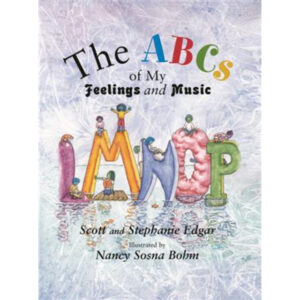
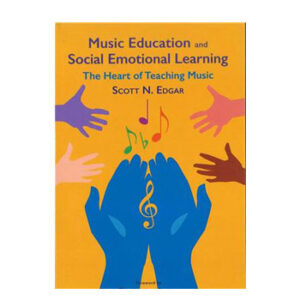
The ABCs of My Feelings & Music, written by Scott & Stephanie Edger and illustrated by Nancy Sosna Bohm, was designed to provide a tangible entry point to discuss emotions in relation to music and art. The illustration of each letter in the alphabet serves as a mnemonic device for the emotion it seeks to represent. Three pieces of music chosen to allude to that specific emotion accompany each letter.
Since its publication, other eminent music educators have created additional playlists to increase the diversity of musical examples available for each alphabet letter. The playlists and recordings are available on Spotify.
Mindful Music Minute Lessons
Inspired by the concept of SQUILT, I started implementing Mindful Music Minute lessons in my classroom. I use this social-emotional listening lesson daily to help transition my students into music and connect with them.
The activity is simple – play music as students enter the room while projecting the image from the book. When the music is over, ask the students questions about what they heard, felt, or noticed in the music or artwork. The process takes about five minutes, allowing students to move to their seats, get drinks or a last-minute bathroom break, and reset themselves for music class.
However, the trick to success is structuring the listening experience for students so this daily routine of talking about music permeates the rest of their musical experiences in your classroom.
Planning with Intention
Preparation is the key to most teaching success. I have a master slide deck with the images from the book and the links to the listening examples for each letter. In addition to the original playlist for The ABCs of My Feelings & Music, I utilize the alternative lists compiled by Karen Howard and Franklin Willis.
Every week, I choose one or two songs per letter to have students listen to at the start of class. I project the image from the book with a brief reminder of what students should listen to while the music plays. Students listen for about three minutes while transitioning into class and moving to their spots.
I strategically choose what I ask students to attend while listening and the discussion questions asked after they listen. For example, in fourth grade, we spend time learning about the instruments of the orchestra and other world instruments. So, in our discussion, I almost always ask them to focus on how the instrumentation of the music affects the mood of the piece. Or why the way we play different instruments is associated with specific emotions.
In Kindergarten and First Grade, we spend countless hours moving to the pulse. Therefore, in those grades, I ask them to find the pulse in their bodies while listening, and after the song has concluded, we talk about how the tempo and dynamics can influence our feelings.
Teaching students what specific elements to listen for within the music provides structure to this activity. Asking students to find the pulse, draw the phrases in the air, conduct, or move their bodies to match the pitches keeps their minds and bodies engaged. Providing routine while students listen to different musical examples builds their musical and emotional vocabulary in a safe environment.
Logistics
Create a copy of the weekly slide from the master slide deck.
Delete the music hyperlinks not being used.
Add the listening cue to the slide.
Duplicate the slide and alter the listening cue for additional grade levels.
Organize with the other slides you plan to use in your teaching during the week.
Log into Spotify.
Ensure your recording plays before you start your teaching day!
Final Thoughts
Incorporating a few minutes of listening at the start of the classroom has had several benefits for my students. First, we are building their musical vocabulary to discuss different styles and genres of music. Second, they can better articulate the connection between emotion and music. Third, I am learning additional tidbits about my students during this time. Fourth, thanks to the additional playlists created by Karen Howard and Franklin Willis, I am exposing my students to a larger body of music meaningfully. During this activity, I do not spend time talking about the musicians and their accomplishments; rather, I refer to the listening at other times in my lessons to teach this content. Finally, I have created a predictable transition for my students when they enter my room, allowing them a few minutes to settle, creating a better learning environment for all.
Happy Teaching!
A Note About Copyright
The slide deck I created includes screenshots of the book The ABCs of My Feelings & Music. Using these images falls under the fair use exemption since I own both physical and Kindle versions of the book and only use these images in my classroom.
I have a free version of Spotify, and the streaming service protects the lists linked to my recordings, which is why I recommend ensuring that these songs are loaded on the platform before starting your teaching day. Uploading these songs and embedding them into the slides is legal if you have paid for the content.
Reselling or sharing this slide deck is illegal. This is why I have explained the creation process but will not share the content. Please feel free to contact me with any questions – kate.hagen@musicconstructed.com
References
Catalano, R., Berglund, L., Ryan, J., Lonczak, H., & Hawkin, D. (1998, November 12). Positive youth development in the United States: Research findings on evaluations of Positive Youth Development Programs. ASPE. https://aspe.hhs.gov/reports/positive-youth-development-united-states-research-findings-evaluations-positive-youth-development-0
Edgar, S., Edgar, S., & Bohm, N. S. (2020). The abcs of my feelings and Music. GIA Publications, Inc.
Howard, K. (n.d.). The abcs of my feelings and music Karen Howard Alternativeplaylist. Spotify. https://open.spotify.com/playlist/5WoYzbyCXf1oFfhOCSIWBO?go=1&sp_cid=6c798bf7468353aa80a45628fbe04985&utm_source=embed_player_p&utm_medium=desktop&nd=1&dlsi=040e0db399974859
Positive Action Staff. (2020, August 7). Social-emotional learning (SEL) standards in all 50 states. https://www.positiveaction.net/blog/sel-standards
Prather, M. (n.d.). Squilt Music appreciation. Squilt Music Appreciation. https://www.squiltmusic.com/
Willis, F. (n.d.). The abcs of my feelings and music Franlin Willis alternative playlist. Spotify. https://open.spotify.com/playlist/7tF81daeDWs5WrDkZJtVzO?go=1&sp_cid=6c798bf7468353aa80a45628fbe04985&utm_source=embed_player_p&utm_medium=desktop&nd=1&dlsi=2fd1c6b82ce8428a
Kate Hagen currently teaches in the Iowa City Community School District. She has 20 years of experience working with K-6 students in public schools. Kate has a license in Music Therapy from the University of Iowa, and a Masters of Music Education from University of…
Hi Dorothy, you will need to make your own Master Slide Deck. Kate is not able to share hers due to copyright infringement. Using one in your own classroom falls under fair use – sharing negates the fair use exemption.






 Facebook
 Twitter
 Pinterest
 LinkedIn
 Email
Email Print
Print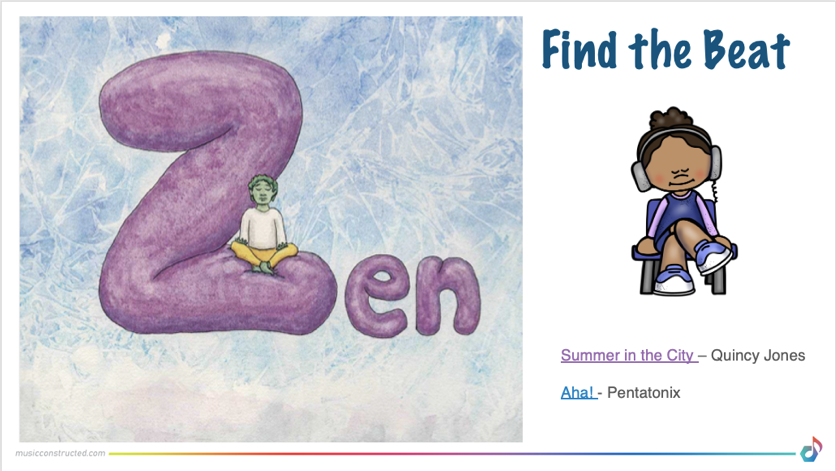
Dorothy Turner
February 15, 2024
Where can I get the master slide deck? I have the book already!
Music ConstructED
February 22, 2024
Hi Dorothy, you will need to make your own Master Slide Deck. Kate is not able to share hers due to copyright infringement. Using one in your own classroom falls under fair use – sharing negates the fair use exemption.