Summary
How do babies and toddlers respond to music, and why is it important? In this informative article, learn some of the theoretical and practical ways to engage young children with music.
by Julia Rennick





How do babies and toddlers respond to music, and why is it important? In this informative article, learn some of the theoretical and practical ways to engage young children with music.
by Julia Rennick
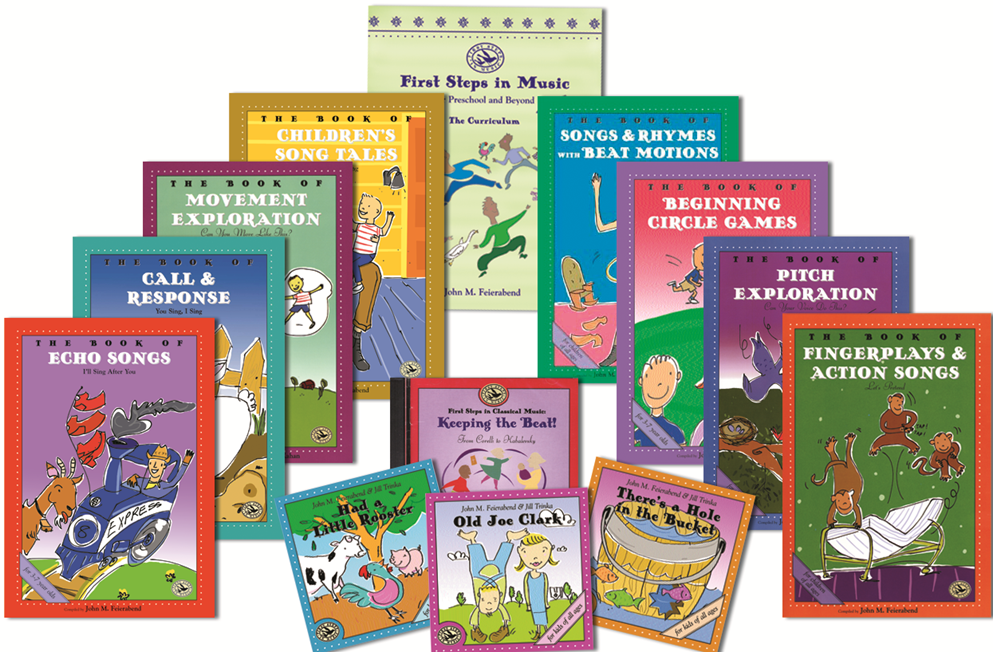
Written by a renowned leader in early childhood music education John Feierabend, this creatively illustrated book contains everything you need to lead a music class for preschool and early elementary students.
by Kate Hagen
The first three years of life are a time of tremendous growth, development, and change. These changes aren’t just cognitive and physical but social and emotional, too!
Very young children are fascinated by music and sounds. Musical activities contribute to children’s total development; they grow musically when allowed to take risks and not feel pressured to perform.
From birth to 9 months, babies listen attentively to musical sounds. Vocalization begins as he or she imitates what they hear. Reading to your baby before bed and/or singing them a lullaby enhances the connection between parents and children because they are calmed by familiar human voices.
Rocking your baby whilst singing to them deepens the bond and connection and helps them relax, giving a sense of security and comfort, all of which researchers believe lead to better sleeping and feeding.
Lullabies exist in most cultures and have been sung for hundreds of years. Any song or piece of music that is repetitive, simple, and soothing can be sung. Some parents have told me they’ve chosen an upbeat piece of music they liked and slowed right down to use instead of a traditional lullaby.
I liked singing the Skye Boat Song when our children were little; whatever works for you is fine –try it if you haven’t already. Maybe you can recall a song sung to you when you were young. Remember: babies and toddlers will not judge your singing voices!
From 9 months to 2 years, toddlers respond to music with clear, repetitive movements. They are interested in all sounds and may begin to approximate pitches. They are primarily attracted to strongly rhythmic music.
Babies and toddlers need to experience many opportunities to play with music and sounds freely and in more structured ways. Don’t expect polished or accurate musical responses as outcomes. Understanding this means we can make music play and activities an essential and enjoyable part of toddlers’ learning and discovery.
Children can be introduced to simple music experiences through songs, finger plays, knee bouncing, games, movement, folk dances, and sound exploration. Young children love and need lots of repetition, so sing songs they know and then add something new.
Consider laying out child-friendly instruments for them to explore – if you don’t have any – perhaps borrow from a local toy library – or use pots and pans from the kitchen with wooden spoons. Make shakers (maracas) by filling small sealable boxes with pasta, rice, rocks, bells………
Babies are sensitive to loud/soft sounds – (dynamics.) They can be startled by loud noises and comforted by soft rhythmic sounds. Their whole body responds when music is played; for example, a sitting baby will bounce to the music, and when they can stand, they may sway and rock from side to side or bend their knees and bounce up and down.
Toddlers are sensory-motor learners. They carry, cart, fill, tip, make a mess, climb, and wander around observing objects and people. They use large muscle activities extensively, dislike waiting for turns, and enjoy individual rather than group play activities.
Toddlers learn with their whole bodies – by doing rather than listening. They’ll move in response to how fast or slow (tempo) the music or instrument is playing. They can dance (if they choose to!) and have more control over their physical responses. Repetition, rhyme, fingerplays, and simple action songs are best for this age group.
At this stage of development, toddlers may begin to distinguish between sounds and will respond enthusiastically to certain songs. Never forget that big feelings and tantrums are prevalent at this stage -it’s all about them!
Forget what anyone has ever told you about your musical ability … your child won’t be judging your rhythm or whether you’re in tune. It’s your voice and play-based activities that will capture their interest.
For further reading in this age group and beyond– the theorists Vygotsky and Piaget will give more insight into child development across all areas.
Contributor
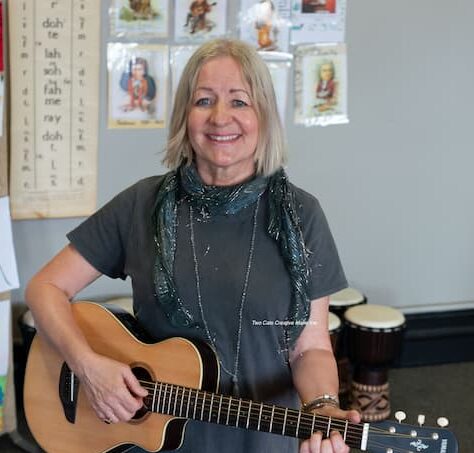
Julia was a finalist for ARIA Music Teacher of the Year 2019. Emma Watkins (former Yellow Wiggle) was her Ambassador. For an overview, see https://www.youtube.com/watch?v=PwWMOfK-SPQ She was a peripatetic music teacher in pre-schools, schools, and the community for almost 30 years and…
Discover more from Julia Facebook
 Twitter
 Pinterest
 LinkedIn
 Email
Email Print
Print