Summary
Improvisation is an essential music skill for students to experience in general music. Start students down the path of composition with four playful improvisation activities.
by George Halley





Improvisation is an essential music skill for students to experience in general music. Start students down the path of composition with four playful improvisation activities.
by George Halley

This lesson uses solfege in improvisatory question and answer to take students another step down the path of improvisation.
by George Halley
Improvisation is an essential music skill for students to experience in general music. Through improvisation, students can demonstrate an understanding of both musical form and melodic scales. Students who learn to improvise are taking the first steps into composition.
So, how do we start students along this path of musical play?
Imagine sitting in a circle with your students and asking them a simple question. What is your favorite color? A student answers My favorite color is chartreuse! If, during this exchange, your questions and answers are spoken rhythmically while maintaining a steady pulse, you have started your students on the path of improvisation.
Improvisation is the art or act of improvising or composing, uttering, executing, or arranging anything without previous preparation (Collins English Dictionary, 2012).
When we ask our students a simple question, they know the answer based on their preferences. However, they do not know what question will be asked – hence, improvisation. This is a short and straightforward way to start including improvisation in your lesson planning.
Check out the Lesson Sketch, Conversation Time.
What is a vocable? Vocables are sounds used in language that is not considered words. For example, “la” is used in music or an exclamation such as “huh.” We can utilize vocables to take our students one more step down the path of improvisation.
To illustrate, watch this short clip, Great Teachers in Action, using vocables in an improvisation game. Our game with elementary students is less advanced but utilizes many of the same principles.
In our Vocable Improvisation variation, the teacher speaks a four-beat rhythm using vocables. The students utilize the same vocables but change the rhythm of their responses. Another variation can include students keeping the same rhythm but altering some of the vocables in their responses.
Students can also practice having these vocable conversations with each other. Imagine the fun your students will have during centers playing this improvisation game.
Check out the Lesson Sketch, Vocables.
Solfege singing is a fantastic tool for improvisation. When teaching students to use solfege for improvisation, consider using the pentatonic scale and spending a little time reviewing the basic rules of composition. Questions – or phrases that sound like they are not complete, usually end on a Re, Mi, So, or La. Answers – or phrases that sound complete, usually end with Do.
The Solfege question-and-answer improvisation process is like the vocable activity.
The teacher sings a four-beat pattern, ending the pattern on Re, Mi, So, or La. The students sing the same rhythm, starting on the solfege note the teacher ended the question with, then using other solfege to complete the rhythm, ending the pattern on Do.
Once students are secure with this process, they can answer the question with a complimentary rhythm. However, before you take this next step, you must practice questions and answers only using the rhythm before adding the secondary layer of solfege.
An extension of this game is to create a Question-and-Answer chain. The first person sings the question and the second answers. The third person starts another question and the fourth answers. The process continues around the circle until every student has had a turn to either sing a question or answer. This practice will later enable students to have solfege conversations with each other. This is another great activity to include during centers.
Check out the Lesson Sketch, Solfege Improv.
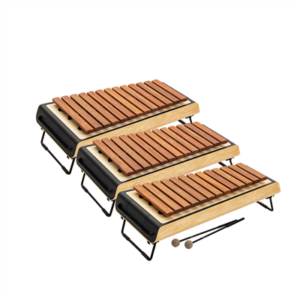
Transferring improvisation to the barred instruments is like the process used in the last activity. Set up the instruments in a pentatonic scale and spend a little time reviewing the basic rules of composition. Questions – or phrases that sound like they are not complete, usually end on a Re, Mi, So, or La. Answers – or phrases that sound complete, usually end with Do.
The teacher plays a four-beat pattern, ending the pattern on Re, Mi, So, or La. The students play the same rhythm, starting on the solfege note the teacher ended the question with, then using other solfege to complete the rhythm, ending the pattern on Do. As in the solfege lesson, once students are comfortable with the process, they can alter their answers to include complementary rhythms.
When students can improvise in a simple question-and-answer form, you can easily extend the piece by inserting these motives as a B section in another piece of music, creating a rondo form.
With all these improvisation activities, beginning with four-beat questions and four-beat answers is advisable. However, each example can be extended to 8 or 16-beat phrases. Additionally, once familiar with the question-and-answer structure, students can begin to play with asking and answering their own phrases. This final step moves students down the path of improvisation, intersecting with the path of composition.
Improvisation is an abstract idea that is frequently difficult to evaluate. However, using these four steps, teachers will have multiple examples to gather student growth data. Starting with the idea of having a conversation, these short lessons will allow students to gain confidence and understand the rules of improvising using a question-and-answer form.
Carnegie Hall. (2019, October 18). Great teachers in action – vocal improvisation game. YouTube. https://www.youtube.com/watch?v=dZePVD0N1so
COLLINS ENGLISH DICTIONARY . (2012). Improvisation definition . Dictionary.com. https://www.dictionary.com/browse/improvisation

Contributor
My name is George Halley. I received my undergraduate degree from the University of Northern Colorado, and my master’s from Adam’s State University. I am in my 11th year teaching general music, and I have completed my Orff Schulwerk…
Discover more from GeorgeHello (not ? Log out)
 Facebook
 Twitter
 Pinterest
 LinkedIn
 Email
Email Print
Print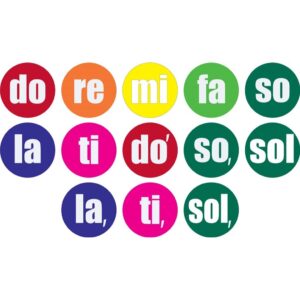
Prtal Berita
October 9, 2024
What are some ways teachers can assess student growth in improvisation according to the article?