Elementary school teachers use centers as an integral part of their instruction process. Students are trained to work in small groups with some autonomy. And yet, we rarely apply this principle of instruction to the music classroom. With a simple process, centers can work in the music room, too!
In October 2021, I had my first observation of the school year. I was told by my principal at the post-observation meeting that I needed to add centers to my classroom. This concept scared me. How do I apply centers in my music classes that only last 30 minutes? Will students be able to complete tasks I ask of them without my help? How am I going to come up with center ideas for all of my classes? It turns out that adding centers to music class doesn’t have to be that hard!
What are Centers?
Centers are a way for teachers to work with a small group of students. Working with a small group of students (usually three to four) allows you to give individualized instruction, help students who struggle with a certain concept, and give students assessments while other students are working on something else that is productive. Students that are not in centers can be placed in two different ways. The first way is to have students in small groups working on a certain activity or playing an educational game that they can do without your help. The second way is to have students in their seats with a must-do/may-do list. The must-do list can be one or more items that they need to complete by the end of the day. The may-do list is a list of activities or games that they can do after their must-do is done and to keep students busy at the end of class.
Getting Help
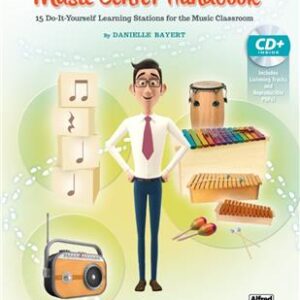
Centers are something that I didn’t have any training in when I went to school to be a music teacher. During my Christmas break, I bought a book called The Music Center Handbook: 15 Do-It-Yourself Learning Stations For The Music Classroom by Danielle Bayert. This book inspired me on a topic that was unknown to me before this time and prepared me for applying centers to my music classes. I also decided to work with our instructional coach in our grade school building. Our instructional coach guided me through the process of applying centers, choosing a grade to start applying centers to, and came with me to observe a 2nd-grade teacher do math centers. All of this was helpful and was a great start to my journey to centers.
Pick a Group/Class
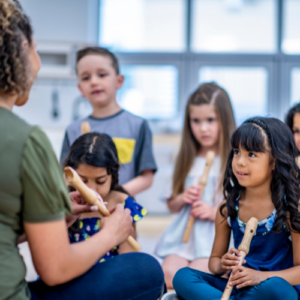
The next thing that I needed to do is figure out which class I should pick to trial the centers format. Our instructional coach and I agreed to apply this to one class instead of all classes because it would be overwhelming to apply centers to six grades or twelve classes since I teach K-5 general music. I decided to go with my fourth-grade classes since I’m working on recorders with this class.
Weekly Centers
I started centers in March with my 4th graders and I have used this method for two months. I see my students twice a week for half an hour. On the first day that I see students, I work on rhythms, note reading, and a song. On the second day, I do centers to work on the song that we started on the first day. I have seen great improvements in students’ playing since I have applied centers in my classroom, especially for one student who had problems playing the recorder can now easily play it.
Must-Do/May-Do
After talking with the instructional coach, we agreed that a must-do/may-do list is the best way to keep others busy while I work with a small group. My instructional coach asked me to look at my materials to see what I had that I could use for these lists. I decided to use a recorder worksheets that I got from teachers pay teachers, only applying two to four pages per center. I make sure to explain the worksheets before I do centers and set rules while I do centers. For the optional list, I choose certain music games that students may play that I put in Google classroom. Some examples of games I let them play are Incredibox, Chrome Music Lab, and Classics For Kids.
Organize Your Room
Before applying centers to both fourth-grade music classes in March, I did a test drive in late February with just one group and had our instructional coach observe it. We talked after the class to review how it went. The instructional coach had positive comments about the centers in my room and agreed that the students met my expectations. We both agreed that the way my room was set up at the time was challenging. I didn’t have a space to work with my students. The instructional coach and I worked together to reorganize my room so that all of my students would still fit and I had enough space to have a circular table in the room.
Conclusion
Taking simple steps to implement centers in the music classroom helped me teach my fourth-grade class. The process of learning about centers, their application, and how to apply them to my teaching was a worthwhile process. Since I took the time to apply centers in my music class, I have gained confidence and have been able to closely work with students to help them better play the recorder.
References
The Music Center Handbook: 15 Do-It-Yourself Learning Stations for the Music Classroom by Danielle Bayer
Kayleigh Parker graduated with a Bachelor’s in Music with teacher’s licensure (K-12th grade, instrumental concentration) with a minor in community health and a teaching endorsement in health education (9th-12th grade) from Eastern Illinois University in December of 2014. Kayleigh…





 Facebook
 Twitter
 Pinterest
 LinkedIn
 Email
Email Print
Print