SUMMARY
Does the music you teach reflect the students you teach or provide a window into the lives of others? Learn the difference and reflect on your curriculum to decide what kind of experiences you provide in your classroom.
by Allison Russo





Does the music you teach reflect the students you teach or provide a window into the lives of others? Learn the difference and reflect on your curriculum to decide what kind of experiences you provide in your classroom.
by Allison Russo
Some teachers want to infuse fresh materials, while others may feel pressure from their administration. Finally, there are those teachers who want to engage students with materials representative of their cultures and communities.
Regardless of the motivation, it is essential to understand that the mere existence of diverse musical materials in your classroom does not translate to a culturally responsive experience. Merely including diverse songs, melodies, or styles without their cultural context often equates to cultural appropriation. The power of culturally responsive education empowers and challenges students to gain a deeper understanding of themselves and their community.
Emily Style’s 1988 essay clearly illustrates this perspective. In her essay, Style explains that students engage with curricular materials as either a mirror or a window.
Mirror experiences are ones that immediately reflect who you are as a person. A student can “see” themselves in the experience without further explanation. These mirrors help students understand themselves, empower them to see possibilities for themselves, and emphasize dignity, humanity, and intrinsic motivation. In the music classroom, listening to music that a student enjoys at home or singing a song that reflects their experiences could be mirror experiences for them.
Windows force students to realize that other people do not have the same experiences. Additional cultural, social, and historical information is necessary for students to understand this material. Window experiences value empathy, diversity, and intellectual and emotional challenge.
Both window and mirror experiences are equally important, and a curriculum should seek to balance the two for students. Each piece, song, melody, or style in your curriculum may fit into one or both categories for each student.
It may sound obvious, but students may only know that a piece of music you have put in front of them is either a window or mirror experience once you put it into context. For example, students will only know who the composer is when handing out a new piece of orchestra music beyond their name.
The composer’s gender, race, ethnicity, education, LGBTQ status, religion, or native language will be a mystery until you provide them with the information or they are provided with an opportunity to discover it themselves. Those identities, related experiences, and realities will allow students to gain their perspective and relationship to the composer and their music.
Depending on a class’s ages and abilities, there are many ways to open the door to discover a window or a mirror within a musical experience. Short lectures, videos, or reading passages can deliver information on a piece of music. Students or student groups can research individual musicians, genres of music, or interpretations of musical styles geographically.
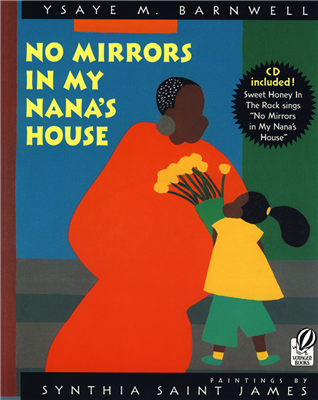
Picture books and stories are an engaging way to provide context. Connecting music to a book, video, or dramatic story will bring the music to life.
Cultural diversity is a broad umbrella term frequently mistaken to include only race and gender. Every piece of music has a unique context and perspective that might be an empowering mirror experience or an exciting window experience for your students.
If searching for new materials seems overwhelming, look at the materials you are currently using. Classical and folk music, often the core of many school curricula, comes from regions across the united states. Consider adding a little geographical and historical context instead in addition to the musical concept.
Even music from the “Dead White Guys Club” can provide students a window into a different period, social and political structure. Other ways can include featuring professional musicians of different ethnic and cultural groups.
Did you know that Anthony McGill was the first African American principal player for the New York Philharmonic and was awarded one of classical music’s most significant awards in 2020? Watching McGill play Mozart is suddenly more relevant and interesting.
Sharing that cultural context is the key to making emotional, social, and musical connections. Beyond piquing students’ interest with familiar music, the storytelling, sharing, and connecting that comes with truly incorporating diverse materials will establish long-lasting memories and learning outcomes for your students.
Anthony McGill, Principal Clarinet. New York Philharmonic. (n.d.). Retrieved January 22, 2023, from https://nyphil.org/about-us/artists/anthony-mcgill
Style, E. (n.d.). Curriculum as window and mirror. National SEED Project. Retrieved January 22, 2023, from https://nationalseedproject.org/Key-SEED-Texts/curriculum-as-window-and-mirror
$10.99Add to cart

Contributor
Consultant, writer, and educator Allison Russo has dedicated her career to creating more ethical and effective arts learning spaces. She has a BM from Ithaca College and an MM from Boston University, both in Music Education. As an elementary…
Discover more from Allison Facebook
 Twitter
 Pinterest
 LinkedIn
 Email
Email Print
Print