SUMMARY
Explore innovative ways to engage students in learning and executing dynamics that can be applied to every ensemble or musical lesson!
by Selena Ryan





Explore innovative ways to engage students in learning and executing dynamics that can be applied to every ensemble or musical lesson!
by Selena Ryan
Dynamics can be tricky for learners of all ages to grasp; between controlling “forte” sounds not to be too loud and giving enough substance to “piano” volumes, musicians can often struggle to escape the medium mezzo-forte they spend a majority of time playing or singing in. This article will highlight innovative ways to engage students in learning and executing dynamics that can be applied to every ensemble or musical lesson!
Like all concepts in music, it is most beneficial to students to receive the most straightforward explanation when presented with something new. I ask my students to identify different volumes they hear in the world.
A “lion’s roar” is loud, but a “newborn kitten’s mew” is quiet. At recess, we use loud voices, but in the library, our voices are soft. Typically, we speak in a mezzo-forte without even realizing it, as our usual conversational voices are medium in volume.
Executing sound with a quiet intensity is essential when playing wind instruments while maintaining strong and steady airflow. For strings, consistent pressure and movement in the bow should be prioritized in softer dynamics, and singers should be reminded not to sound raspy, whispered, or weak.
I find that students are inquisitive surrounding the why of doing something. This is a beautiful time to reinforce the concept that music is a language with a unique vocabulary.
Dynamic symbols are universal; musicians worldwide can play different volumes together without speaking the same language. I explained that if we just said “loud” and “soft,” we would need to translate the words in our music constantly.
My students find these activities engaging, and they reinforce the concept of dynamics.
I use the human body as a “ladder” to reinforce different dynamics. Working up from the feet, chant the different dynamics at their corresponding volume levels while placing your hands on the matching body part. The kinesthetic component of moving will help reinforce the concepts and is a great way to warm up with movement and “shake out” extra energy.
Extensions:
The purpose of this activity is to practice reading and playing different dynamics, but it is also beneficial for repetition practice in tricky passages of music.
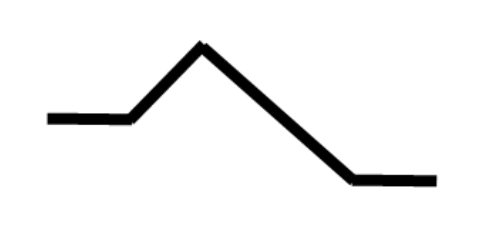
Select a small passage of music. I suggest four to eight measures of instrumental music or half a verse or chorus of a song. One student draws a “roller coaster” with a dry-erase marker on a whiteboard. Higher lines are loud, lower lines are soft, and the middle is medium volume. Practice playing the passage using the dynamics represented in the drawing. Repeat with different roller coasters.
Tip: Have the student who is drawing pick the next student to draw. To avoid students only calling their friends, consider giving them parameters for their choice. For example, “pick someone with hair that is longer/shorter than yours,” “pick someone wearing shoes without laces,” etc.
Extensions:
This activity helps to “gamify” a rehearsal and keep engagement high during woodshedding and technical practice. Use a small item like a stuffed animal, mug, picture, etc., as the object to be hidden.
Like the previous activity, choose a small selection of scales, warm-ups, or an excerpt from a piece for the class to play or sing. Elect one student to hide the object and another to close their eyes and be the “seeker.” The seeker will have the length of the excerpt to try to find the item.
The class plays or sings louder the closer they are to the item and get quieter the farther away they are. The class gets the point if the item is found before the excerpt is finished. If the item is not found, the teacher gets the point. This healthy competition motivates students to move with purpose and play dynamics as carefully as possible.
Tip: Hide the object in “plain sight.” While it doesn’t have to be completely obvious, avoid having the object inside drawers, lockers, backpacks, etc., as it will never be found.
Tip: Let students pick the following players of the game but limit everyone to one turn as either the hider or the seeker before repeating students. See activity #2 for a tip about encouraging inclusive student choices.
Using these activities can help to keep class and rehearsal entertaining and engaging. Once students can produce consistent, healthy, and pretty sounds with their instruments and/or voices, they are ready to add to the next concept of dynamics. Some students need help with sound production and feel unprepared to read and execute dynamics.
By gamifying the concept, they will begin singing and playing with different dynamics without even noticing that they are doing it. After the initial concept is grasped, you can refine sound, balance, blend, and tone to take your ensembles and classes to the next level!

Contributor
Hi there! My name is Selena Ryan and I am an Arizona-based music educator, composer, and performer. I work as a middle school band director, private clarinet instructor, marching band visual head, and freelance composer and performer. I am…
Discover more from Selena Facebook
 Twitter
 Pinterest
 LinkedIn
 Email
Email Print
Print