This article highlights the benefits of incorporating play in choir rehearsals to strengthen relationships, enhance learning, and engage students. Discover interactive games like Poison Pattern, Solfege Challenge, and Solfege Bingo that reinforce musical concepts such as solfege, rhythm, and notation. These activities foster skill development, teamwork, and a positive classroom atmosphere, making rehearsals more enjoyable for students.
by Karla McClain
Teacher Toolbox
A Differentiated Approach to Teaching Music Literacy
We want all learners to succeed, so it is imperative to find ways to differentiate the learning of literacy skills so that all students can be successful. By using different levels of sight-reading exercises, coupled with differentiated assessments and digital tools, all students can show progress at their level.
“Time spent playing with children is never time wasted.” – Don Lantero
Why include play in a choral rehearsal? You can build relationships, provide structure in a long class period, and use play to teach concepts in an easy way. My middle school choir students come to me from a general music background where they “opt in” to choir, and I was struggling with getting them to adapt to hour-long rehearsals. I decided that incorporating games would be a great way to have a brain break that also functioned as instructional time. My goal in using play was to reinforce concepts and make kids more comfortable as an ensemble.
Poison Pattern
The first game I play with students that is non-negotiable daily is Poison Pattern. We play this at the start of rehearsal. It helps to reinforce solfege patterns– we can prepare or present patterns or concepts like skips, steps, key signatures through this game. It could also be used for decoding. To play, I put a 3 note solfege pattern on the board:
Students may echo any pattern that I sing, except for the poison pattern. I keep a running tally for the week– any class that beats me with more points at the end of the week earns karaoke for the last part of class on Fridays.
Solfege Challenge
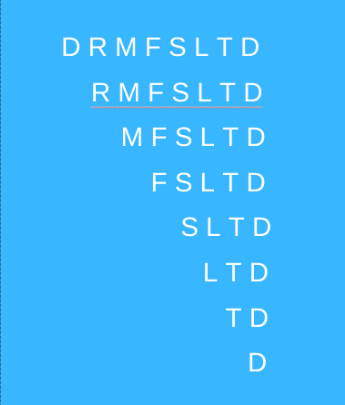
Have your students heard of the 8 challenge on TikTok? I saw some choir teacher influencers change it to solfege! Amazing for audiation skills! We sing it like this and then go backwards for a bigger challenge.
Solfege Bingo
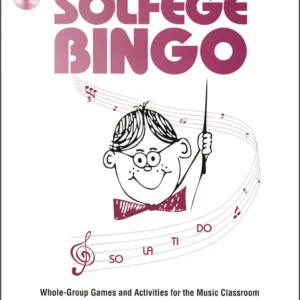
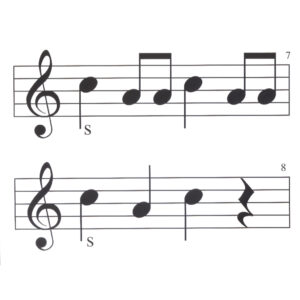
This game by Cheryl Lavender is a great way for students to practice solfege identification and/or decoding skills. There are 2 levels– one is pentatonic and one is diatonic. You can also have kids sing the patterns when they win for an extra challenge. For differentiation, I might show the students the patterns visually, or allow them to buddy up with a classmate.
Blooket
I love using Blooket in my classroom! It is totally worth paying for the “plus” membership to get access to extra features because you can access other users “sets.” I create my own sets as well. I love that you can play different types of games using the same set, or assign “homework” links– great sub plans! This also collects data so you can see how students are doing as a class overall, or individually–perfect for a formative assessment! It also has a “homework” setting that you can use for individual practice or sub plans. In addition, I like this better than Kahoot because students who have slower processing time still have a chance to win the game. The game play isn’t about who is fastest or most correct.
Song Games
Yes, even the big kids like playing song games! It’s a great way to introduce music from other cultures or to work on literacy strategies. I have also used them to work on technique or musical concepts. In addition, the team building/relationship building THROUGH music is fantastic to get students working together.
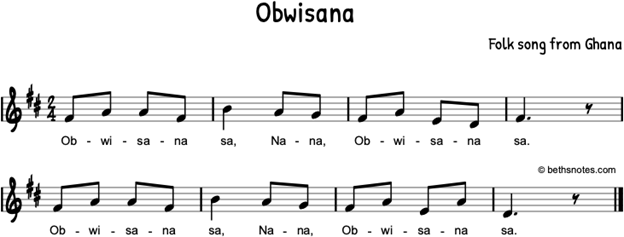
Obiswana
This is a stick passing game. I use it as a cooperative game where we all have to make sure we are working together. We also do various tempo changes to talk about tempo marks, and at various dynamic markings as well.
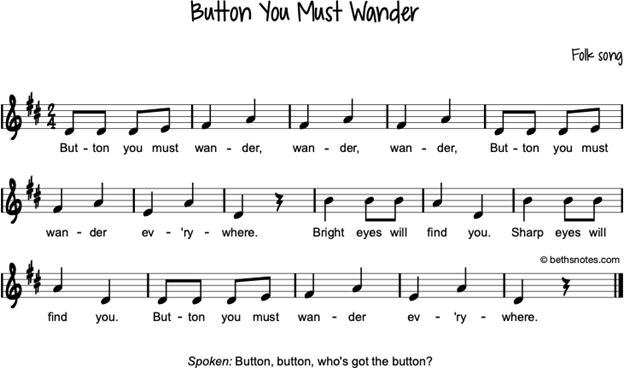
Button You Must Wander
We use this to read notation, and it’s a fun way to learn each other’s names. I also love to use this to work on vocal space and phrasing.
Game play
Formation: Students sit in a circle on the floor with one student in the middle (“It”). Before starting the song, “It” closes eyes while the teacher gives a button to one student in the circle. Tell the other students to be “sneaky” and pretend to hold the button in their hands. When the singing starts, “It” opens eyes while students in the circle pass the button around the circle. The students without the button pretend to pass a button, so it looks like everyone is passing the button. At the end of the song, the class stops passing and chants, “Button, button, who’s got the button?” “It” gets three chances to guess who ended up with the button.
Pass the Beat Around the Room
This game is so fun! I make it harder by changing certain words to a sound, or putting a background track on for the kids to keep a super steady beat. Here is a video of another teacher and students showing you the game–it’s easier to watch than to explain. My students ask for this game all the time and never get bored of it!
Boom, Clap, Snatch
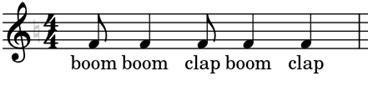
This game originally is just about listening– I incorporate rhythms that we are learning in the patterns that we do for “boom” and “clap.” For example, if we are learning syncopation I might say a pattern such as this to prepare students for learning the new rhythm concept.
Choir Karaoke
This isn’t a game but it certainly is fun! Here is my curated list. Students pick which song to sing, and we sing as a group. In addition, you could play blind karaoke where a student faces away from the board and has to try and sing the words correctly.
I hope that this helps you find new ways to engage students in your choral rehearsals!
Karla McClain is a National Board-Certified Teacher in Early Adolescent/Young Adulthood Music and teaches at Illing Middle School in Manchester, CT. Before teaching in Manchester, Karla taught in Farmington, West Hartford, CT, and Hilliard, OH. This is her 26th year of teaching choral and…







 Facebook
 Twitter
 Pinterest
 LinkedIn
 Email
Email Print
Print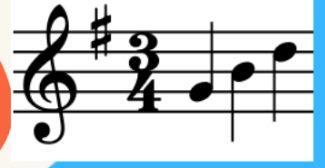

Roger Emerson
March 26, 2025
Thank you! Great ideas. 💙