We want all learners to succeed, so it is imperative to find ways to differentiate the learning of literacy skills so that all students can be successful. By using different levels of sight-reading exercises, coupled with differentiated assessments and digital tools, all students can show progress at their level.
Have you ever sat in a faculty meeting or PD about reading and thought, “I think that would work for music, too?” The question I started pondering was, “Why don’t I think more strategically about using sight-reading levels when teaching music literacy?”
My school uses the NYSSMA levels for music literacy assessments. However, not all 7th graders are ready to read at Level 2.
Level 1: Intermediate School
Level 2: End of 7th Grade
Level 3: End of 8th Grade
Frequently, I have students who are new to choir, new to our district, or new to the U.S.! They may not all have a Kodály background like students who have been in our district since elementary school. Several years ago, I decided that instead of assessing all students at the same level, I would assess students at their “just right level.” This made things more equitable for students and easily allowed me to make modifications or accommodations for anyone who needed it.
Once I gave students a baseline assessment for sight-reading, I gave them specific feedback, which might include, “Great pitch and rhythm accuracy — you are ready for the next level, “ or “You struggled with matching pitch to solfege — continue to work on that and stay at Level 1 for now.”
I also allowed students (even if they don’t have accommodations or modifications documented) to use examples labeled with solfege if they needed it. I find that students are honest, know their skill level, and don’t take advantage of this assistance. For our following assessment, I use Google Classroom to assign students to the specific level at which they should complete.
Digital Tools for Music Literacy
In the past, I used “paper” sight-reading examples at different levels, but I’ve recently started using Sight Reading Factory. This program has been a game-changer for students because the metronome and multiple exercises help students build their skills.
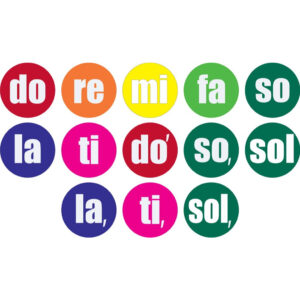
I use musictheory.net to practice solfege identification. I assign exercises and include multiple links, allowing students to self-select their level. The first link might have “helpers” where Do is labeled in one key; the second link has no “helpers,” and the last might have no helpers in multiple keys. Not only do I direct students to pick the level where they think they are, but as I monitor students working, I can see how they are doing and suggest a switch if something is too easy or too hard.
Flat.io Boomwhacker™ notation is another excellent tool for differentiation. My dyslexic student discovered that her eyes focus better using color-coded notation. The result is that she can sight-read with higher accuracy.
Mastery-Based Learning for Music Literacy
Another critical aspect of how I differentiate for students is allowing them to retake any assessment. Mastery-based learning is a crucial component of my district and my philosophy. Musicians do this inherently, so why make grades contingent on one-time tests?
I find that using game-based methods to work on essential note identification and rhythm motivates students because they are fun and engaging. As a bonus, students can see their stats just like the video games they love playing at home.
Quizizz is fantastic because you can embed audio examples — there is nothing like a room full of my voice singing “Sol-Mi-La” as students work on decoding!
Blooket is another great tool where you can create your own game sets. There is a vast selection of games to choose from, and you can play games as a whole class or set homework links. The reports show the whole class percentage, so I keep track of each class as we master a skill like solfege identification in the key of C, and then my classes compete against each other and themselves.
When our class average is above 90%, we know we are ready for an assessment. I also appreciate Blooket because you don’t have to be good at the skill to win the game. The gameplay is compartmentalized from the skill, so all students have a chance to win the game. It is so important for our struggling learners to be on a level playing field, even if they don’t have the skill set.
Using these tools simultaneously is another differentiation technique. For example, recently, I had students taking an assessment working on a “homework” Blooket. Students who needed a reteach watched a video on Google Classroom before taking a retake of that Blooket. The rest of the class finished their assessment and did a live Blooket on a previously learned skill for fun. Forty-five students were engaged in the appropriate activity for their current learning level. And because all of these games “run themselves,” I could be free to monitor students and assist those who were struggling.
Using these different tools, from leveled sight-reading to these websites, has become integral to my teaching. It has been so amazing to see the growth in my students and their music literacy. It takes a little time on the front end, but it is worth it when I see my students motivated and grow their musicianship skills.
References
Practice sight-reading and sight-singing exercises online. Sight Reading Factory®. (n.d.). Retrieved April 2, 2022, from https://www.sightreadingfactory.com/
Online collaborative music notation software. Flat. (n.d.). Retrieved April 2, 2022, from https://flat.io/
The world’s most engaging learning platform. Quizizz. (n.d.). Retrieved April 2, 2022, from https://quizizz.com/
Musictheory.net. (n.d.). Retrieved April 2, 2022, from https://www.musictheory.net/
Blooket. (n.d.). Retrieved April 2, 2022, from https://www.blooket.com/
Karla McClain is a National Board-Certified Teacher in Early Adolescent/Young Adulthood Music and teaches at Illing Middle School in Manchester, CT. Before teaching in Manchester, Karla taught in Farmington, West Hartford, CT, and Hilliard, OH. This is her 26th year of teaching choral and…




 Facebook
 Twitter
 Pinterest
 LinkedIn
 Email
Email Print
Print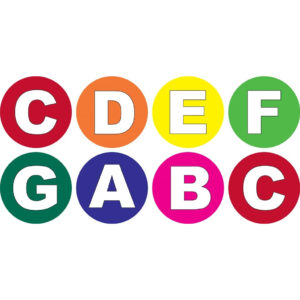

Blooket
January 10, 2026
Nice article — very informative!
For anyone interested in fun learning tools, I also share resources at https://blooketlab.com/ 😊