SUMMARY
The importance of the kazoo throughout history and across cultures has been all but forgotten. Learn how this instrument played important roles in tribal ceremonies, opera, and jazz.
by Kathleen Staten





The importance of the kazoo throughout history and across cultures has been all but forgotten. Learn how this instrument played important roles in tribal ceremonies, opera, and jazz.
by Kathleen Staten
Every year on the fourth Thursday of January, devotees of the kazoo break out their beloved instruments to celebrate. National Kazoo Day highlights all the ways in which playing and listening to the kazoo bring happiness to people of all ages. There is much more to this buzzy toy than meets the eye (or ear, as the case may be). From China and Africa to Tchaikovsky and American country, the kazoo has found its way into music that crosses continents and genres.
The kazoo is one of the most well-known wind instruments. Unlike brass and woodwinds of the orchestra, a kazoo can be made of myriad materials from plastic to metal and even things found in nature. Its simple, tube-like construction relies on the human voice to produce a sound. No fancy embouchure or complicated fingering is required! Just the simple act of humming causes a thin membrane to vibrate, giving this mirliton its characteristic buzzing sound.
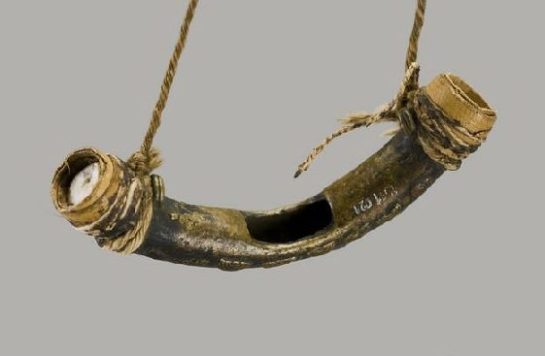
Mirlitons are one of the few types of membranophones (membrane instruments) that are not sounded by striking. The first mirlitons originated in Africa and China. In Africa, the horn-mirliton was fashioned from the horn of a cow with a membrane consisting of eggshells of spiders. It was used to distort voices at tribal gatherings and religious ceremonies, in folk music, and to mask the voice in theatrical productions.

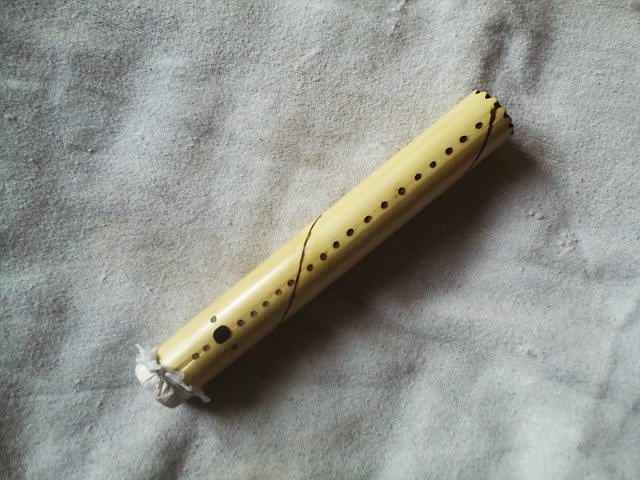
Would you believe that a relative of the kazoo was used in Kunqu Opera, one of the styles that contributed to the development of Beijing Opera? The dizi, also known as di, looks more like a flute than a kazoo, but there is one significant difference: the end of the head joint is open and covered by a thin membrane stripped from the inner layer of a bamboo stalk. This membrane not only provides not only the poignant buzzing that gives this instrument its haunting voice, but also creates natural amplification of the sound.
Bass G key dizi flute musician collective grade for UK player (Model:A006) – YouTube
A similar instrument to the di, called the eunuch or onion flute, gained popularity in Europe during the 17th and 18th centuries. It was also held horizontally against the mouth as opposed to directly at the lips and was said to have a bleating quality. Onion flutes were common throughout France, where the instrument was appreciated for its close resemblance to the sound of the human voice.
These buzzy flutes even managed to find their way into ballet. In The Nutcracker (1892) by Pyotr Ilyich Tchaikovsky, the “Danse de Mirlitons” in the Land of the Sweets is characterized by a flute-based melody and is even sometimes called “Dance of the Reed” or “Pipe Flutes.” There is likely a very tasty reason why this music ended up in the Land of the Sweets. Mirliton du Pont-Audemer is a French pastry that is rolled into a tube, filled with chocolate praline mousse, and dipped in chocolate.
The Nutcracker – Dance of the Mirlitons (Francesca Hayward, The Royal Ballet) – YouTube
It was in America where the kazoo as we know it started making an impact on the history of the world. As many sources tell it, a gentleman in Macon, Georgia by the name of Alabama Vest got the idea for the kazoo. He teamed up with German clock manufacturer, Thaddeus von Glegg, to construct the first instrument. A travelling salesman took a keen interest in this new product, and by 1914, he had partnered with a metal factory owner and began mass production under the name of The Original American Kazoo Company.
Selling kazoos was good business! The amplified sound of the “down south submarine” was easy to hear over a banjo and much cheaper than a horn section. It became a staple of jug bands and could frequently be found at country dances. Children’s clubs and men’s associations found it easy to use and formed bands that performed in parades from DC to Hawaii. The kazoo, or sometimes an even more rudimentary version of it – wax paper and a comb, was also found in the roots of jazz. One such group was The Mound City Blue Blowers, a jazz ensemble from St. Louis, Missouri that performed in the 1920’s using kazoo, banjo, and, in lieu of a drum kit, a suitcase played with foot and whisk brooms.
kazoo man – YouTube
You Can Play Chicago Blues on Kazoo! – YouTube
playing on comb! – YouTube
Comb Blues [Acoustic: Comb & Guitars] – YouTube
In the 1960’s, the kazoo’s singular voice was embraced by the Beatles, Pink Floyd, and The Kinks. These memorable cameos, however, were the beginning of the end of the influence of the kazoo on modern culture. Now relegated to the toy bin, the important historical and cultural significance of this instrument has been all but forgotten.
As an educator, the idea of using the kazoo has intriguing possibilities. It could take away the fear of singing in public, allow easy access to improvisation on an instrument, facilitate the creation of ensembles, and have applications in vocal warm-ups and training — just to name a few. Is there room in the music classroom for kazoos, somewhere in between the Boomwhackers™ and drums? Only time will tell. But hopefully, the importance of this mighty little mirliton in human musical history will not be lost in time.
References
Chisholm, Hugh, ed. (1911). “Eunuch Flute”. Encyclopædia Britannica. 9 (11th ed.). Cambridge University Press. p. 891.
Romanowski, Perry “Kazoo .” How Products Are Made. Retrieved December January 18, 2022 from https://www.encyclopedia.com/manufacturing/news-wires-white-papers-and-books/kazoo
Nichelle Suzanne. (2015, December 17). What The Nutcracker Is A Mirliton, Anyway? Dance Advantage. Retrieved January 18, 2022, from https://www.danceadvantage.net/what-is-a-mirliton/
RaftingCanadian. (2005, January 7). Kazoo. Syncrat. Retrieved January 18, 2022, from http://www.syncrat.com/posts/5037/kazoo

Manager
Before joining West Music as the Manager of Music ConstructED, Kathleen’s career encompassed 15 years of world-class performing as an oboist, six years in music education, including curriculum development and program building, and business leadership. Her favorite part of…
Discover more from Kathleen Facebook
 Twitter
 Pinterest
 LinkedIn
 Email
Email Print
Print