Teachers use music across subjects, like singing math facts. The challenge is to prioritize musical objectives in cross-curricular lessons. Collaborative projects between art and music teachers maintain individual goals while finding common threads, deepening student understanding, and discovering connections between visual art and music.
Teachers use music in all areas of education, from singing math facts to learning the elements of the periodic table. The challenge for music educators when creating cross-curricular lessons is ensuring that the lesson’s intent still focuses on musical objectives. Integrating other subject learning should be secondary – reinforcing or increasing the depth of knowledge and creating connections between the subject areas.
The following projects are a collaboration between visual art and music. Each teacher maintained their goals and objectives while looking for common threads that could be reinforced in each other’s classrooms. The result was a deeper student understanding and a discovery of commonalities between visual art and music.
1. Building School Community
In this project, students learned about the genres of folk music and folk art. The curriculum focus of the art component was to create a piece of folk art modeled on our school mascot – Hornet. The music curricular focus was identifying and labeling folk music and dance components and composing a dance incorporating the Folk Art created by the same students in their art class.
Art Objectives:
Students will learn about Molas and their importance to the Kuna Women of Panama.
Students will each create a 3D Hornet sculpture.
The third-grade community will create a collaborative large-scale Hornets’ Nest Sculpture.
Music Objectives:
Studentswill learn about the genres of Folk Music and Folk Dance.
Students will create a third-grade community folk dance incorporating the sculptures they created in art class.
Student Reception: Students loved creating and incorporating the artwork into their dance. The project’s final step was the third graders performing this dance during a music program, solidifying the goal of creating a community with Art and Music.
2. Dia De Los Muertos
This project focused on the cultural significance and symbols of Día de los Muertos to the Hispanic community. In Visual Art class, the curricular focus is to learn about the symbols’ significance and then use these symbols in an art project. In General Music, the students learned about the role of music in the celebration of Día de los Muertos and then composed a rhythmic piece based on a children’s book about the celebration. We consulted on the vocabulary we would teach and created standard definitions to use in art and music to ensure that we were teaching and reinforcing the same concepts related to Día de los Muertos.
Art Objectives:
Studentswill learn about the history of the Day of the Dead and the significance of the images of the skeleton and marigolds.
Students will explore simplified bone structures to create sugar skulls with glue and chalk pastels.
Music Objectives:
Studentswill learn about the history of the Day of the Dead and the significance music plays in this celebration.
Students will create rhythmic compositions based on the words in Clatter Bash! A Day of the Dead Celebration by Richard Clemson Keep.
Student Reception: We taught this lesson to our fourth-grade classes. Student artwork was hung in the hall, and student compositions were recorded in class and sent home to parents. Keeping standard definitions about Día de los Muertos between our classes provided a common vocabulary as we worked on these projects. Our Hispanic students were proud to provide additional information about their family traditions.
3. Energy Wave
Energy Wave focuses on exploring movement in visual art and music. Students explored how positive and negative space visually affects the look and outcome of art. In music students, students reviewed and expanded their movement vocabulary and explored the results of using positive and negative space in movement. This lesson examined positive and negative space definitions in the visual arts and music. After creating standard definitions, we used examples from each other’s disciplines when explaining positive and negative space in our classrooms.
Art Objectives:
Students will gain deeper knowledge about warm and cool colors and how they help express movement.
Students will explore how positive and negative space affects the look and outcome of their artwork.
Music Objectives:
Students will identify and explore movement vocabulary.
Students will explore how positive and negative space can affect body movement.
Student Reception: Our sixth-grade students had fun exploring positive and negative spaces alone, in pairs, and in small groups. They used their movements as inspirations for their artwork.
4. Musical Quilt
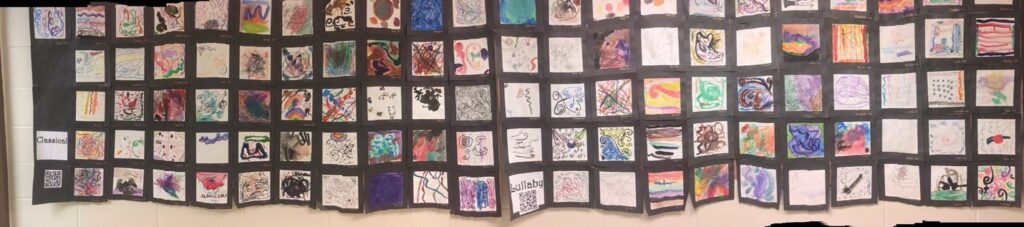
Students were introduced to the idea that music can be used as an inspiration for visual art. In music class, students listened to different musical styles and reacted to the music using several movement styles. After exploring multiple musical examples, four were chosen to have students listen to in art class. Students used their knowledge of color theory and line movement to react to each of the four musical examples.
Art Objectives:
Students will understand different color schemes and how they express/evoke emotion.
Students will be able to identify different line movements and the different feelings they may portray.
Students will gain an understanding of how the use of different materials helps demonstrate different emotions/feelings.
Music Objectives:
Students will explore and identify the elements of movement.
Students will move to contrasting music genres.
Identify movement vocabulary that is used in Visual Arts.
Student Reception: We lined up all the paper quilt squares our second-grade students made in art and created a quilt for each musical style. In the description of this collaborative artwork, we also included a QR code so anyone who looked at the Musical Quilt could listen to the music that inspired the artwork. The students enjoyed looking at each other’s work and seeing the collaborative piece come to life!
5. Keith Haring Sculptures
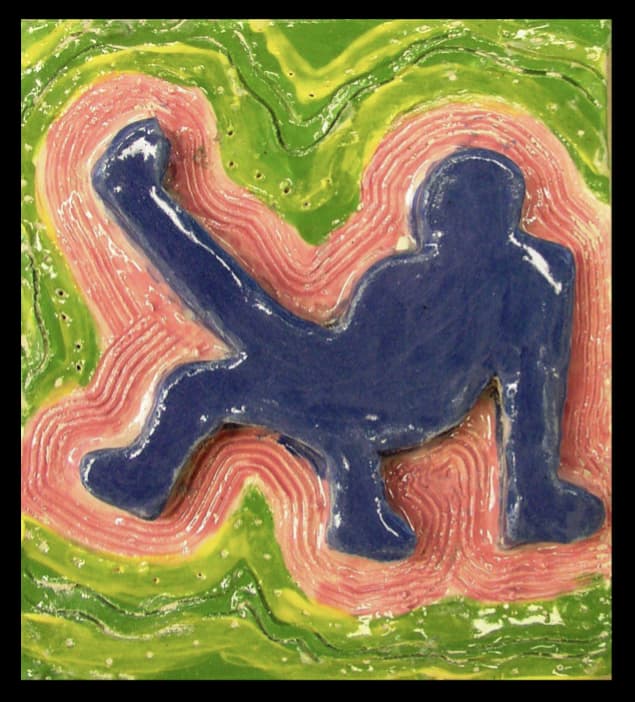
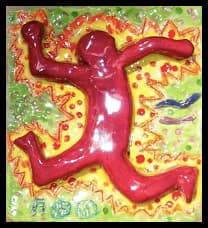
Keith Haring (1958-1990) was an American Pop Artist from New York whose animated imagery is widely recognized. Our students were exposed to several works by Keith Harding and explored movement and sculpture. The students experienced moving individually and in small groups to recreate Keith Haring’s Sculptures in the music room. In art class, they used clay-building techniques to create artwork in the style of Keith Haring.
Art Objectives:
Studentswill gain basic knowledge of Keith Haring and his work.
Students will expand their knowledge of clay hand-building techniques.
Music Objectives:
Students will identify and explore movement vocabulary.
Students will compose a movement tableau based on the Dance Sculptures of Keith Haring.
Fun Fact: Keith Haring was an artist in residence at our school in the 1980s. In 1989, he painted a mural in our library as a gift to the school. The Mural was moved to the Stanly Art Museum during our recent construction along with the concrete wall it was mounted on. How many students can say that they have seen a Keith Haring in person – let alone just down the hall in the library?
Our fifth-grade students love doing this project – It’s a favorite every year!
6. Piet Mondrian
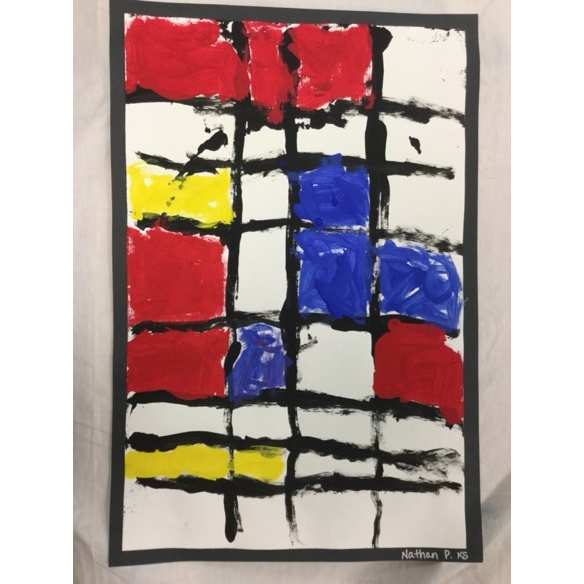
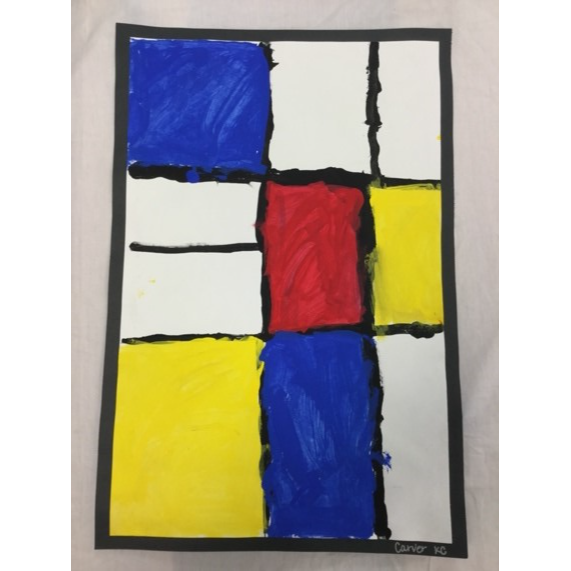
Piet Mondrian (1872-1944) was a Dutch painter and art theoretician considered one of the greatest artists of the 20th century. His iconic works of black lines and primary colors are recognized in his paintings and are the inspiration for tattoos, clothing, and countless other things, including matchbox cars. In this project, kindergarteners begin their study of lines and primary colors in the art room and complete their learning using unpitched percussion instruments to “perform” the artwork of Piet Mondrian.
Art Objectives:
Studentswill gain basic knowledge of Piet Mondrian and his work.
Students will learn the primary colors.
Studentswill identify the difference between horizontal and vertical lines.
Music Objectives:
Students will identify the characteristics of each unpitched percussion family.
Students will compose an unpitched percussion piece based on the works of Piet Mondrian.
Student Reception: To complete the student learning experience, our kindergarteners “played” the artwork they made in the art room. I recorded the compositions and attached the sound files using a QR code to the artwork hanging in the hall. After our music concert, the parents walked the hall to look at their students’ artwork and were able to listen to their compositions, too.
Final Thoughts
A common pitfall music teachers encounter is that we reinforce and teach the secondary subject area to the detriment of our content goals and objectives. Effective cross-curricular teaching occurs when teachers from both disciplines collaborate to write lessons that enhance the learning of both curricular areas. This kind of collaboration leads to multifaceted lessons that reinforce a common theme while allowing each teacher to meet the goals and objectives of their subject areas. An additional benefit is the collegial respect and relationship building when learning from each other about a different subject area.
Kate Hagen currently teaches in the Iowa City Community School District. She has 20 years of experience working with K-6 students in public schools. Kate has a license in Music Therapy from the University of Iowa, and a Masters of Music Education from University of…





 Facebook
 Twitter
 Pinterest
 LinkedIn
 Email
Email Print
Print