SUMMARY
The ways in which we discuss culturalism seems to evolve with each new school year. What are these terms, why are they used, and how can we own and integrate them into our own teaching philosophies?
by Nisha Feik




The ways in which we discuss culturalism seems to evolve with each new school year. What are these terms, why are they used, and how can we own and integrate them into our own teaching philosophies?
by Nisha Feik
What is ‘multicultural’? What is ‘intercultural’? When examining this issue, it becomes apparent that one idea has evolved from the other. One idea describes independent behavior, while the other necessitates interaction and empathy.
There has been a shift in the language used to describe diversity and equity in the past few decades. It’s noticeable that, when discussing culture, some people are now using the word “intercultural” rather than “multicultural.” Others continue to use both terms. This slight change of emphasis communicates a desire for our communities to empathize and interact with each other, where in the past different ethnic groups would be encouraged to learn to merely tolerate and live alongside each other.
Where ‘multicultural’ relates to varied cultural groups existing independently of one another, ‘intercultural’ refers to something occurring between different cultures. The former is passive, involving these groups existing in their own separate ways. The latter is active and describes interaction between culturally diverse people. A desire to shift from a multicultural society, where culturally diverse people exist side by side, to an intercultural society, where these people interact, share, and learn from each other, is becoming increasingly apparent.
It’s noticeable that a desire for change doesn’t mean that the change has occurred. Habits are entrenched, and people take time to learn and implement new concepts and behaviors. In other words, our society has moved from an initial focus on tolerance and multiculturalism to a desire for empathy and intercultural understanding, but we are still finding out how to bridge the gap between awareness of other cultures and interacting with them. Sharing experiences like singing, dancing and storytelling are great ways to do this. It’s important to participate in these experiences rather than merely observing as an audience member to understand cultures more fully.
When it comes to performing arts programs, schools will usually include other cultures in the program through booking guest artists once or twice per year. This is a wonderful way to provide an authentic context for students to understand music, dance and drama from other countries. However, units of work need to be developed that allow students to experience and learn from cultural diversity in more detail. From developing empathy to communicating across cultures, there are a lot of skills to be included.
As examples, here are three different lesson plans from African cultures:

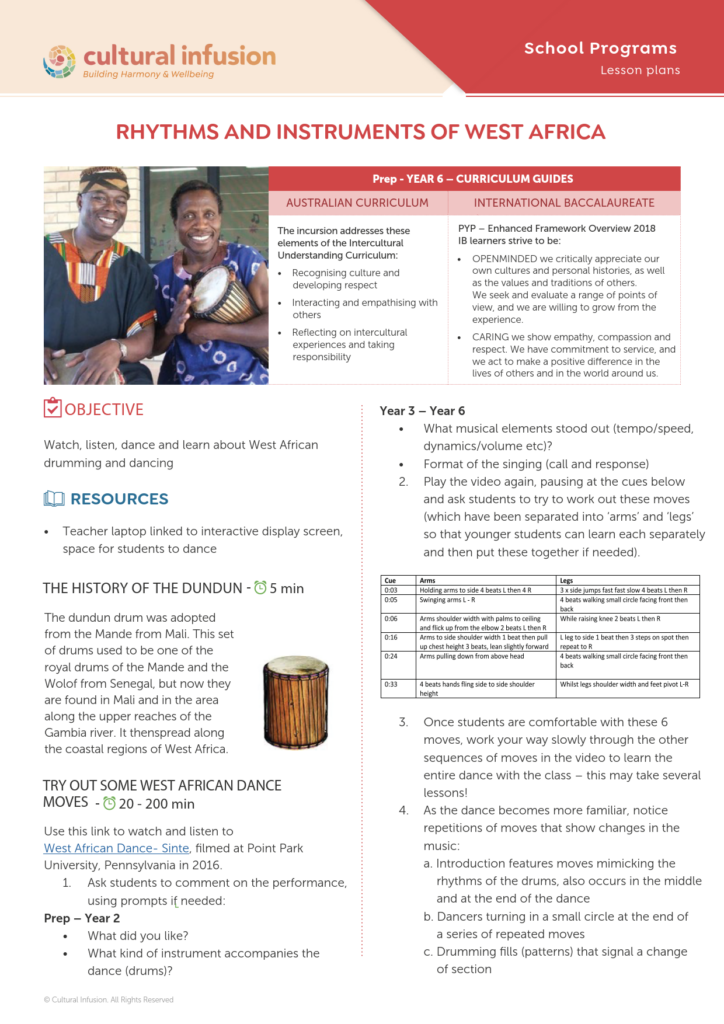
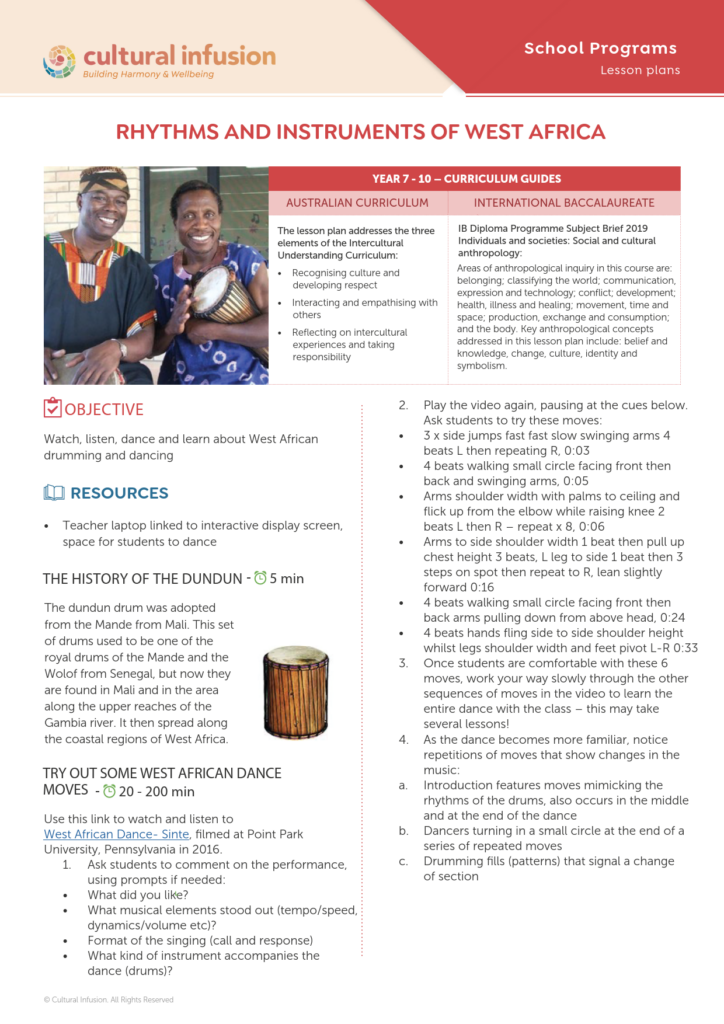
In addition to organizing classes with culturally diverse performers, performing arts teachers can include their school communities when planning curriculum. This needs to be done with sensitivity on a family-by-family basis, rather than expecting every student to contribute about their background. Some students will want to share songs, instruments, stories, dances or traditions, others may feel that this is a private and personal matter.
Placing instrument origins in context can be another great way to get students thinking about culture. For example, glockenspiels, meaning ‘bell play,’ originate in Germany, and djembes come from Mali and have multiple origin stories. In one version, a woman was sitting and pounding grain in a big wooden bowl and pounded a hole in the bottom of it. Her husband came along and fixed it with some goat skin was carrying. They turned it upside down and it became the first djembe drum! Both of these instruments are commonly used in primary school music classrooms, and these are easy additions to a lesson plan for any teacher.
Taking a blended learning approach can expand the horizons of music classes from the practical to a broader exploration of instruments, form and geography using the program Sound Infusion https://soundinfusion.com.au/. After using and finding out about the origins of classroom instruments such as glockenspiel and djembe, students can explore about instruments from more than 100 countries and find out about where they are from, what they sound and look like, and drag samples around in a studio to make their own music. Working alongside classmates, they can discover new instruments and sounds as well as sharing those encountered from their own cultures. A bonus of this program is that it also includes 10 lesson plans for each year level of school.
Musicians have shared music from different cultures throughout time – they are in a way the ambassadors of interculturalism! Performing arts teachers can monitor their programs to ensure that they are including songs from around the world and provide some context when teaching them through either connecting directly with people from that culture in the community or via an incursion, or indirectly through sourcing videos online.
Aspiring to be an intercultural community rather than separately noticing the cultures around us is a wonderful aim. To achieve this, we need to be brave enough to sometimes reach outside our comfort zone to provide the best learning experiences for our students.
Elias, A., Mansouri, F. & Sweid, R. Public Attitudes Towards Multiculturalism and Interculturalism in Australia. Int. Migration & Integration 22, 1063–1084 (2021). https://doi.org/10.1007/s12134-020-00784-z
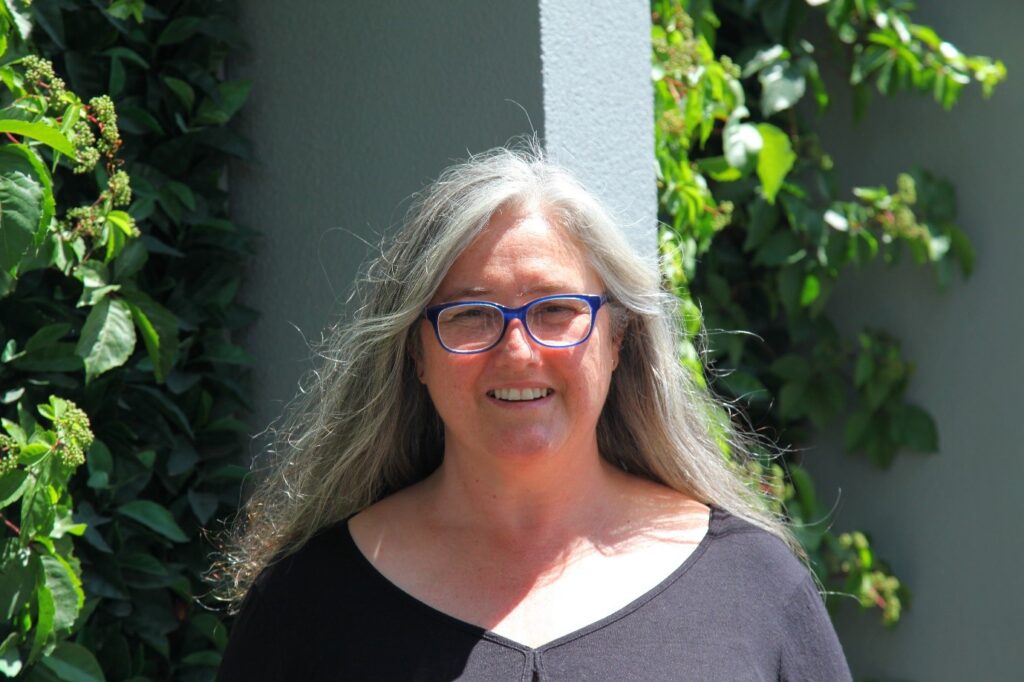
Contributor
Nisha Feik is an Australian educator of more than 3 decades who currently works at Melbourne company Cultural Infusion helping to develop intercultural resources for teachers and provide training sessions for them. She has been supporting others to include…
Discover more from Nisha Facebook
 Twitter
 Pinterest
 LinkedIn
 Email
Email Print
Print