Discover how a kind older woman who has a love for baking and giving away her delicious pies has her plans upended by a mischievous but lovable pup named Henry. The learner will:
Identify cued words in a story
Create four-beat rhythmic patterns
Explore and play student-generated rhythmic patterns, using unpitched percussion or body percussion
As story of Henry the Hungry Hound is read, students interact with the book by exploring the use of their voice as sound effects for the “crash” and “boom” sections.
After reading the book, discuss students’ comprehension of the story.
Ask them to identify the types of pies that the old woman made in her kitchen. (Answers may include: cherry, apple, blueberry, lemon, lime, etc.)
Explain to students how some of the pie crumbs have stained Henry’s paws and he has tracked them throughout the house.
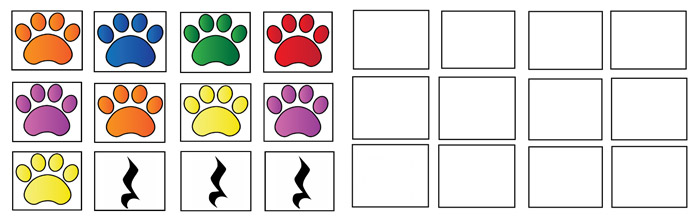
Show visuals of “paw prints.” Ask the student to name the different colors they see on the paw print and think of a pie that matches that color.
For instance, a yellow paw print might represent a lemon pie; a red paw print might represent a cherry pie, etc.
Assess understanding of one- and two- syllable words by naming the pies while clapping or tapping. (Example: cher-ry, cher-ry, or peach, peach)
Students look at the paw print template and identifies the quarter rests. Then, they creates a silent action to represent the rests.
Teacher guides students in choosing body percussion actions for each pie name students have selected. (Example: Lemon=patting, Cherry=snapping)
Give each student or group two paw print templates and a four beat grid template.
Allow students to arrange the cards (paws and rests) on their four beat rhythm templates. (If this work is being done in the classroom, and there was sufficient time, the teacher could allow students to help by cutting out their own paw prints and rests.)
Have students practice speaking their rhythmic patterns, and then add body percussion.
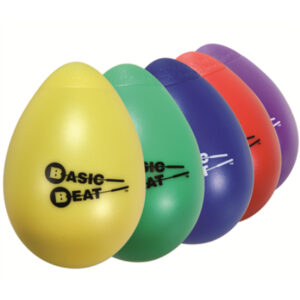
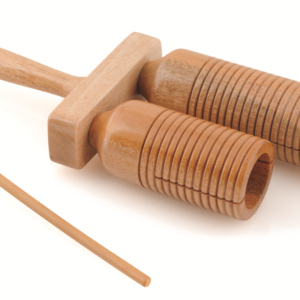
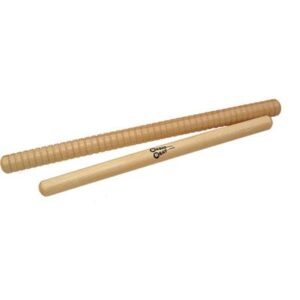
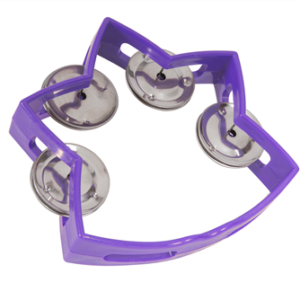
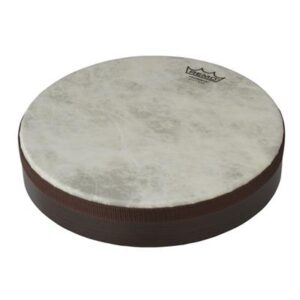
If unpitched percussion (UPP) instruments are available, students transfer their body percussion patterns (clap, pat-ting, clap, clap) to unpitched percussion, playing every syllable.
Teach the poem, “Eating Pie” below. Add changes in vocal inflection (such as high, middle, low) for each line of the poem.
Eating Pie Eating Pies is such a treat. They taste so good, they taste so sweet! It’s my favorite kind of food. I’d eat them all, if I could!
Encourage each student or group to perform one or two lines of their created body percussion or unpitched percussion after the poem. Teacher could lead in with, “What kind of pies did Henry eat?”
All groups perform their creations as a rondo, alternating the poem and each “pie” pattern, one at a time.
Remind students to remember their “concert” listening skills as each group performs.
Once each person or group has performed, ask students to provide positive feedback about the other groups.
Print two copies of the paw and quarter rests template below. Print one copy of the four-beat template below. Cut out each paw print and rests below and create your own four- beat sequence. Then place on the four-beat grid.
Hi, my name is Theresa Cocci and I currently teach Early Childhood Music in Reading, PA. I have over thirty years teaching experience in the classroom and instruct private piano. Recently, I have authored a children’s picture book, entitled,…






 Facebook
 Twitter
 Pinterest
 LinkedIn
 Email
Email Print
Print