SUMMARY
Teaching Social Justice is essential now more than ever. By teaching music with a conceptual lens, students can better understand Justice through the study of music.
by Karla McClain




SUMMARY
Teaching Social Justice is essential now more than ever. By teaching music with a conceptual lens, students can better understand Justice through the study of music.
by Karla McClain
Teaching Social Justice is essential now more than ever before. Recent events of 2020 and the beginning of 2021 have made it crystal clear that our BBIA students need to be seen and heard in our classrooms. Teaching diverse music is a start, but it is not enough. As educators, we need to let ALL students know that we are anti-racist!
My personal journey in thinking about anti-racist music education came when I read “You Might Be Left with Silence When You’re Done” The White Fear of Taking Racist Songs Out of Music Education by Martin Urbach in 2019. My first steps included finding and removing songs with racist backgrounds from my library and curriculum. I also shared it with other music teachers in our district, and we started digging deeper into our PreK-12 curriculum.
Learning more about the history of racist music and education in our country inspired me to act. I decided to start fresh and re-think my entire approach to teaching music. I took a course with Nyssa Brown and Karen Howard called “Empowering White Teachers to Decenter Whiteness” through Music Education Forward.
This class made me re-evaluate my thinking about the curriculum. I started asking myself why and how I teach what I teach? Re-framing my thinking is helping me find ways to reach ALL of my students. My goal is that every student feels seen in the music that I select to teach.
The section of the course that resonated with me is the idea of thinking about music education through an anti-bias lens. I want to develop a plan for music this school year that is culturally relevant to my students, diversify my students’ repertoire, and teach through a conceptual lens. Brown and Howard noted that when students see the patterns and connections in music through the conceptual lens, they transfer their knowledge, making learning matter more.
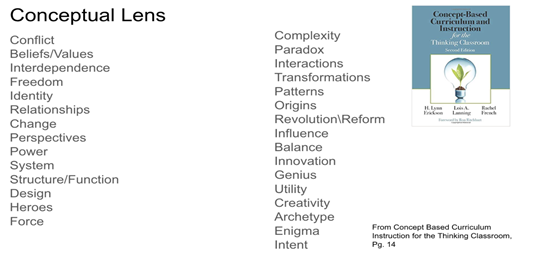
I started teaching this year using the conceptual lens of Justice. Teaching through a conceptual lens involves choosing curricular materials that focus on Justice FIRST, and the secondary focus on how the material introduces students to a specific concept.
My first step was to think about how my classroom materials related to Justice. Then, I evaluated an activity or piece of music through a skill-based lens. Altering my perception has completely changed my teaching for the better.
The first unit I introduced my students to with my new perception was music from the Civil Rights Movement. My 8th-grade students study the Civil Rights Movement in Social Studies, so I decided this would be the perfect place to introduce some interdisciplinary crossover.
I asked my students two questions: “What is social justice?” and “Why do you think we might be talking about it in music class?”
Students immediately started discussing historical and current events. Students mentioned the Civil Rights Movement and Martin Luther King, Jr, the #metoo movement, George Floyd’s death, and Black Lives Matter protests.
These discussions lead us to learn about Freedom Songs and their function. We focused on understanding the songs “Ain’t Gonna Let Nobody Turn Me Around” (available in the Justice Choir Songbook; there is also a great SSA arrangement by Rollo Dilworth that includes text by Langston Hughes) and “This Little Light of Mine.”
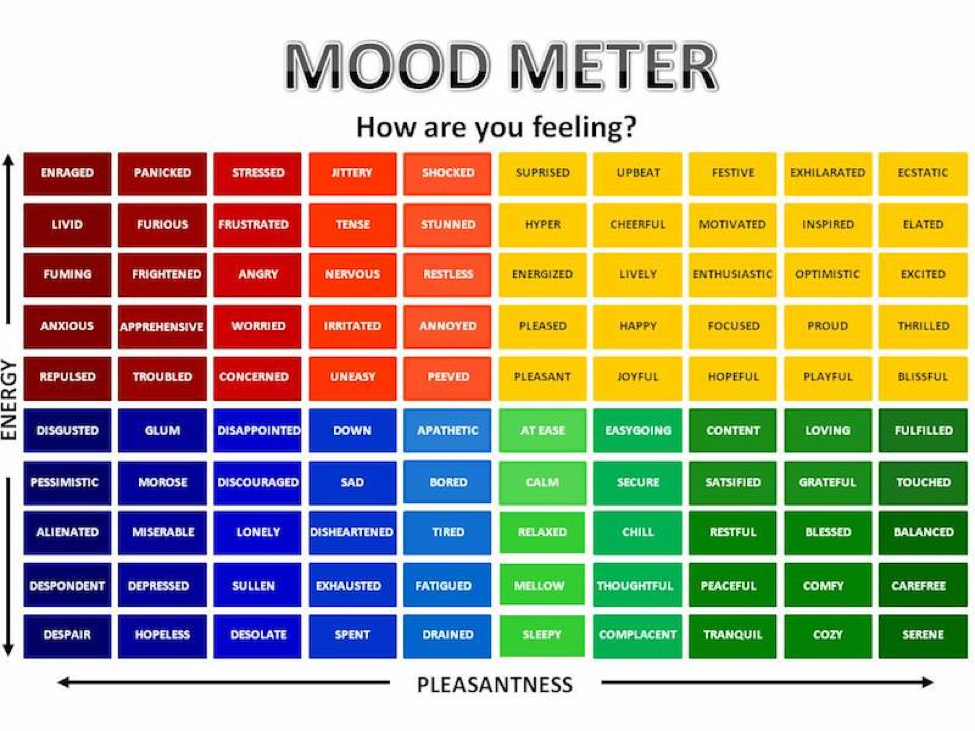
As a class, we discussed the meaning of the lyrics and the message these words promoted. We sang the songs and used a mood meter to plot the emotions of the song. Next, we watched Bernice Johnson Reagon’s video discussing the critical difference between the words “I” and “We” in Social Justice Songs. My students were surprised and interested to hear how powerful the simple melody of “This Little Light of Mine” was to the Civil Rights Movement.
We also learned the song “We Shall Overcome,” discussing the many activists who sang these songs, including Joan Baez and Pete Seeger. After learning the three pieces, I wanted students to reflect and demonstrate their understanding of the concepts. I used a Padlet to ask students four questions.
After students wrote their reflections, they used Flipgrid to record themselves singing one of the songs we learned as a class. I used the recording to assess vocal technique. Flipgrid enables students to record at home so that in-person students can sing unmasked at home. It also helps me hear my remote students since about 30% of our students are fully remote.

The second group of questions I posed to students in our Social Justice Unit were:
Students immediately mentioned the #metoo movement, Black Lives Matter, and protests for climate change. Next, we learned and listened to two contemporary songs from the Justice Choir Songbook, One Foot/Lead with Love, and We are Rising Up Today.
Students also identified social justice themes in the lyrics of popular music. The first song we listened to was ‘Where is the Love” by Black Eyed Peas. I used Mentimeter, an interactive presentation software, to ask students to describe the song in three words.
Mentimeter then creates a word cloud using students’ words. If multiple students use the same word, it will appear larger. In our discussion, I asked the students why they choose their words. The second song we listened to was released in the aftermath of 9/11. During our conversation, the students decided the message in the music is still relevant today.
In the third section of our Social Justice unit, we studied protest songs from around the world. We focused on the music of Apartheid, explicitly focusing on Vula Botha from Freedom is Coming and Bella Ciao from Italy (used during WWII).
Next, we started listening to different music from other cultures each day. I created a YouTube playlist for this part of the unit since many of the songs were not in English. I was able to turn on the closed captioning translations while students listened to and read the text of the songs. As a bonus, I had a student suggest a piece from her cultural background she recommended we add to our listening list.
To facilitate discussion about these songs, I incorporated several online and in-person tools. We had discussions about the mood, lyrics, instruments, etc., of the songs. Sometimes I would post a question in Google Meets and use the polling feature. We also used Google Jamboard so that all students could offer their input and opinion on what we were discussing- a fantastic tool in remote or hybrid teaching situations.
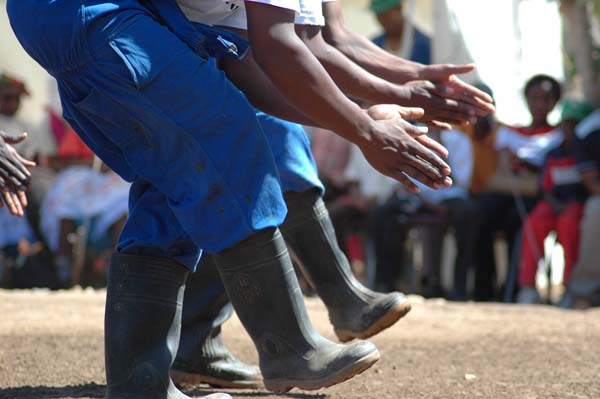
We ended our Social Justice unit by learning a dance! Many years ago, I was fortunate enough to take a course with Mary Goetze and Muziwandile Hadebe at Central Connecticut State University about Gumboot. Muziwandile was a history student from South Africa studying at the University of Indiana. He taught us the history of Apartheid in conjunction with several easy dances.
As part of the course, we made videos of our culture bearer, Muziwandile, teaching us the dances step by step. These recordings give my students the experience of learning from a culture bearer when we can’t have guests in our classroom. I was amazed at how much middle school students enjoyed learning these dances and the cultural and historical context.
Throughout the entire Social Justice Units, students learned and used traditional music skills, including; solfege literacy, rhythm reading, and vocal technique. The foundation of my work every day. However, exploring music through a conceptual lens gave us time to dig deep into a meaningful and relevant issue without sacrificing curricular goals. Instead, it improved my teaching, ensuring that the BBIA students in my class know that they are heard, valued, and represented in my classroom. Finally, making this change allowed me to take an anti-racist stance to help my students become better people.
Bernice Johnson Reagon on “This Little Light of Mine [Video]. (2013, May 13). Moyers on Democracy. https://billmoyers.com/2013/05/03/moyers-moment-1991-bernice-johnson-reagon-on-this-little-light-of-mine/
DeMore, M. (2016). One Foot Lead with Love [Score]. Justicechoir.org.
Dilworth, R. (2013). Ain’t Gonna Let Nobody Turn Me Around (L. Hughes, Librettist) [Score]. Hal Leonard.
Erickson, H. L., Lanning, L. A., & French, R. (2017). Concept-based curriculum and instruction for the thinking classroom (2nd ed.). Corwin.
Hadebe, M., & Goetze, M. (2006, July). Gumboot Dances.
https://musicedforward.com/online-academy. (n.d.). Music Education Forward. Retrieved January 9, 2021, from https://musicedforward.com/
Kabanashvili, B. (2009, November 12). Black Eyed Peas Where is the Love [Video]. youtube.com. https://www.youtube.com/watch?v=EICNm-Ow0ms
Moore, J. D. (2017). Ain’t Gonna Let Nobody Turn Me Around [Score]. Justicechoir.org.
Morris, C. (2016). Bella Ciao [Score]. 8notes.com.
Nyberg, A. (2002). Freedom is Coming-Songs of Protest and Praise from South Africa [Score]. Walton Music.
Unterseher, R. (2017). We Are Rising Up [Score]. Justicechoir.org.
Urbach, M. (2019, August 14). You Might Be Left With Silence When You are Done. The Medium. https://medium.com/@martinurbach/you-might-be-left-with-silence-when-youre-done-the-white-fear-of-taking-racist-songs-out-of-89ecdc300ee5
Wondemagegnehu, T. Y. (2017). We Shall Overcome [Score]. Justicechoir.org.
Contributor
Karla McClain is a National Board-Certified Teacher in Early Adolescent/Young Adulthood Music and teaches at Illing Middle School in Manchester, CT. Before teaching in Manchester, Karla taught in Farmington, West Hartford, CT, and Hilliard, OH. This is her 26th year of teaching choral and…
Discover more from KarlaHello (not ? Log out)
 Facebook
 Twitter
 Pinterest
 LinkedIn
 Email
Email Print
Print
Kathleen Staten
February 3, 2022
Love that mood meter chart!