Summary
Connecting music with other subjects is as old as time! Enhance your students’ educational experience while creating inclusive environments by adding STEAM to your lesson planning.
by Kathleen Staten





Connecting music with other subjects is as old as time! Enhance your students’ educational experience while creating inclusive environments by adding STEAM to your lesson planning.
by Kathleen Staten
Did you know that for centuries, music was a fundamental component of education? It was woven into the fabric of learning alongside math, literature, and the sciences. From ancient Greece to the Renaissance, music was not just an art form; it was a critical tool for developing the minds and character of students. Educational practices, like many aspects of our culture, began to shift in the 19th and 20th centuries. We have seen how music is sidelined in favor of more standardized curricula focused on core academic subjects. Today, as we embrace the STEAM (Science, Technology, Engineering, Arts, and Mathematics) movement, we recognize the vital role that music and the arts play in holistic education, particularly for neurodiverse learners.
In ancient civilizations, the Greeks believed that music education cultivated virtue and harmony within the individual, while medieval scholars incorporated music as part of mathematics and astronomy.
During the Renaissance, music flourished as a key component of a well-rounded education that emphasized technical skills, critical thinking, and creativity. The teachings of influential educators during this period laid the groundwork for a comprehensive educational approach that valued the arts alongside the sciences.

Who needs music when you have machines and technology? The 19th century marked a turning point in education, particularly in the United States. Influenced by the Industrial Revolution and the need for a more practical workforce, educational reformers prioritized standardized curricula and rote memorization over creative expression. Music and the arts were often viewed as non-essential, leading to a significant decline in their presence in schools.
The early 20th century brought the progressive education movement, emphasizing experiential learning and the individual needs of students. While this approach has its merits, it has further isolated music and diminished its importance as a core subject.
In recent years, the STEAM movement has highlighted the importance of the arts in STEM subjects. By creating cross-curricular lessons, STEAM cultivates a more holistic approach to learning that recognizes the interconnectedness of different disciplines. The name is new, but the concept of focusing on students’ intellectual and personal development through a comprehensive approach is not!
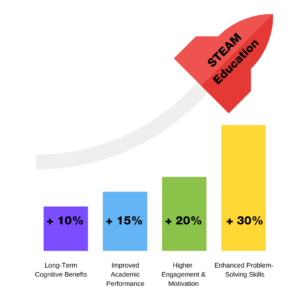
As we look toward the future of education, we need to keep messaging that music has lifelong effects on students’ development and learning. By considering how music can connect with other subjects, we not only enhance the educational experience for all students but also create a more inclusive environment that nurtures the unique talents and abilities of every learner.

Manager
Before joining West Music as the Manager of Music ConstructED, Kathleen’s career encompassed 15 years of world-class performing as an oboist, six years in music education, including curriculum development and program building, and business leadership. Her favorite part of…
Discover more from Kathleen Facebook
 Twitter
 Pinterest
 LinkedIn
 Email
Email Print
Print