SUMMARY
Puppets provide whimsy and joy to connect your students to music concepts and activities! The possibilities are limitless!
by Kelly A. Poquette





Puppets provide whimsy and joy to connect your students to music concepts and activities! The possibilities are limitless!
by Kelly A. Poquette
I have found that including puppets in my music lessons can be transformative for my students, especially those who hesitate to join in new activities. Using puppets benefits students by encouraging them to use their imagination, connecting prior knowledge, and bringing a sprinkle of whimsey to their learning. Here are some examples of how I successfully incorporate puppets with grades K-5, but the age range is limitless!
Here are some possibilities for incorporating puppets:
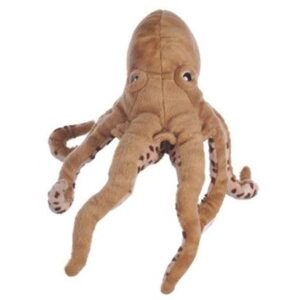
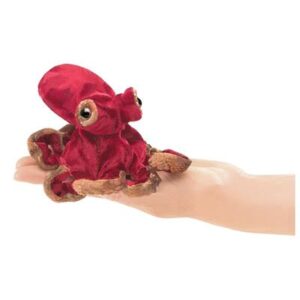
Movement is a component of my classes, and puppets provide concrete examples to support students uncomfortable with new activities, solo singing, or movement. The shared understanding of how animals move helps create a vocabulary from which we can scaffold our musical understanding. One example is when my classes engage with Camille Saint-Saën’s “Aquarium” from “Carnival of the Animals”; I use ocean creatures to give direction regarding ways to move to the music. The octopus and shark move differently and help students explore the melodic direction, rhythm, and tempo. We discuss how the students interpret the animal movement uniquely while being grounded with visual examples which provide reference and structure.
Puppets provide students and teachers the helpmeet to engage in activities that may seem intimidating. For example, a puppet can act as a conduit when engaging in solo singing. Whether with my younger students in Arioso Land, as part of the First Steps in Music Curriculum (J. Feierabend, 2021), or with older students engaging in call and response or improvisation, a puppet is a partner who makes singing with classmates more natural. I have a couple of puppets present for almost every Arioso Land, and students ask where they are if I don’t use them.
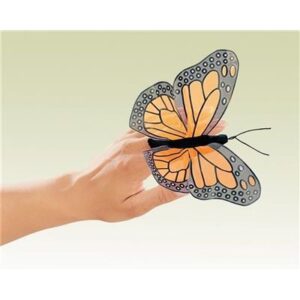
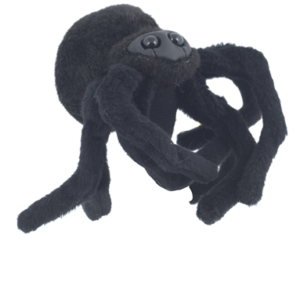
Likewise, students can focus on moving a puppet and center less on the reservations they feel about movement activities. I use the Laban efforts in my classes and pair puppets with each of the eight Laban efforts. Here are some examples:
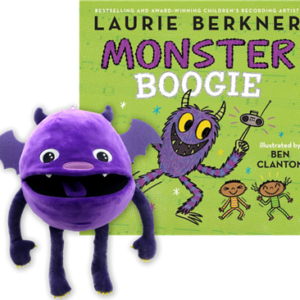
Puppets can be teaching assistants and bring some color commentary to your class. To aid in classroom management, engage a puppet, like one of the monster puppets from The Puppet Company, to question the teacher while not being disrespectful. I have some puppets with specific purposes used at set times in the lesson and others who appear more as special guests. Some examples include having a special guest who introduces and leads activities that can make rhythmic reading or movement activities more engaging. They bring joy to lessons, help add variety to transitions, and can balance more intense activities.
When it comes to which puppets to add to your collection, I am an avid fan of Folkmanis puppets (Folkmanis Puppets, 2022). The quality and attention to detail are fabulous, and the price point is reasonable. West Music carries a variety of puppets from Folkmanis and the Puppet Company. The Puppet Company carries dinosaur finger puppets and knitted sleeve puppets which I also utilize. In addition, I encourage using moveable mouth puppets so they can sing and communicate realistically. West Music has a puppet for every occasion!
Feierabend, J. (2021). First steps in music for preschool and beyond. GIA Publications. https://www.feierabendmusic.org/first-steps-in-music-for-preschool-and-beyond/
Feierabend, J. M., & Love Miller, J. (2014). The Other Day I Met A Bear. GIA Publications, Inc.
Feierabend, J. M., & Maurer, A. (2015). Jennie Jenkins. GIA Publications, Inc.
Folkmanis Puppets. (2022, May 17). https://www.folkmanis.com/146/home.htm

Noteworthy Contributor
Kelly A. Poquette, Ph.D, is an Assistant Professor of Music Education and the Coordinator of Music Education at Greensboro College. She is a sought-after clinician and presenter with certifications from the American Orff-Schulwerk Association and the Feierabend Association for…
Discover more from Kelly



 Facebook
 Twitter
 Pinterest
 LinkedIn
 Email
Email Print
Print