Summary
This student-led Indigenous American research project will teach the instrument families while learning about traditional Indigenous American Instruments.
by Elisabeth Ross




This student-led Indigenous American research project will teach the instrument families while learning about traditional Indigenous American Instruments.
by Elisabeth Ross
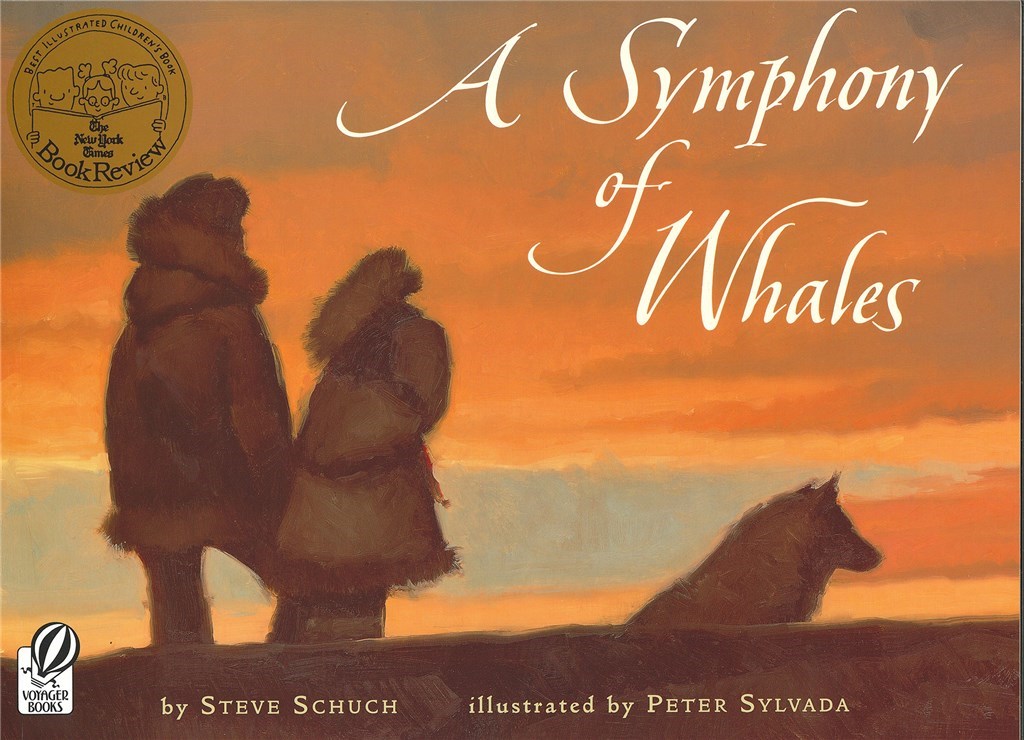
A beautiful children’s book that tells the story of real events from the Chukchi Peninusla. Can you hear whales sing?
by Jessica Palmer
Exposing our students to different communities and cultures can be overwhelming when we are not members of these groups. However, as music educators, we are expected to increase awareness of these different musical styles and genres with authenticity and respect.
This unit was initially created as a way to connect to our 5th grade Social Studies curriculum. In the unit, students are learning about the history of Indigenous people in North America, artifacts, and what they are. This lesson also seemed like a great tie-in to discussions about instrument families.
When discussing instrument families in elementary music classes, we typically focus on band and orchestra instruments. While this is meaningful because many of our students will have experiences in band and orchestra as part of school programming, it is also problematic because it is a Euro-centric approach.
This activity can supplement a discussion on instrument families and involves critical thinking because students have to use what they know about instrument families to decide which family they believe a particular instrument belongs to. I thought this was an excellent opportunity to study the instruments traditionally used by Indigenous Americans. As I started researching, I found the Smithsonian Music Website invaluable for this project.
According to their website, the Smithsonian’s combined musical resources constitute the world’s largest music museum. They have an extensive listening library of music worldwide, lesson plans, live performance recordings by culture bearers, and access to images of items found in the National Museums.
For this project, I accessed the National Museum of the American Indian, specifically using images in the American Indian Music section. In addition to various instrument images, you can access live musical performance recordings on this site. Additional images came from the Smithsonian Music website. See Copyright Information Below.
For this series of lesson plans, I created a Google slide deck. On each slide, I uploaded an image of a Native American Instrument from the Smithsonian. I hyperlinked the image to the webpage so students could uncover the items I wanted them to identify for each instrument. Here is a list of information I had my students find. These items may not be available for all instruments, so adjust your slides as needed.
In our district, our students have 1:1 access to devices. If your students do not have 1:1 access, you will need to utilize your school’s computer lab.
This project can be extended by showing video examples of people playing the instrument or listening to music that incorporates instruments similar to the ones students researched. Asking students to classify unfamiliar instruments provides an excellent opportunity to assess their knowledge about the characteristics of each instrument family. Additionally, it broadens their awareness of the music by Indigenous Americans.
The Smithsonian allows you to use their images for educational purposes. However, you cannot sell a slideshow on teacher sites without paying the appropriate copyright fees for the images
Smithsonian. (n.d.). American Indian music. Smithsonian Music. https://music.si.edu/spotlight/native-american-music
Smithsonian. (n.d.). National Museum of the American Indian. https://americanindian.si.edu/explore/exhibitions/online
Smithsonian. (n.d.). Smithsonian Music. https://music.si.edu/
Wikimedia Foundation. (2022, October 23). Big drum. Wikipedia. https://en.wikipedia.org/wiki/Big_Drum

Contributor
Elisabeth Ross has been teaching general music in Iowa City for 15 years. She has a BM in Vocal Performance, a BA in Elementary Education, and an MA in Educational Psychology, all from the University of Iowa. She’s had…
Discover more from ElisabethHello (not ? Log out)
 Facebook
 Twitter
 Pinterest
 LinkedIn
 Email
Email Print
Print
Sheila Fleming
November 14, 2025
Are you willing to share your Google Slide Deck for this project?