




September is National Literacy Month. It’s also Classical Music Month (among many other equally worthy celebrations.) I thought I’d cover two celebrations in one and share one of my FAVORITE lessons, incorporating one of my FAVORITE authors.
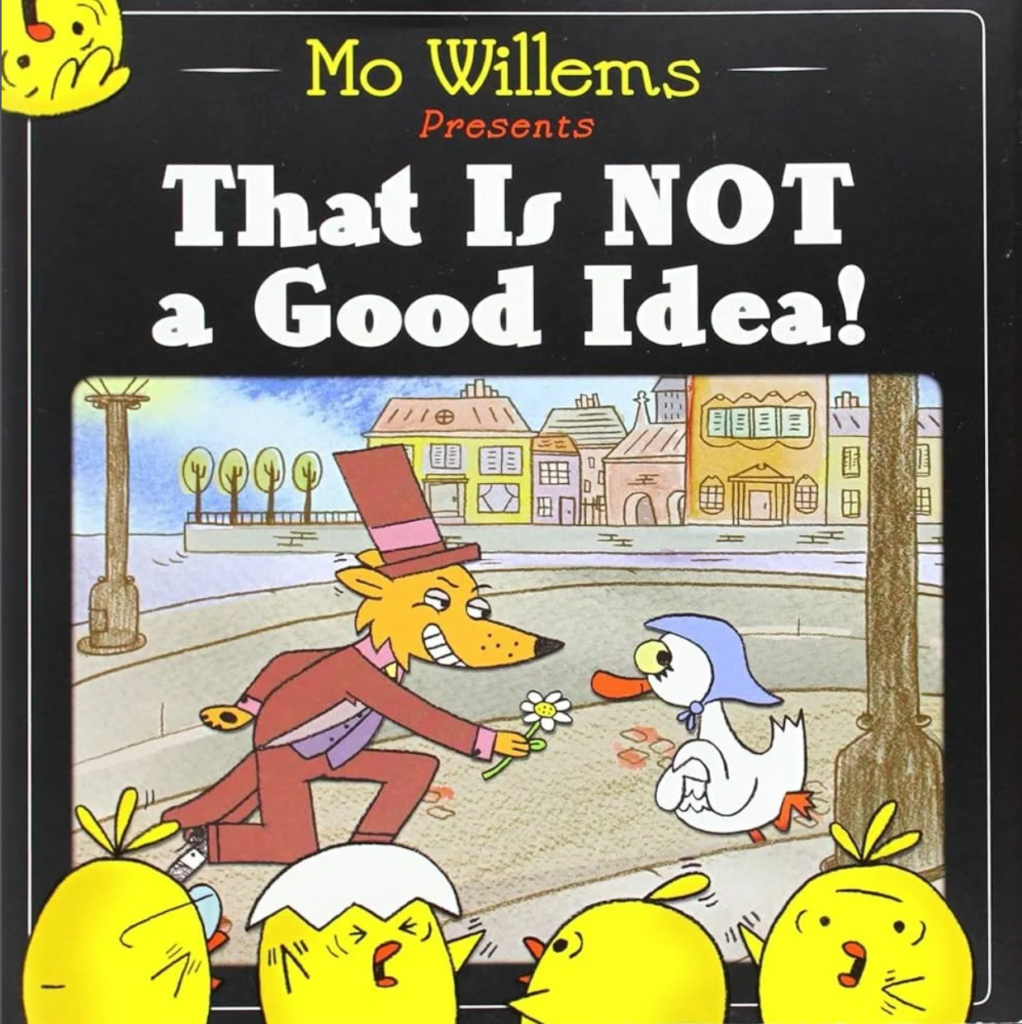
(Get your copy here or at your favorite local bookstore or library.)
I love this book so much I can think of 473 ways to incorporate it into a music lesson (and if you haven’t read it yet–just wait–you will too!) My kids from age 1 to 92 also adore this book. The first time they hear it their reactions are priceless (especially those sometimes-hard-to-engage 5th graders) but even once they know what’s coming they want to hear this story over and over again. Have no fear–if you want to make 473 lessons out of it this year, your loyal subjects will cheer!
Idea #1 on my list of 473: opera.
Specifically: vocal categories and recitative.
We create our own opera, and students improvise recitatives in front of the class—voluntary, in their head voices—and it’s amazing.

Right now you might be thinking “That is NOT a good idea!” I totally understand.
Improvising? Scary.
Opera? Scary.
Recitative? Scary (to teach, understand and to spell.)
You might need a little context and some help from my favorite midwest traveling assembly.
Opera for the Young brings professional, kid-friendly performances of famous operas into schools to ignite excitement for the genre. Partially funded by donors and grants, our school PTA has been willing to fund yearly performances from the organization in our schools for years. The response has been overwhelmingly positive–from kids AND adults. I remember after our first performance, one of my classroom teacher colleagues came up to me and said “When I first heard about this assembly, I was totally dreading it. I was certain the kids would hate it. I was wrong! That was AMAZING! I hope they come back every year!”
Prior to their visit each year I do a week or two of prep lessons with my students. We dig into the musical elements of opera, including the form, as well as its history and function in society. We examine the vocal categories (SATB) and discuss how composers use them to help the audience connect to characters. We also distinguish between arias (beautiful songs filled with emotion) and recitatives (conversations between characters.)
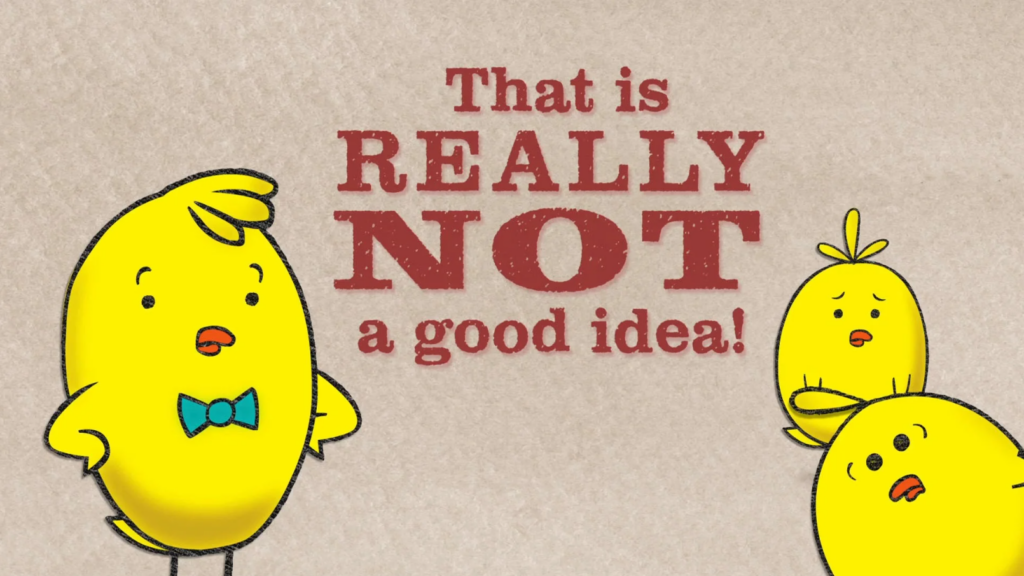
Here’s where the book comes in…
After we’ve had our opera pre-lessons, and after we’ve read this story:
“Pretend we’re making this book into an opera. Would the fox be a soprano, alto, tenor or bass? WHY?” Sometimes we hypothesize whole class–sometimes we use this to assess our responding standards. Connecting the WHY back to the intent and using our knowledge of opera and vocal categories to explain our choices are key here.
Next, we make an opera.
Objective:
Students will improvise and perform an original scene in a class opera, using their singing voices.
Materials needed:
Process:
Present your students with a theme. You can use the theme from the book above OR create one yourself OR have the class help think of a theme.
Examples:
Things that aren’t good ideas (stealing, lying, cheating, etc.)
Shoes (maybe OFtY is going to perform Cinderella at your school?)
Hair (could it be the year of Barber of Seville for OFtY?)
Break the students up into small groups (3-4 students each work best–but it’s ok to be flexible.)
Each group should create a small scene revolving around the theme. Let the students know they will be performing in front of the class. Also let them know it’s ok to be as involved – or not involved – as they feel comfortable.
*Here’s where you class climate and culture will come into play. I know we all try our hardest to make all students feel comfortable performing in our spaces–however, there are some circumstances beyond our control that will affect students’ comfort and feeling of safety on the stage. That’s ok. I’ve had students participate in the scene as silent actors. Students have played inanimate objects–like a tree or a chair! 99% of the time, kids I would never expect to perform end up stealing the show! When we can present opportunities to perform in a way that’s silly and feels like play, and also leave participation in the students’ control, they will always surprise us.
Allow them 5 minutes or so to organize their scene. Too much time and their scenes run too long! We also want to wrap this activity up in one class period. If we give them time outside of class to plan and prepare their perfectionist tendencies will activate their performing nerves. (They will have a BLAST with this lesson–so try doing it again another day! Those students who didn’t feel comfortable vocally participating the first time might be more brave the second time around!)
After their 5 minutes of prep work is up, it’s performance time!
Arrange the groups in a particular order. Post it on the board so they know when it’s their turn to come to the front of the room. (Also, this is probably a good time to review your audience behavior rules.)
Your playlist of thematic songs becomes the “arias” in the opera–but also serves as the students’ cues to come perform or to sit back down. You don’t have to listen to the entire song–fade it out after 30/45 seconds–that’s usually enough time for the groups to switch.
Here’s a shoe-themed example:
“Blue Suede Shoes” by Elvis Presley
Sarah’s group
“Diamonds on the Soles of her Shoes” by Paul Simon
Patrick’s group
“These Boots are Made for Walking” by Nancy Sinatra
Evelyn’s group
“Dancing Shoes” by Artic Monkeys
Jamal’s group
“New Shoes” by Paolo Nutini
Mya’s group
(You get the idea.)
We have silent transitions (no talking during the arias) and hold all applause until the end.
This All-In-One Planner is available as a Google Sheets download. It comes pre-loaded with planners for each quarter, a customizable weekly schedule and lesson plan templates for grades K-5 with the national standards ready to check off!
My goal with this tool is to help make planning ahead easier for you. If customizing this tool is another chore to keep you from using it, please allow me! I am willing and available to customize the tool for you–so you can start using it ASAP!
Improvising, singing opera and incorporating literature into the music class?
That is a good idea!
Happy National Literacy Month!
Blog Post Contributor: Britt Crowe