SUMMARY
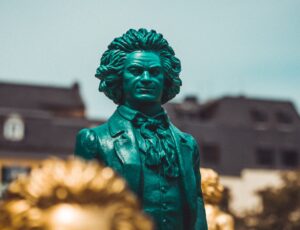
Bring Beethoven to life for your students. Explore the music, life, and extra-large personality of Ludwig van Beethoven.
by Polina Mann





Bring Beethoven to life for your students. Explore the music, life, and extra-large personality of Ludwig van Beethoven.
by Polina Mann

Suggested Grades: 3-5
National Core Arts Standards
#7 – Perceive and analyze artistic work
#8 – Interpret intent and meaning in artistic work.
#11 – Relate artistic ideas and works with societal, cultural, and historical context to deepen understanding.
Objectives
Materials
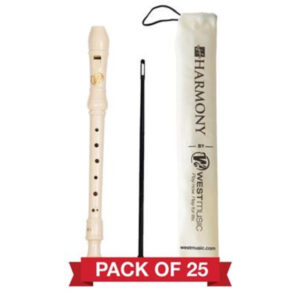
Ludwig van Beethoven is considered to be one of the greatest composers of all time. In this lesson, students will learn interesting facts about his life. Students learn to play Ode to Joy, one of Beethoven’s most recognizable pieces on the recorder. Next, students discuss the origin of the piece and why this song was so important in Beethoven’s oeuvre of work.
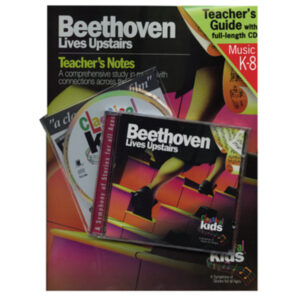
Students will read about Beethoven’s personal life in the story “The 39 Apartments of Beethoven.” Discover why as an adult, Beethoven moved frequently, had numerous pianos, and other facts about his life as a composer. The book summarizes Beethoven’s life condensing factual information and conjecture about why he may have moved so much. This book provides contextual information about Beethoven as portrayed in the movie “Beethoven Lives Upstairs.”
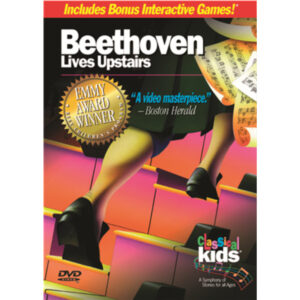
The movie is a fictional story about Beethoven renting a room from a family and living in a room on the top floor. At first, the main character, young Christoph, cannot believe such a rude and careless person has moved into their house. Beethoven’s music changes their opinions when he begins composing his 9th Symphony. The movie starts with Beethoven’s funeral, and Christoph remarks that while Beethoven is gone, “his music will never die.”
Ask students where they think Ode To Joy originated?
Ode to Joy is the melody used in a symphony that required singing instead of simply playing the instruments. Thus, the 9th Symphony was the first Symphony to use voices instead of only instruments.
Play Recording of 9th Symphony Movement IV – Ode to Joy. Have students listen to the original melody sung by the choir in German.
Some questions to consider:
He bangs on the piano and does not converse much with the outside world. The movie chronicles Beethoven’s musical life, including him composing and rehearsing his pieces. While initially a complicated situation, as the household acclimated to Beethoven, they begin to realize his genius. Christoph and his mother are won over by the music when Beethoven begins composing the 9th Symphony.
Students will hear many of Beethoven’s famous works such as “Moonlight” Sonata, “Pathetique” Sonata, 5th Symphony, and 9th Symphony. Excerpts in the book confirm what is shown in the movie, for example – the legless pianos that he composed on and that Beethoven splashed himself with water when he wrote. The film is fiction but reflects what we know about Beethoven’s personality and compositional LEARN MORE
Ask students if they know any other works by Beethoven.
Some questions to consider:
Add a Game:

Contributor
Hi! My name is Polina, and I teach general music in two Catholic schools in New Haven County in Connecticut. I have been teaching general and vocal music for eight years in private schools. I have three teaching certifications in music, dramatic…
Discover more from Polina Facebook
 Twitter
 Pinterest
 LinkedIn
 Email
Email Print
Print