Teaching is a Muscle
Teaching is more than content – it’s the students themselves. It’s advocacy, encouraging individuality, and challenging every student no matter where they are in their learning journey.
by Adam Clark





Teaching is more than content – it’s the students themselves. It’s advocacy, encouraging individuality, and challenging every student no matter where they are in their learning journey.
by Adam Clark
Before I wax poetic, some background needs to be set up. Both of my parents are teachers: my mother and father were teachers, and my father’s grandmother was a teacher, as well as two of his siblings. It’s only fitting that teaching is something that began to be an interest to me, right?
Since I was in 8th grade, I was set on being a history teacher. Since my freshman year, everything in my high school schedule was built so I could take as many history courses as I wanted and get out of high school as soon as possible, until my senior year. And what prompted my switch is quite a story. I lost a section leader bid in my high school marching band.
I was absolutely furious when I found out I had lost!
I had given so much time, some blood, much sweat, and way more tears than I’d like to admit to that program. I felt gypped; my dream for three years was stolen from me. I continued the rest of that year out of spite. “You’re not weeding me out this easily,” I thought. Little did I know then that this would be one of my life’s more meaningful learning experiences thus far.
Music has a way of affecting lives like no other specialty. When you participate in music classes, activities, and experiences, you are actively engaging in a group-oriented, team-centered artistic experience. Through the process of practice and performance, memories are made, inside jokes are formed, friendships are founded, and hard-fought – and earned – lessons learned. These are the top problem-solving, fine motor, interpersonal, critical thinking, and emotional awareness skills students ascertain while participating, but you already knew that (I hope).
When I finally realized all these things and how much band had taught me, I couldn’t conscionably see another path forward for me other than providing this same opportunity to future students. Still, with a twist – I’d do it better than those who had taught me.
Throughout my experience in band, I realized, as I did in history, how I would teach these concepts and how I may have taught something differently than a teacher of mine had. Of course, a student mentioning an opposing way to teach and learn is counterintuitive and often seen as insubordinate to an educator trying to get results as quickly as possible, so I knew not to speak my mind in public. These ideas did not leave me, however.
This leads to today. I’m currently at the end of my junior year as a music education student, and I’ve learned an incredible lot about what it means to be a teacher to young people as a young person. Before this year, my experience lay solely with teaching front ensemble in marching bands – the very section that I was deemed not fit enough to lead effectively in high school.
Despite my reservations and deep, sardonic criticisms about the emotional and interpersonal environment in which I was taught (I was an emotionally troubled teenager. Weren’t we all?), I was taught proper content and context, which I have adapted and can now pass along in a more friendly and open environment.
My thorough fundamental experience and ideas about emotional sensitivity were finally put to practice in the spring of 2022 when I was in charge of an ensemble and its direction alone for the first time. After roughly a year and a half of experience teaching, I was ready to roll. It was a year later when I, after leaving my last high school instrumental placement for the semester a few days ago (shout out to Donegal High School Orchestra), that teaching is a muscle. But what do I mean by that?
I had the ideas I implement now in my teaching as a senior in high school. I never had the chance to put them into practice until I began teaching for the first time, but at that time, I was working under someone else’s guidance. This experience was extremely valuable, as it taught me that I needed to learn how to appropriately talk to, and get to know kids, refrain from brutal and critical honesty, and develop an eye for assessment.
These skills are necessary for me to be able to teach about anything. Even throughout learning how to teach through teaching, I didn’t realize that I was practicing it. It’s all practice, just like we learned in music school. We all learned how to identify major thirds in our aural theory class, but we never learned how to identify if a student couldn’t handle a comment today, if they were trying their hardest, or were just not up for… well, anything.
Teaching is more than content – it’s the students themselves. Teaching music isn’t just eighth notes and solfege; it’s advocacy, encouraging individuality, and challenging every student no matter where they are at. This is realized and applied as current or future teachers practice their teaching.
But how do we practice? Observation, understanding, and assessment. Observing and assessing students at every moment in a small group environment is deeply important to a cohesive musical and social structure. Assessment in music education spans from melodic and harmonic ideas to how students act in their day.
Don’t just assess their musical skills; assess them for themselves. Teachers must understand their students and their lives, or at least attempt to understand. When students know you care about them, they will want to learn more from you. The goal is holistic education, not just music – a whole child needs support.
Striving to understand more than just the content and care to understand the student, you will ultimately be a more successful teacher than those that do not. That’s the end goal—practice mindfulness. Practice humanity. We are people, after all, as are they!
Music and the experiences it provides are indelible. We bear the responsibility to teach kids the ability to express themselves. How can we teach those kids without encouraging individual expression and artistic creation?
If the individual is stifled, misunderstood, and caged away, the entire point of our specialty is mute. You will be locked out if a kid believes you do not care. There is a delicate balance involved in teaching them musical concepts and teaching life skills, but you can’t do just one.
Arts are unique and essential for this reason – it involves so much humanity that you can’t teach it like any other subject. If you take anything from this article, take this: I was a kid who didn’t fit perfectly into everyone’s expectations of me in band – and I will be a better teacher for it.
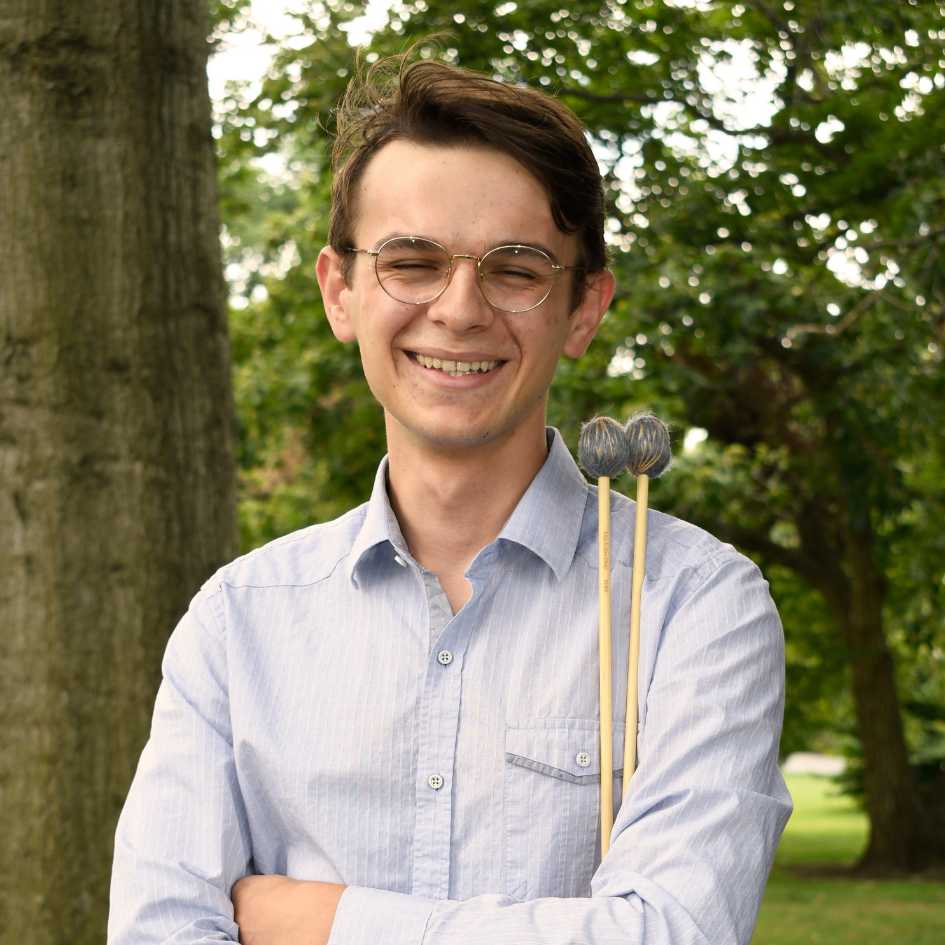
Contributor
Adam Clark is an educator and percussionist based in Lancaster, Pennsylvania. Adam is an active educator and pre-service teacher, teaching privately and having taught at Penn Manor High School and Hershey High School and their respective marching band and…
Discover more from Adam Facebook
 Twitter
 Pinterest
 LinkedIn
 Email
Email Print
Print