SUMMARY
Compose online using Hyperscore! This article includes a description of the eight-day unit I teach with my junior high students in my Music Tech class.
by Cecilia Roudabush




Compose online using Hyperscore! This article includes a description of the eight-day unit I teach with my junior high students in my Music Tech class.
by Cecilia Roudabush
In 2003, I had the privilege to be a General and Adaptive Music pilot leader for a new user-friendly, graphic music composition interface called Hyperscore. As I sat through the teacher workshop with Tod Machover, I remember thinking, “this is the missing link!”
At the time, I was teaching 7th and 8th grade Music Tech and Adaptive Music for the students who considered themselves “non-musicians” or played instruments that didn’t fit into performance classes like Band or Orchestra. In our curriculum before Hyperscore, we had a dry review unit of music vocabulary that we presented and tested on. BORING!
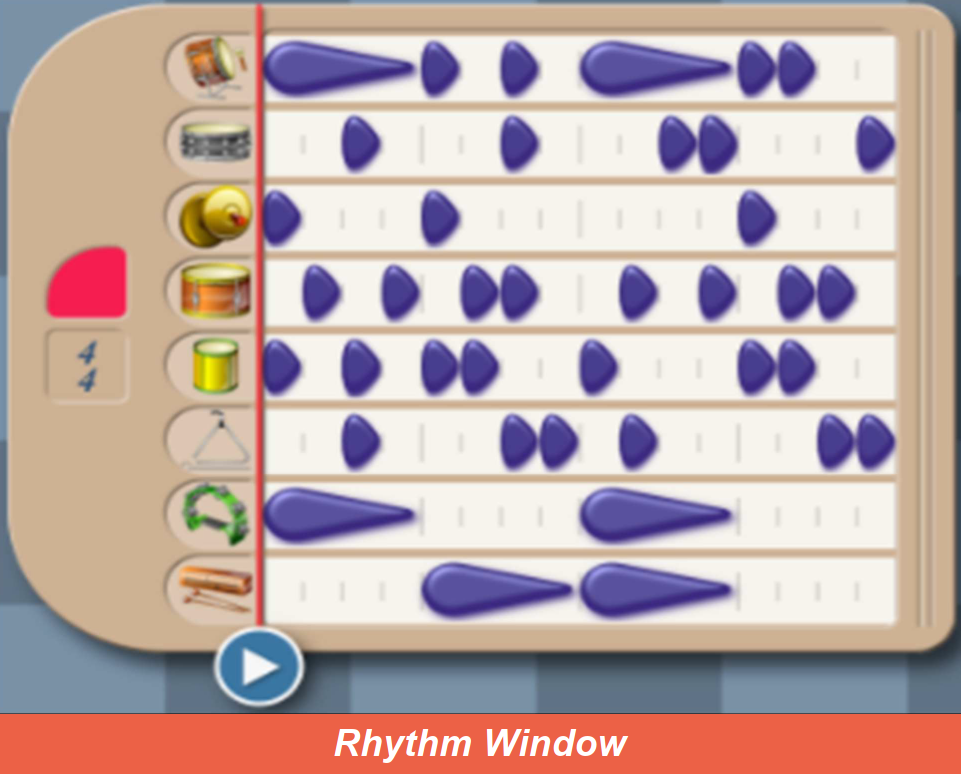
With Hyperscore, I could introduce Rhythm with definition and listening activities and then have students experience rhythm by composing using the Rhythm Sketch Window in Hyperscore. THANK YOU, MIT Media Lab (designed and implemented by Mary Farbood and Egon Pasztor under the direction of Tod Machover) for your innovative software!
Over the 18 years that I used the software, I polished an 8-day unit:
Day 1: I presented Rhythm. (“We are a part of the rhythm nation!” — so true, Janet!)
Day 2: Students wrote rhythms using Hyperscore, learning note values and how different rhythms interact with and complement each other.
Day 3: Melody was next with a “Name That Tune” game.
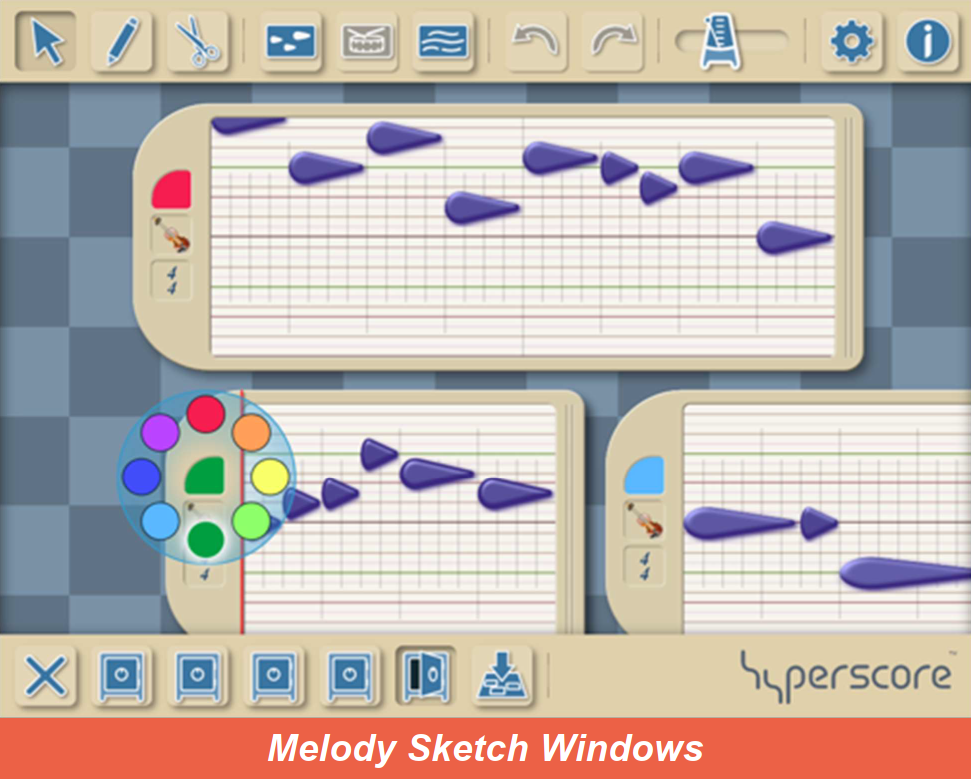
Day 4: Using the Melody Sketch Window, students wrote “Hot Cross Buns” to demonstrate their understanding of note value and pitch levels. A successful rendition of the song earned you free play time with the Melody Sketch Window to compose your original melodies.
Day 5: We watched videos of people singing in unison versus harmony and sang “Row Your Boat” in rounds.
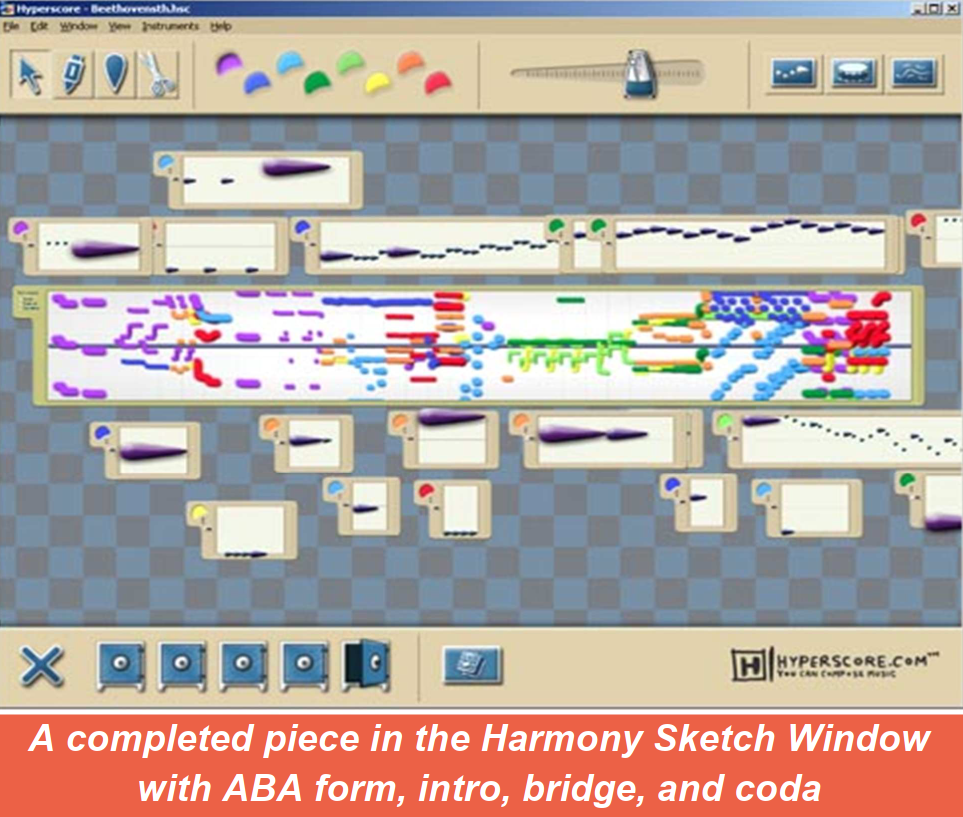
Day 6: We combined our Rhythms and Melody windows in the Harmony Sketch Window in Hyperscore. Nothing is better than “Hot Cross Buns” with a serious jamming rhythm beneath it that you created yourself! Of course, they also learned how to use Dynamics in their Harmony Window, so the melody stood out from the beat.
Day 7: My favorite day! I first presented elements of Form and Tone Color. Then students would map out the song structure of “All-Star” by Smashmouth of Shrek fame. By now, students would be begging for composition time.
Day 8: Students created an AB form with an optional intro, bridge, and coda. Imagine their amazement at turning their melodic sound into a shamisen or bird whistle, or a rhythm section triangle into a cuica when I introduced Tone Color.
Hyperscore changed my teaching. I wish YOU could hear the 1000’s of unique pieces my students created in those 18 years! But my story is not over. Read Hyperscore 5: A New Era to see how the pandemic opened a new chapter for my students.
This article was originally published by Music ConstructED on December 7, 2021.

Contributor
Cecilia Roudabush taught General and Adaptive Music K-12 in the Iowa City School District for 32 years. Her Master’s degree in Music Education specializing in Music Therapy and Behavior Disorders is from the University of Iowa. She was honored by the…
Discover more from Cecilia Facebook
 Twitter
 Pinterest
 LinkedIn
 Email
Email Print
Print