SUMMARY
Inspired by the “things that just make sense…” TikTok trend, here are my organization tips and tricks (with lots of pictures) that I have tweaked over the last 15 years in my tiny music spaces.
by Misty Kikoler





Inspired by the “things that just make sense…” TikTok trend, here are my organization tips and tricks (with lots of pictures) that I have tweaked over the last 15 years in my tiny music spaces.
by Misty Kikoler
I have never had a big, dedicated music room. I am not complaining – I’ve never been on a cart! However, teaching elementary music in a small space comes with its own set of challenges. Here are some of the products and hacks I have used to make the most of my space.
When I moved to this school, my husband wanted me to get a U-Haul. I certainly had enough to fill one, but I was NOT going to be *that* teacher who shows up with a truckload of stuff. So, I filled my music room a little bit at a time throughout the summer. I soon discovered I did not have enough space for all of my stuff! I culled my collection, parring it down to essentials. To ensure that my room does not become cluttered, I challenge myself not to grow my collection: something new means something else must go!
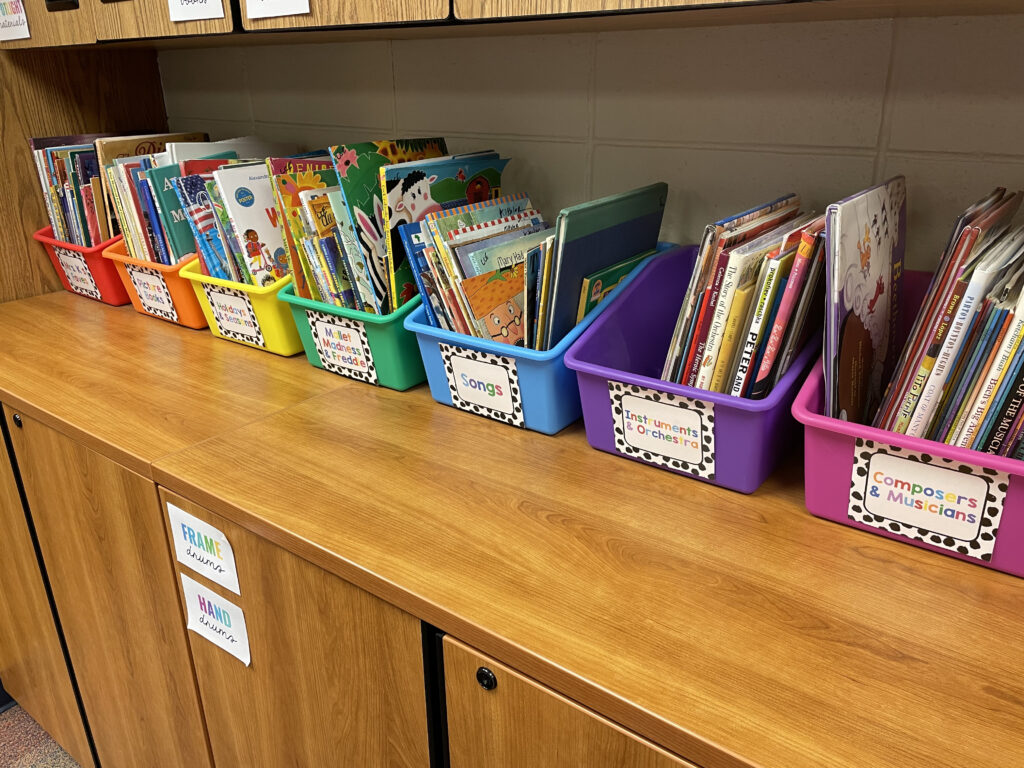
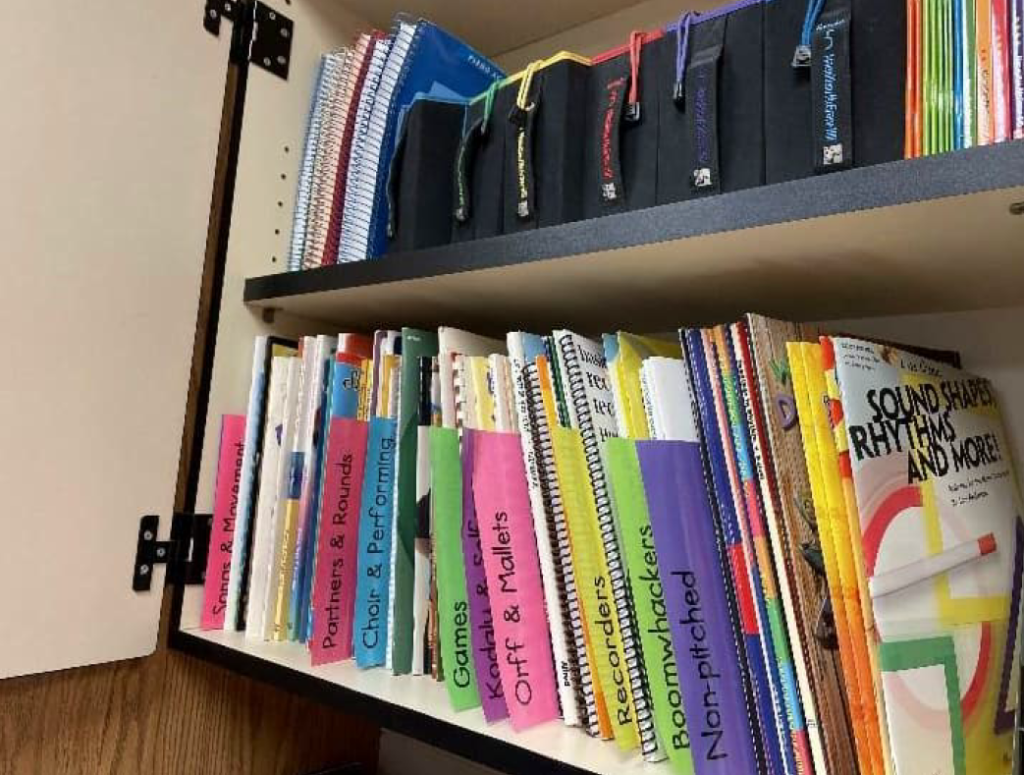
Magazines, manipulatives, instruments – label it all! Giving everything a designated place makes it easier to put things away. Additionally, students gain ownership by getting out and putting away supplies.
Labels with printed words (and even pictures for younger students) are helpful. I update labels every year and re-evaluate what items I have and if they are stored in the most effective space. Since my space is minimal, I have to be creative. If something is worthy enough to be in my room, it will have a designated home and a label.
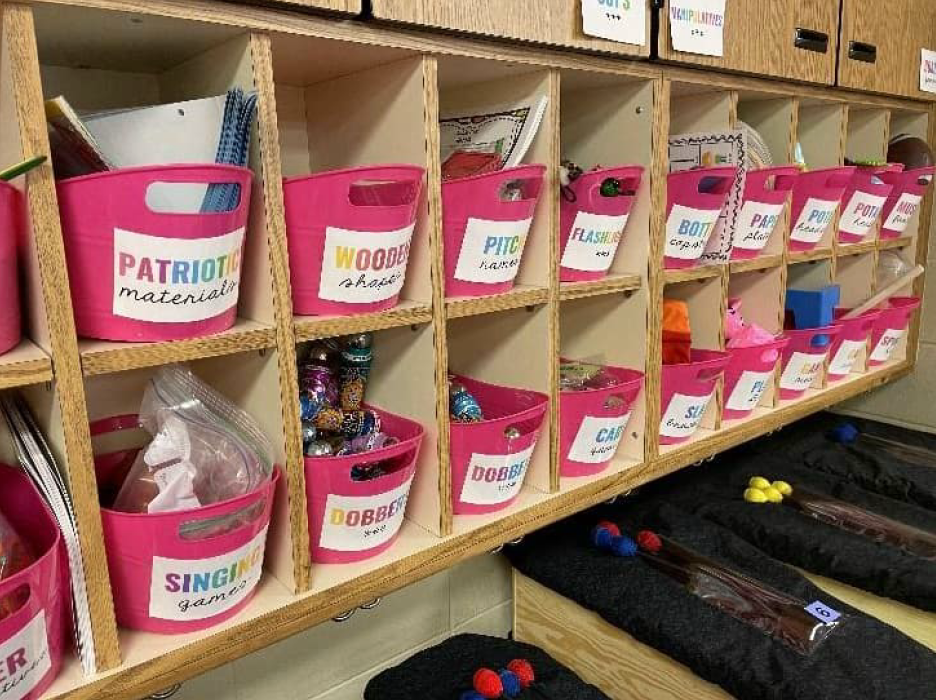

My school does not have a room designed for music, so I have a regular classroom. I use the cubbies with flexible bins to hold manipulatives and smaller items. I keep my instrument carts below where students would typically hang up coats and backpacks.
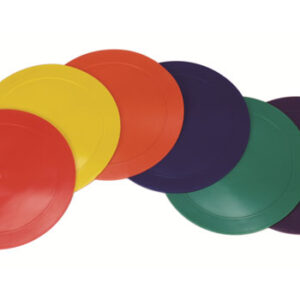
In addition to every item having a home, my students also have designated spots. I use Velcro carpet dots to assign seats in my room. I used a Sharpie to write numbers on dots in six different colors (each color has a 1, 2, 3, and 4).
My students know their assigned color and number. I use these colors and numbers for collaborative work (turn to your face partner, turn to your shoulder partner, work in your color group, etc.).
I also use the colors and numbers for classroom procedures (all the number 2’s need to get pencils for your group, number 4’s get a xylophone, number 3’s get your team supply caddy, etc.). With some training, these procedures can save a lot of transition time in the classroom.
On a side note, I HIGHLY recommend Kagan Cooperative Learning training. The structures I use from Kagan are engaging, and the procedures and routines save so much transition time. I also use Kagan Selector Tools and my spinner from IKEA to select students.
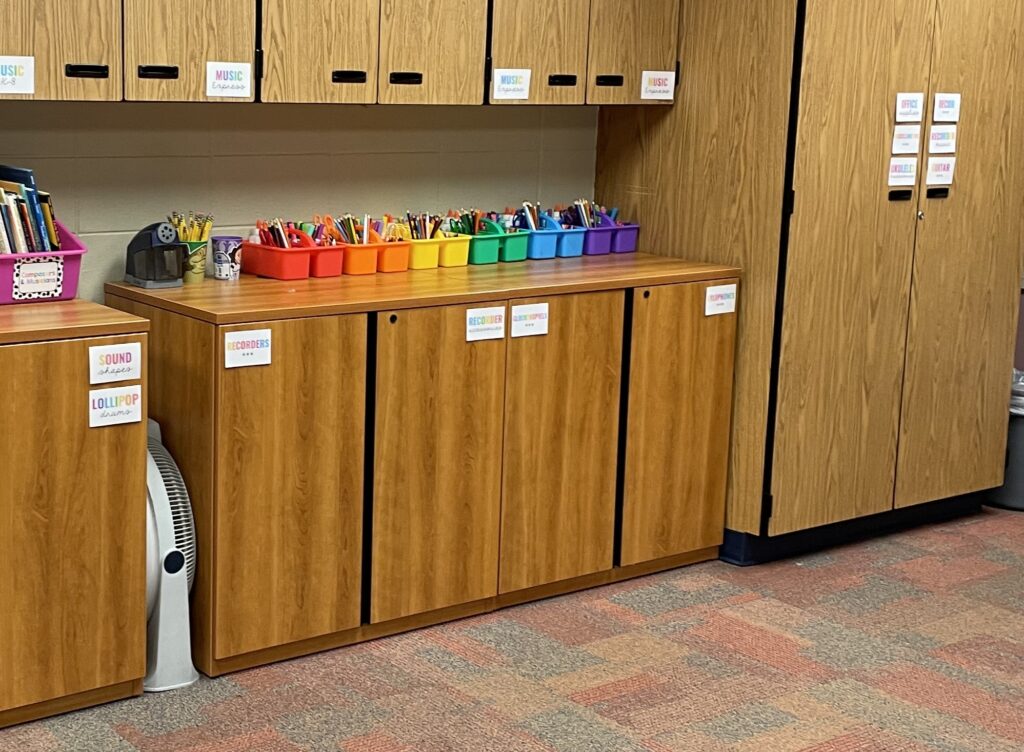
Each colored team has supply boxes. I added a matching letter tray under each supply caddy with dry-erase clipboards. This makes getting supplies quick and easy!
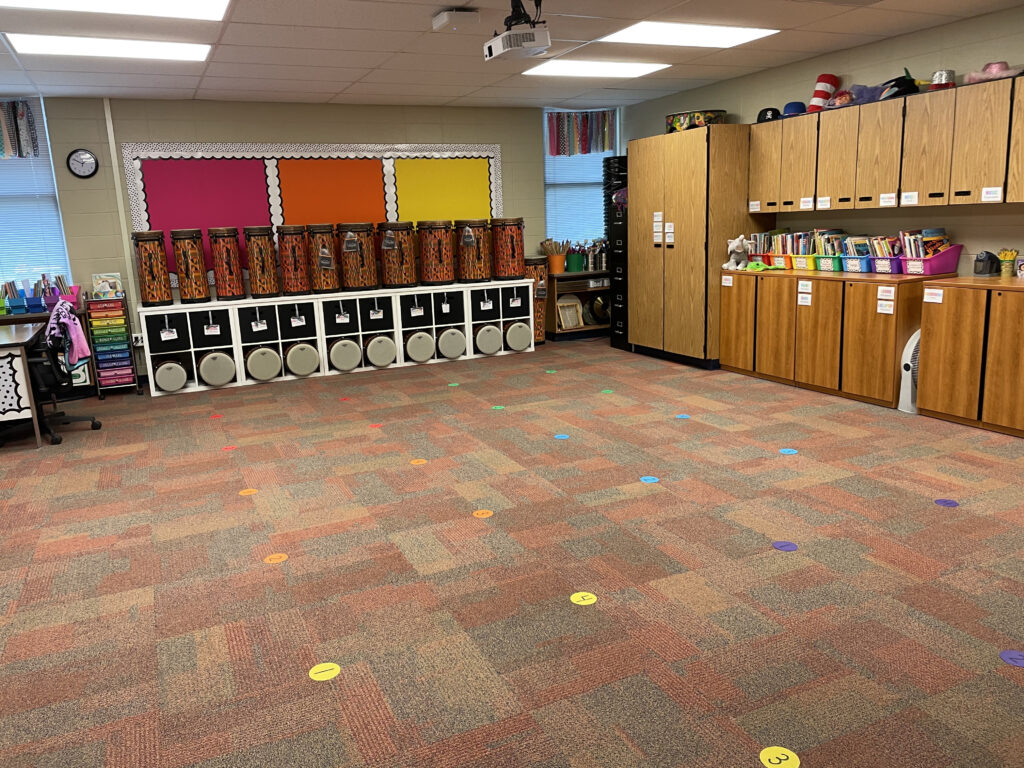
Every student has an assigned spot on the floor. I try to balance teams considering personalities, behaviors, and ability.
Keeping like items together can be tricky in a small space. I try to keep things that would go together close (drums with drumsticks, pencils with clipboards, xylophones with accidental bars and mallets, etc.).
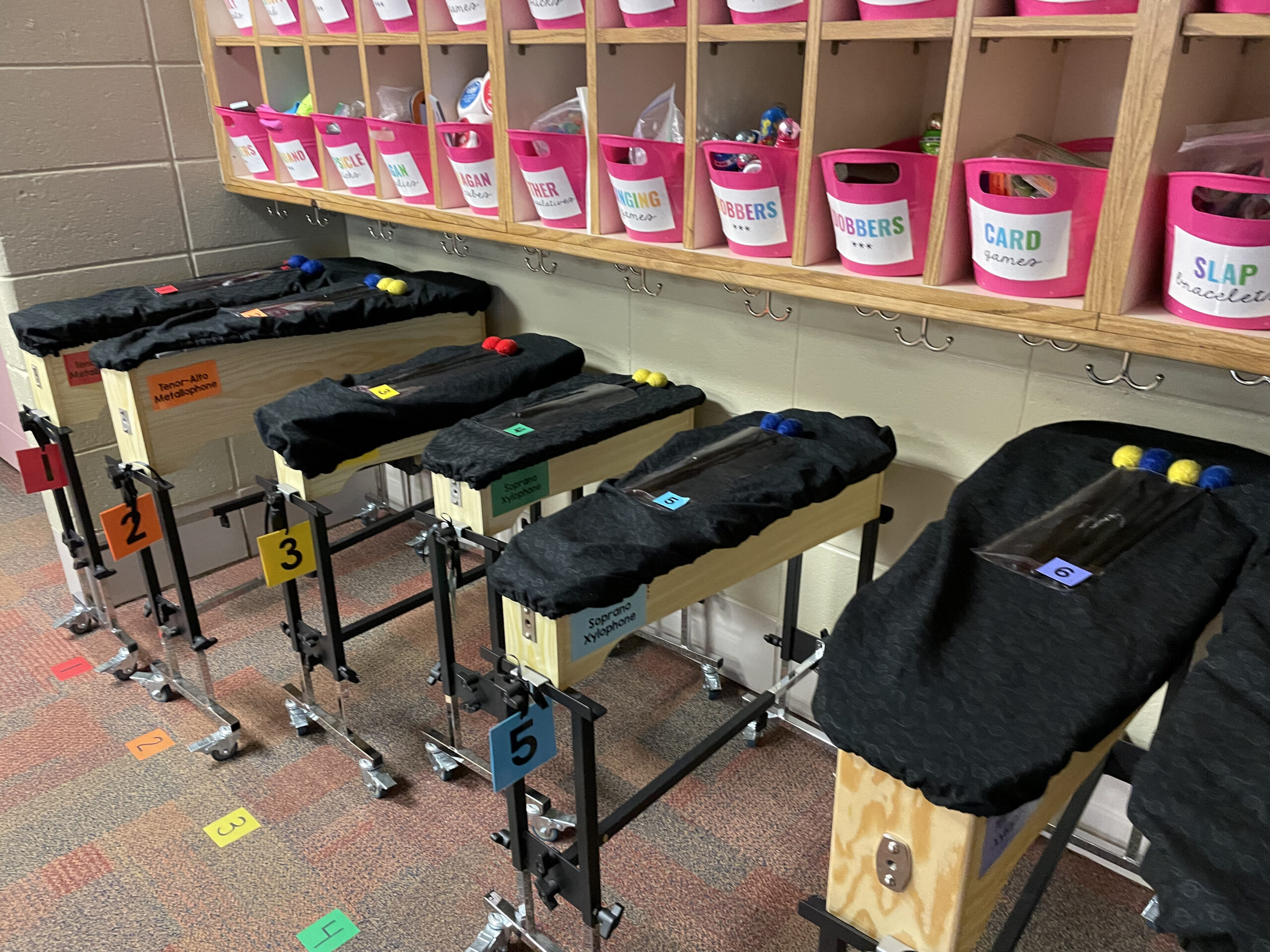
The instrument cart “garage.” One of our teacher’s assistants helped me finally complete this multi-year project on a workday – instrument covers with pockets for mallets and accidentals.
Magnetic hooks are great for everything! Hanging ukuleles, organizing supplies, and holding essential papers are just a few ways I use them. I have very little wall space in my room, so I have to take advantage of the magnetic whiteboard. My magnetic hooks are even strong enough to hold ukuleles!
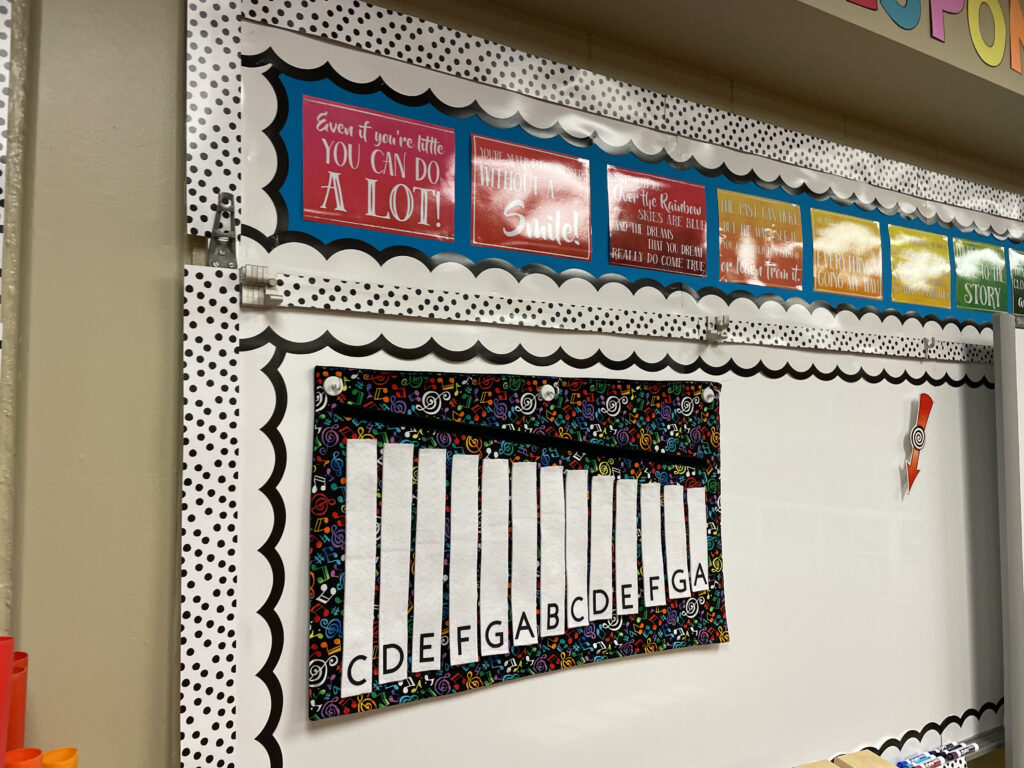
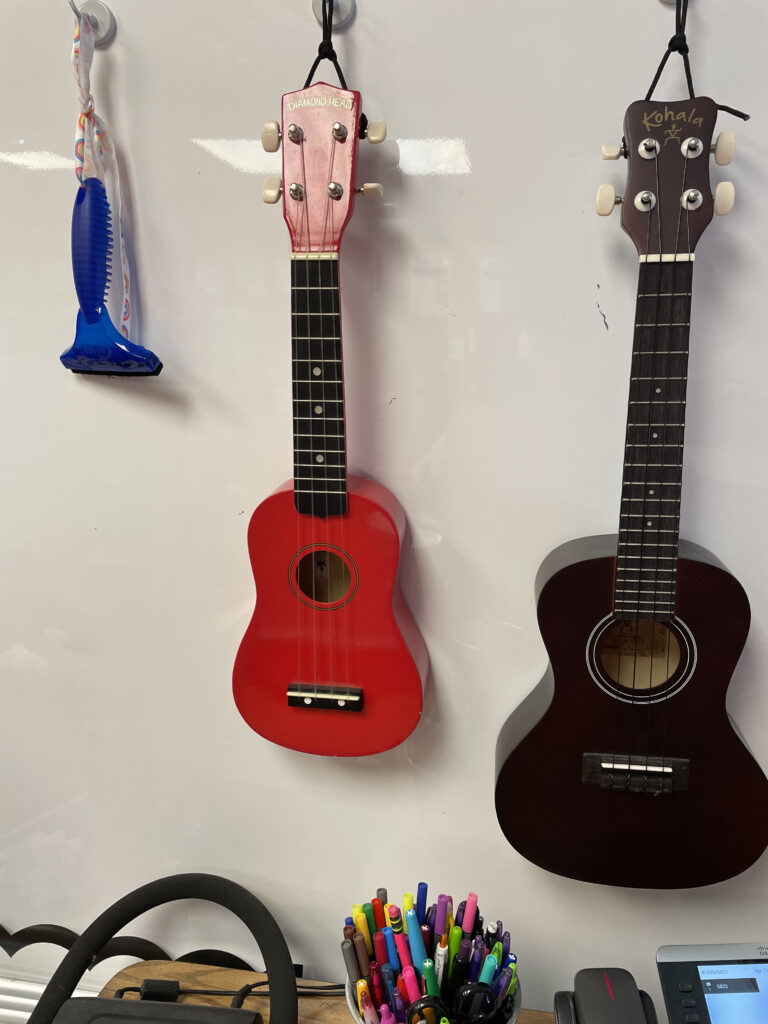
I use magnetic hooks to hold items and move them quickly if I need the whiteboard space. The musical posters are from David Row’s Teachers Pay Teachers Store.
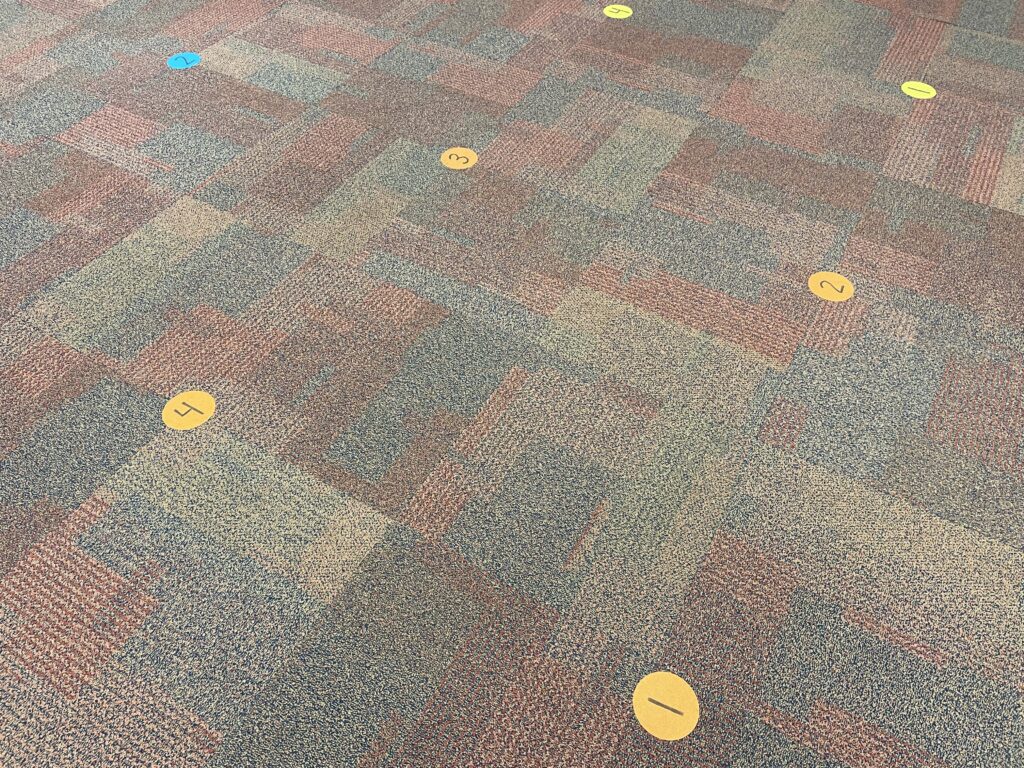
Velcro carpet spots or the branded version, SitSpots, are amazing! I buy sets of these on Amazon, and I write spot numbers on them so the students know where to sit in my room. I have also used Velcro carpet spots to mark line-up spots and where to “park” the instruments on carts in the “garage.”
I cut circle sit spots into squares for the garage parking and wrote a number on them with a Sharpie. The numbers and colors match the mallets, the accidentals, the instrument cover, the label, and a tag on the cart, so all the pieces stay together. The SitSpots brand sells printed music note sets.
I also love using Velcro carpet spots on risers! I also number these so the kids know exactly where to stand on the risers. The best part: they stay in place when the risers are stored, so they are always ready for the next concert!
After years of failed solutions to my Boomwhacker™ storage, I finally found this Boomwhacker™ stand from West music. One stand will hold 13 notes. I love that they are lightweight and slide around easily. They can also sit on top of a counter or table.

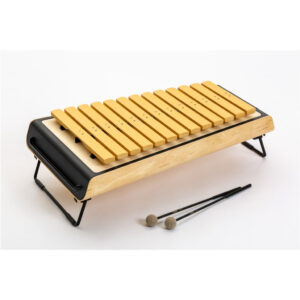
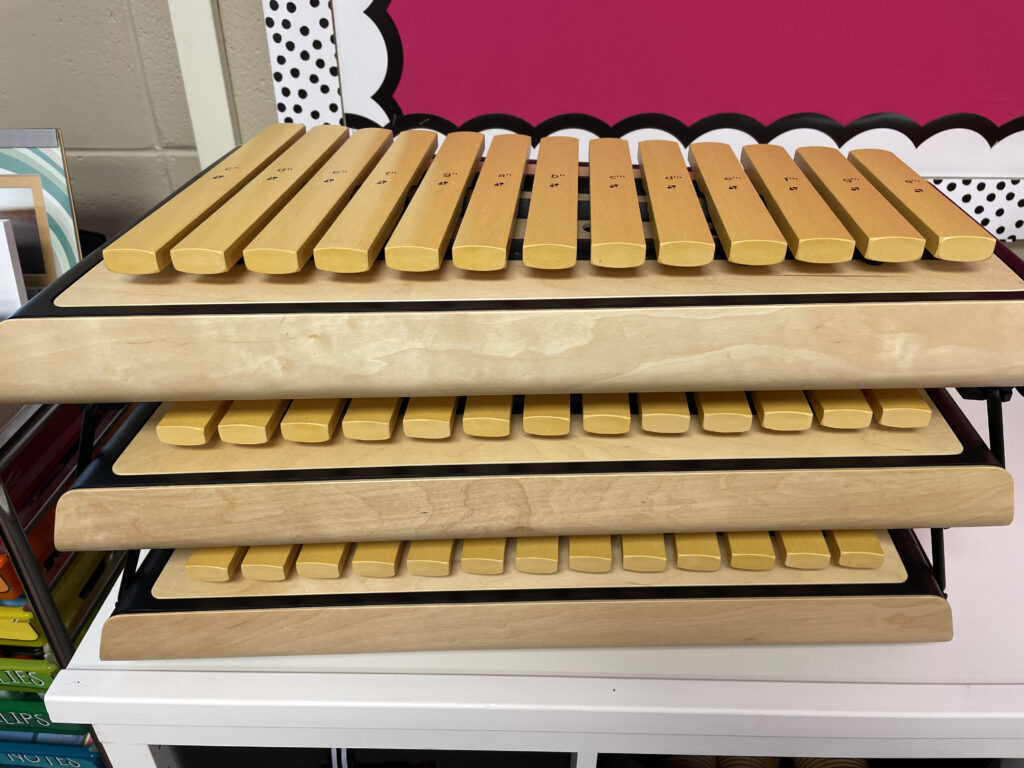
These beautiful instruments are a GAME CHANGER! When I took Orff Level 1 this summer, Judy Pine brought one of these new SMART series xylophones for us to try out. I have wanted to expand my instrumentarium, but with space at a premium, I was at a loss for how to make it happen. These are perfect! The instruments have built-in risers to stack up to five high. They are very lightweight and even have a “garage” to store extra bars and mallets. The xylophones make a beautiful sound. I recently ordered an additional eight SMART series xylophones for my room.
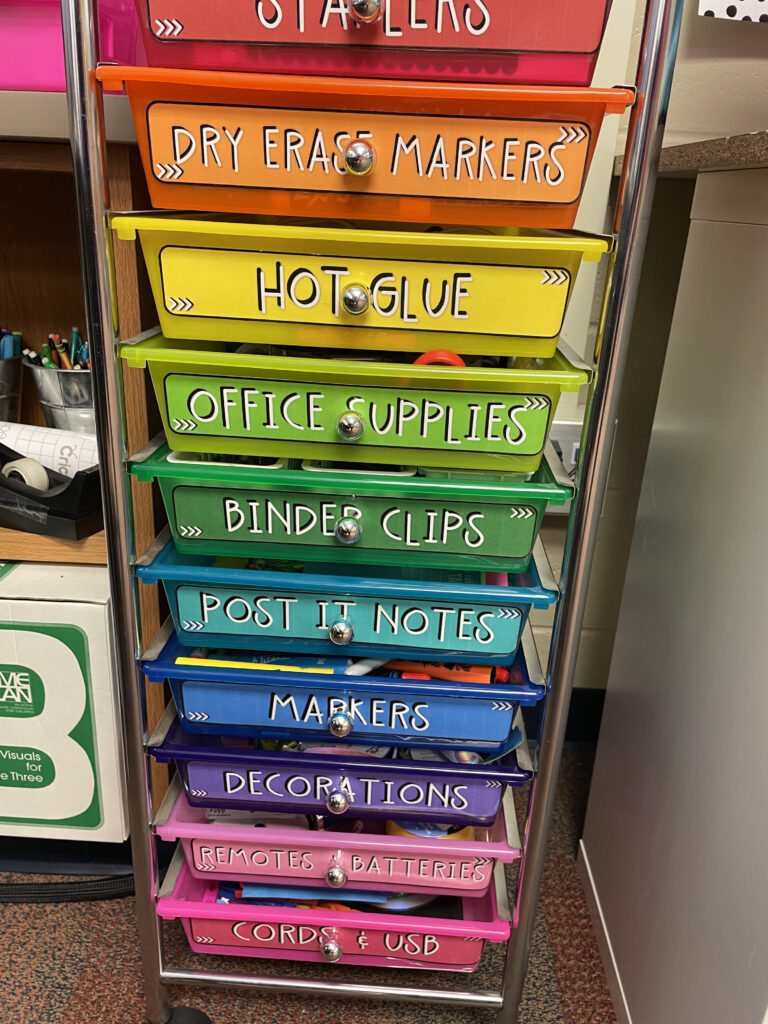
When I moved into this classroom, I knew that I had to remove the obscenely large teacher’s desk. While I loved having a dry-erase kidney table and giant desk before, there was no way that I wanted to sacrifice that space in my new room. I now have an old-school teacher desk with just a few drawers. I keep all office supplies in a rolling rainbow cart from Michaels. I purchased the editable labels from Kristi DeRoche on Teachers Pay Teachers.
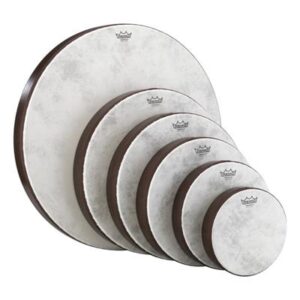
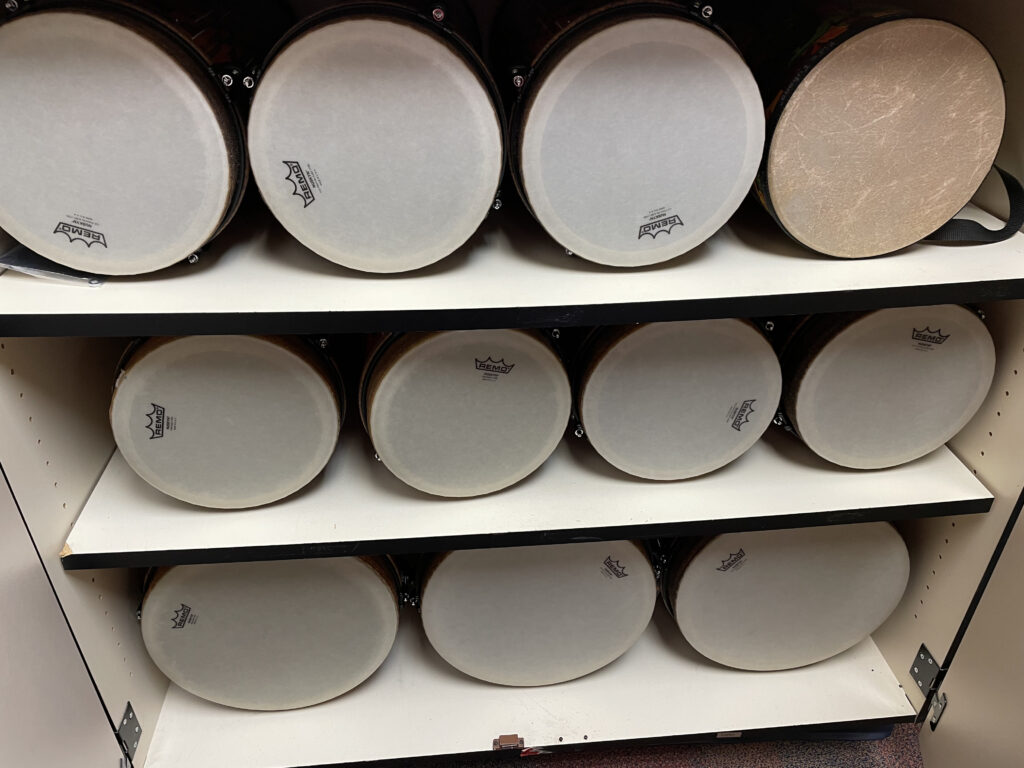
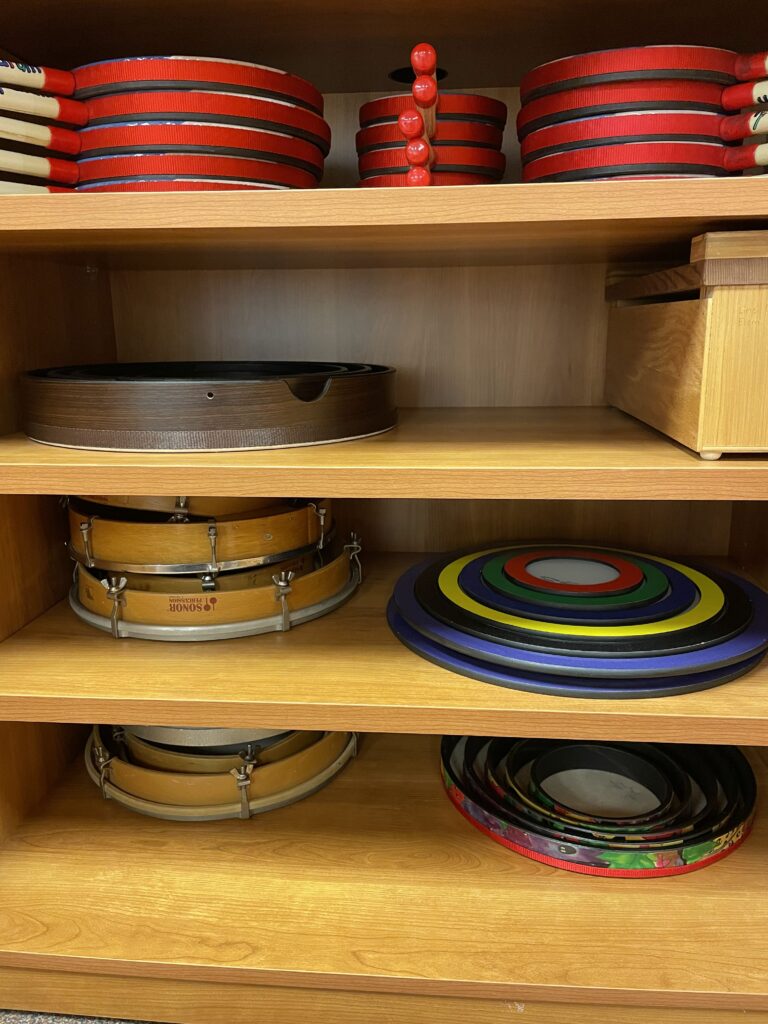
Because of my limited space, I am very intentional with what I purchase and consider how it may fit into my room. Even though I love tunable hand drums, I bought frame drums in various sizes because they nest together. I prefer the Remo Fiberskyn frame drums, but I also have the Remo Kids frame drum set. My younger students like the sound shapes and the lollipop drums. I hope to purchase additional sets of frame drums and sound shapes soon.
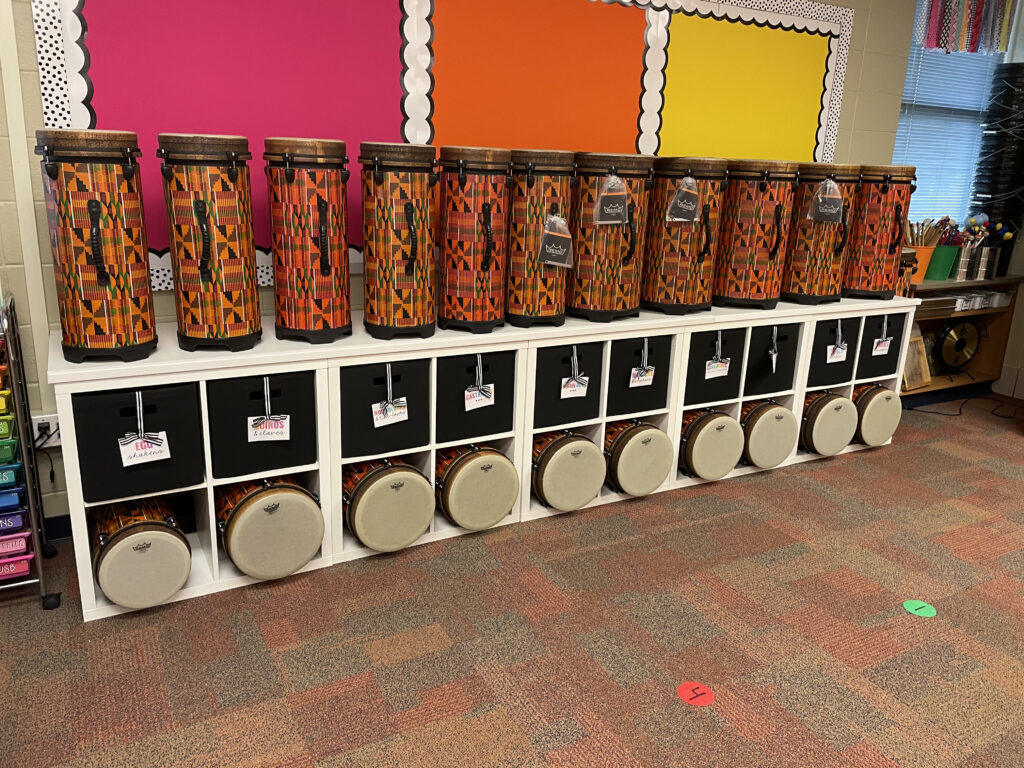
I love cube shelves! I have several four-by-four shelves from IKEA and Target at school and home. They can fit REMO 10” and 12” tubanos horizontally! They do stick out of the shelves a bit, so I went to a home improvement store and had a melamine panel cut into two pieces to create a counter space for the drums to sit on top and prevent items from falling behind the shelves. I drilled the countertop into the tops of the shelves and added an L-shaped corner molding to cover the sharp edges. You can’t see it, but there are about eight inches of space between the shelf and the wall. I recently moved the drums on the top of the counter into a deep closet, and I love having the counter space. When my new SMART instruments arrive, they will find a home on the counter!
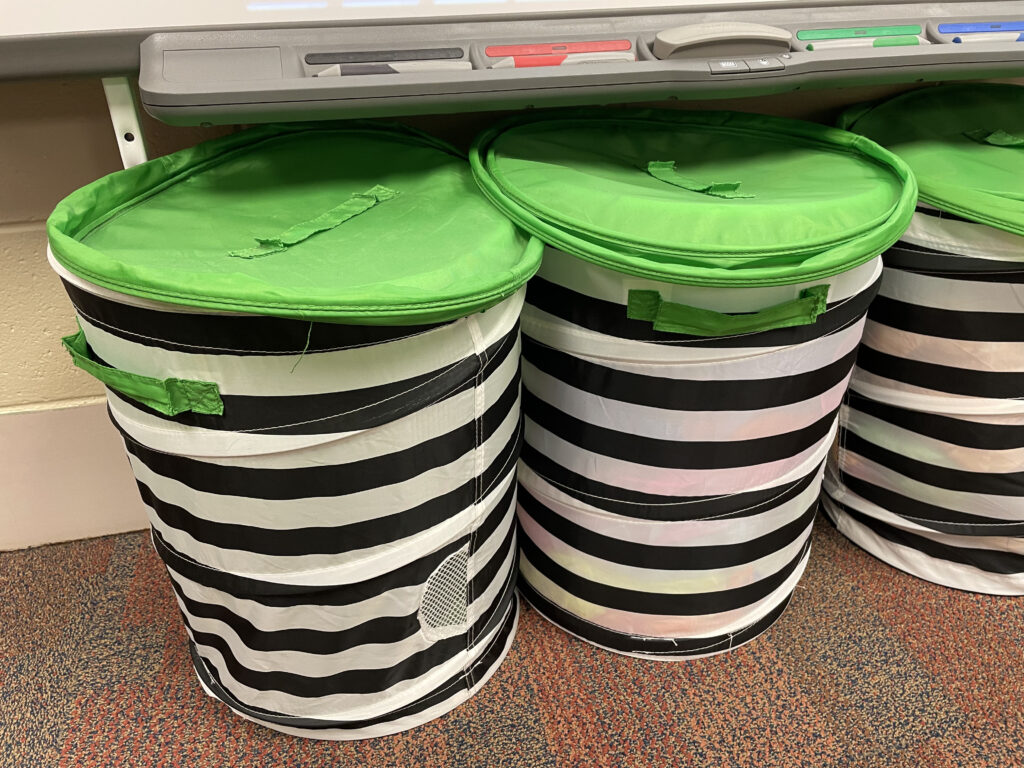
Collapsible laundry hampers are great for holding a big stretchy band, scarves, ribbons, puppets, and stuffed animals! I purchased these at IKEA.
I started using IKEA Flyt magazine file boxes years ago to organize my teacher books. I recently found that I prefer collecting those resources on shelves, so I was left with dozens of file boxes. I have found two perfect uses: organizing ukuleles and holding Music Express magazines. Each box will hold two Music Express issues. I still use older issues of Music Express, and I have a subscription to its replacement, Essential Elements Music Class.
As for my ukuleles, I initially stored them in magazine files on top of a counter. Now, I have them in a deep closet. I will be labeling them soon, so the students will know where their ukulele is supposed to be “parked.”
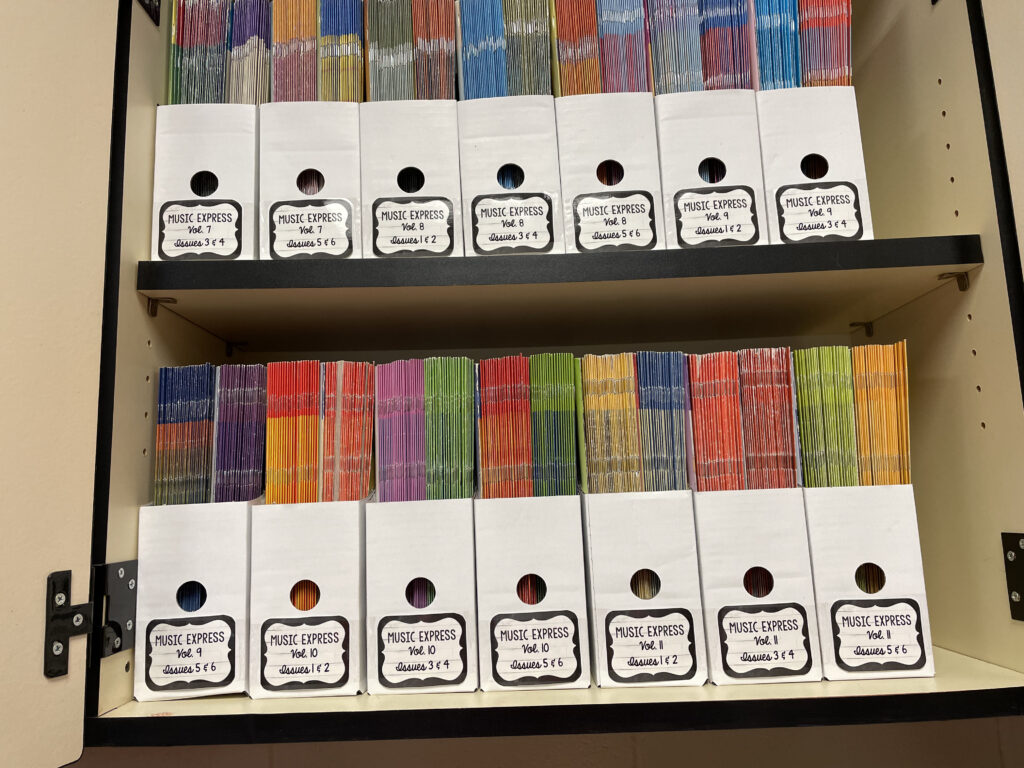

These IKEA magazine file boxes are great for holding Music Express or Music K-8 magazines and ukuleles in a deep cabinet.
Whether you are getting organized for the start of the school year, spring cleaning, or planning out next year’s purchases, I hope some of these ideas may help you think outside the box to make your space beautiful and functional.
Kagan S., & Kagan, M. (2015). Cooperative Learning. Kagan Publishing.

Contributor
Dr. Misty Kikoler is a National Board-Certified music teacher in the Park Hill School District in Kansas City, Missouri. Misty received her B.S. in Instrumental Music from Missouri Western State University, a M.A. in Education from Baker University, and doctorate in Educational Leadership…
Discover more from Misty Facebook
 Twitter
 Pinterest
 LinkedIn
 Email
Email Print
Print