




When I first started teaching years ago, I ran into the same problems on repeat. I struggled to get my students engaged. I struggled to connect with them. And I had the classic “teach the way you were taught” syndrome. The result was not pretty. Students didn’t buy into what I was teaching, they didn’t connect to the topics and the repertoire. And I had to keep teaching the same topics over and over again. I realized that I was treating students like empty vessels, with me being front-and-center all the time, the gatekeeper of all knowledge. I didn’t make space for them. I wasn’t creating a welcome, equitable space for them to learn and thrive. Enter equity-centered pedagogy. Something that truly saved the day (and my career) as a music teacher.
Equity-centered pedagogy is an educational approach that prioritizes fairness, inclusion, and social justice to ensure all students—regardless of background—have access to meaningful learning experiences. It involves recognizing and addressing systemic barriers that disadvantage marginalized students, integrating diverse perspectives into the curriculum, and fostering a classroom culture of belonging and respect. Music teachers can use this approach to employ culturally responsive teaching, differentiated instruction, and student-centered learning to meet the unique needs of each learner. The goal is to create an environment where all students feel valued, empowered, and supported in achieving academic success.
Here are some specific examples of how you can embrace equity-centered pedagogy in your music instruction:
Diverse Repertoire Selection – Incorporate music from a variety of cultures, genres, and traditions beyond the Western classical canon. They include composers and artists from historically marginalized communities and ensure that students see their own cultural identities reflected in the curriculum.
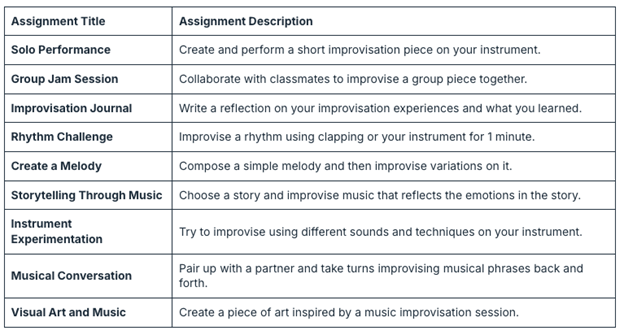
Student Voice and Choice – Allow students to have a say in song selection, instrumentation, and even compositional projects. This empowers students and validates their musical interests and experiences. Below is an example of a choice board for students in the general music setting.
Culturally Responsive Teaching – Connect musical concepts to students’ lived experiences. For example, they might explore hip-hop’s role in social justice movements or discuss the oral traditions of African and Indigenous music alongside notation-based approaches.
Accessibility and Differentiation – Adapt lessons for students with disabilities by using adaptive instruments, alternative notation systems (e.g., color-coded notes), and multi-sensory teaching strategies to ensure that all students can participate fully.
Anti-Bias Discussions in Music – Facilitate conversations about music’s historical and social contexts, including discussions about appropriation, power dynamics, and representation in the music industry.
Flexible Performance Assessments – Instead of relying solely on traditional assessments like sight-reading or classical performance, offer multiple ways for students to demonstrate their musicality, such as improvisation, composition, beat-making, or digital music production.
Community Engagement and Collaboration – Invite guest musicians from diverse backgrounds, partner with local artists, and encourage students to explore music’s role in their own communities, fostering a broader understanding of how music connects people across cultures.
Equity-centered pedagogy does not need to be an all-or-nothing deal. In fact, when it comes to certain schools and districts, you might not be allowed to embrace every strategy recommended here. Find out what you are allowed to do and find meaningful paths to do those things well. Connect with other teachers in your school and district to see what they are doing and to learn what works with them. Remember that you are not alone, and reaching out for specific strategies on how to put some of these practices could make the difference between creating an equity-centered classroom or staying on the “same-old, same-old” hamster wheel of teaching music.
Of course, I’m always here to help you and your fellow teachers as well! Feel free to reach out!
Blog Post Contributor: Erin Zaffini