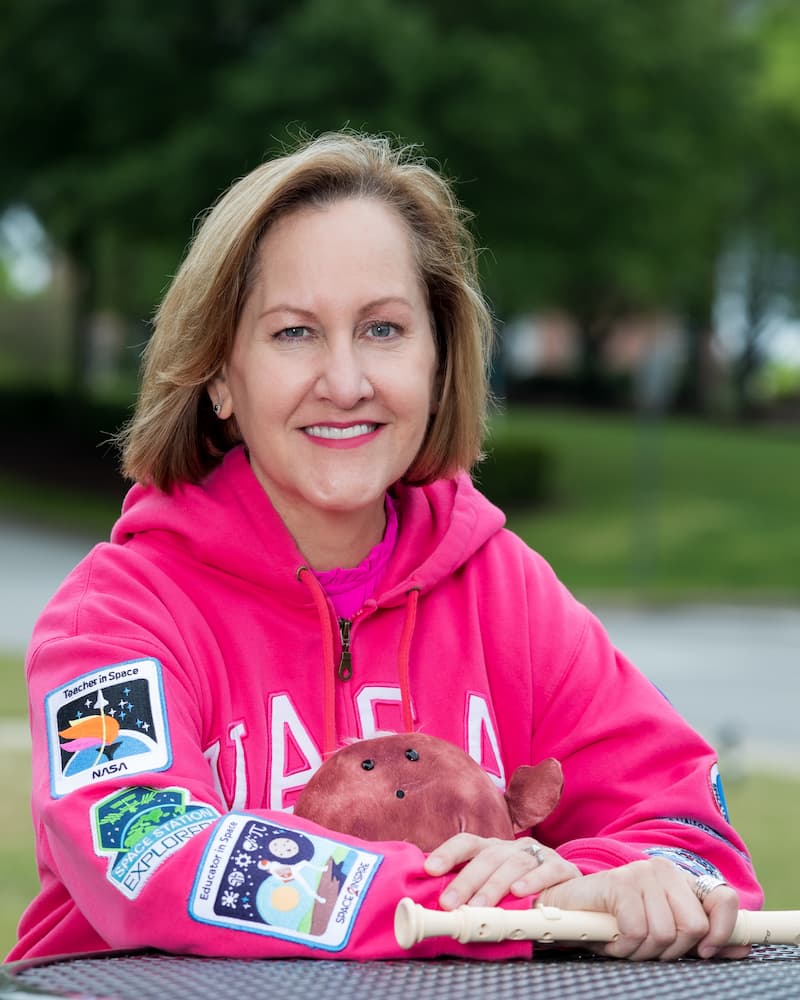
Laurie Orth, an education pioneer, uses STEM in her recorder classroom to engage her students. She shares the genesis of her music workbook, Rocket Recorder, which features space-themed recorder music and songs along with five tips to start your classroom on a cosmic musical journey of epic proportions.
Have you ever created a new lesson plan, and it didn’t go like you thought it would? It isn’t necessarily a bad thing. Sometimes it is an excellent thing, and the lesson keeps on giving. Here is a story about just such a lesson plan.
Once Upon a Time
I had a great group of middle school students as part of my general music program taught for homeschoolers. We had been working on music reading basics, and I wanted to put it all together by teaching them how to play the recorder.
Everything was going great. Until it wasn’t.
After spending a few weeks with my class of 9-13-year-olds, playing songs by ear and doing echo work to fun accompaniments, we transitioned to a beginner recorder book. I began to see slightly off-task behavior in class, and they weren’t practicing like I thought they would. These middle school students did not want to play songs like Hot Cross Buns and Mary had a Little Lamb. They thought these songs were beneath them. Their positive emotional involvement in the lessons was losing steam, and they were losing interest.
Space to the Rescue
They were Star Wars fans, though, and I am a space and rocket fan. It’s not quite the same thing, but it’s “close.” One day before class started, the students were chatting about the Millennium Falcon spaceship. To rein them in and begin class, I asked them if they wanted to learn about current launch vehicles like reusable rockets.
Of course, they did! It was so out of the blue that they crowded around me as I told them about a rocket company called SpaceX that launches Falcon 9 rockets—named Falcon 9s because they have nine rocket engines on them. I explained how these rockets are launched into space to deliver satellite payloads, and then the first stage booster lands back down on earth to be used again.
The students thought this was awesome! I explained how different this was compared to the Apollo Missions’ old days at NASA, when the enormous Saturn V rocket stages fell back to earth when they were out of fuel, only to sink to the bottom of the ocean. Their shocked and confused expressions showed how much they were paying attention, as they told me this was so wasteful.
As our impromptu rocket lesson ended, we transitioned to our recorder lesson and began again with the beginning recorder literature. Sadly, the light I had seen shining brightly in my students’ eyes just a few moments before dimmed as we started playing Merrily, We Roll Along.
As I drove home that day, I assessed my classes. My middle schoolers perplexed me; they exhibited 100% learning engagement when learning about reusable rockets. I wanted that same level of engagement in their recorder class. I wondered if I could recapture that engagement if their recorder music was about space and rockets.
I searched for space-themed recorder music online but came up empty-handed. With time running out before next week’s lesson, I thought, “I’ll just write something myself. It can’t be that hard. The students only know 3 or 4 notes… it’s not rocket science.” That was how “the lesson plan that keeps on giving” got its start.
The Mission
Our mission that year was to learn how to read music proficiently and play the recorder. They did that, and so much more. Students learned about space exploration because we started every class with lively discussions about long-term space flight to Mars and the challenges of building moon bases.
Here is what I discovered that makes this new curriculum idea work.
1. Let the pictures do the talking
Each week, I made color copies of pictures from the NASA website or the SpaceX Flickr photo albums online to go with each new recorder piece. We looked at the picture, and I asked them to describe what they saw. In photos of the Falcon 9 rocket about to lift off the launch pad, I’d point out the exhaust fumes at the bottom of the rocket and the pointy bit at the top of the rocket where the satellite payload goes. When students wanted to know more information, I’d suggest that they research it at home on the NASA STEM website or YouTube and come back to share with the class what they learned.
2. Practice, proficiency, possibility
My students needed to practice their recorders at home to play and read new pieces in class. To help this process, I created a set of music notebooks for class use. Each contained full-color pictures for each piece on the left-hand side of the page and the sheet music on the right-hand side. The students were curious about what the following space picture was going to be! But the rule was that they couldn’t turn the page until they could play the piece in front of them proficiently.
Students began to see that their efforts at home directly correlated to their ability to play well in class. Student leadership bubbled as stronger players encouraged their peers and taught them how to play a tricky part correctly. Their teamwork allowed students to turn the page in their notebooks, to find out what the following space picture would be, and learn more about it. They didn’t even realize they were improving their music reading skills each week in class.
3. Create new lyrics and poems
Next, we started adding lyrics to the recorder songs. Initially, I wrote the lyrics but always asked my students for their input. I asked them to write rhyming poems that we would turn into songs.
This hands-on, collaborative, creative writing enhancement to their recorder class led them to research the NASA STEM website at home, and it is how middle school boys began to write rhyming poetry about the moon.
The entire class was emotionally invested in music class, looking forward to turning in their poems and playing new space-themed songs each week. What a fantastic learning-filled year we had…My students completed the mission requirements and became space and rocket fans too!
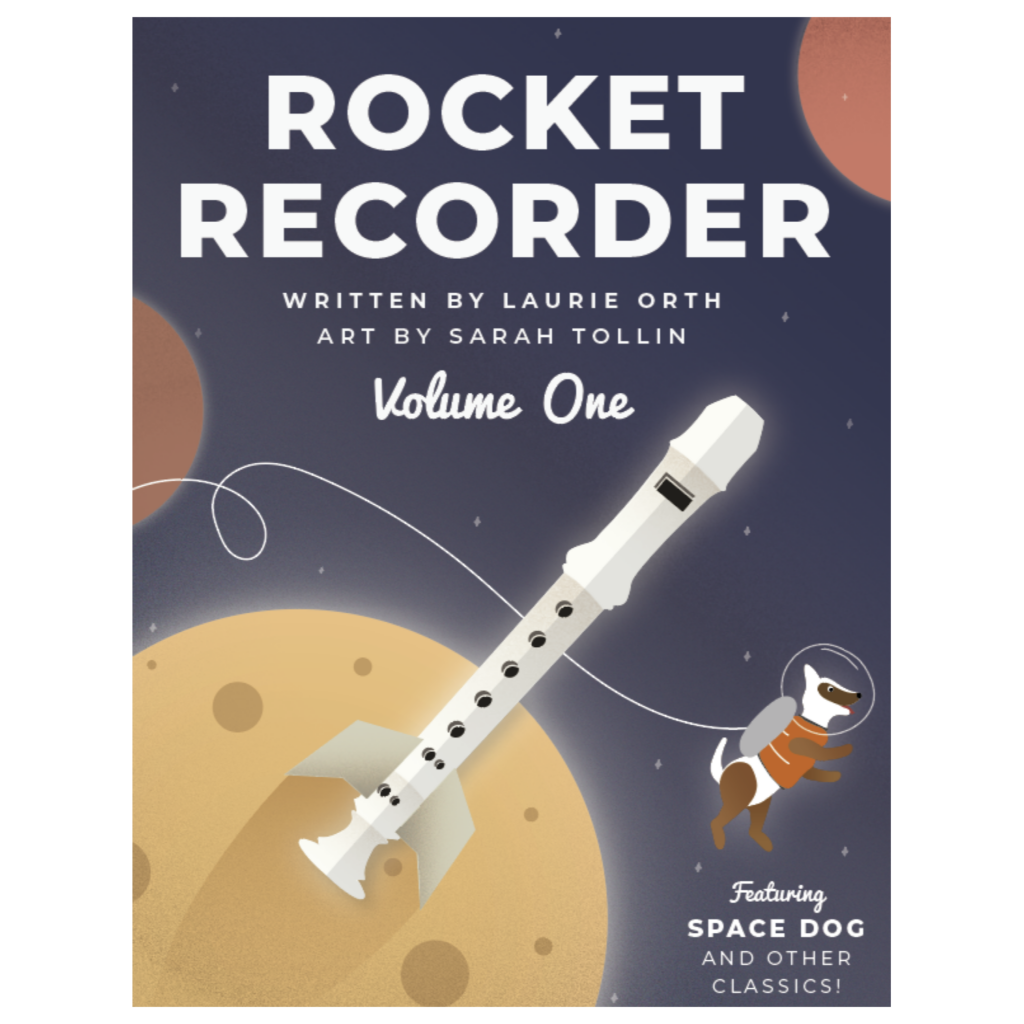
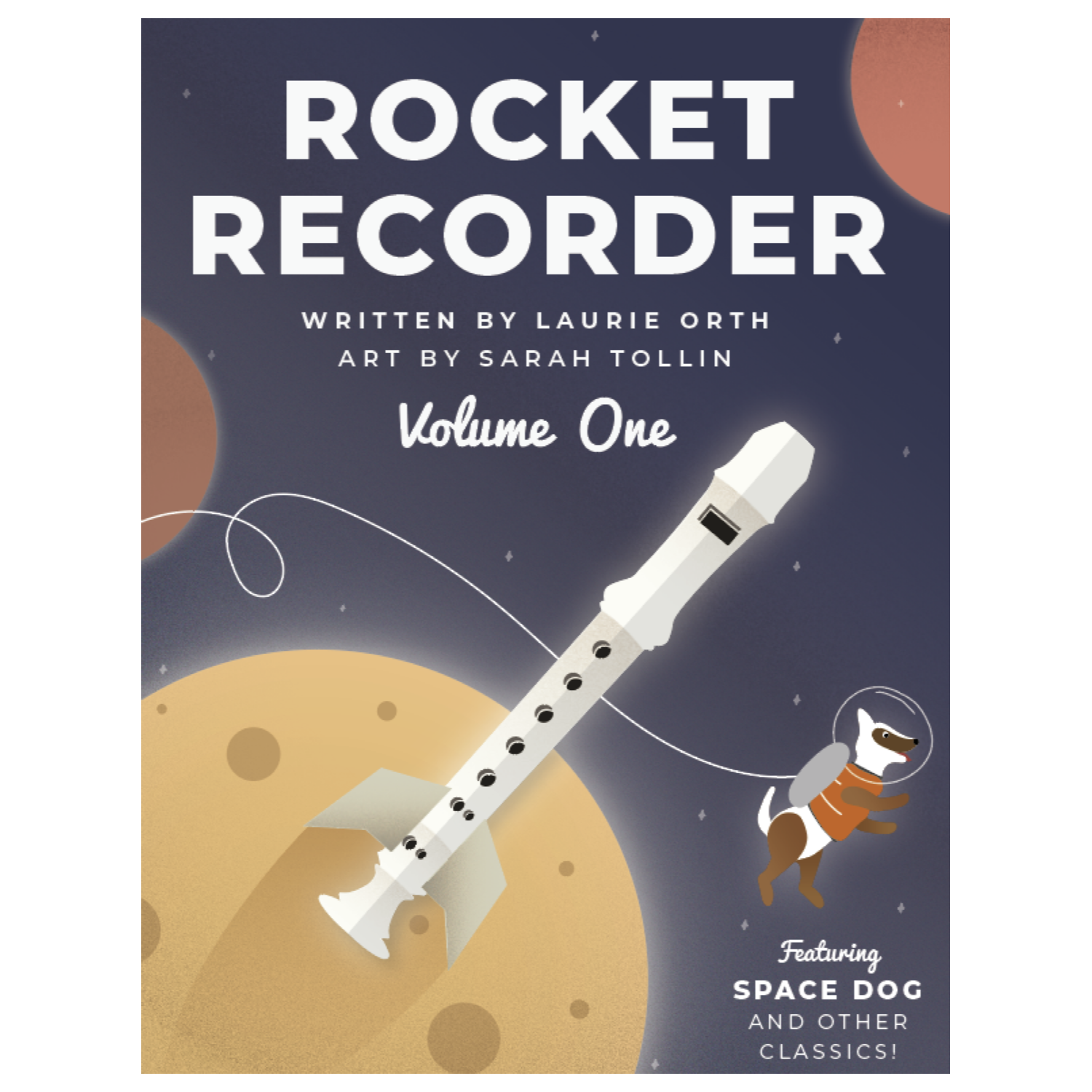
My space-themed recorder music is available in a workbook called Rocket Recorder – Volume One. In addition to using this in your music classroom, your students can use these recorder pieces to create their lyrics based on their research. Each song has an accompaniment track recorded using the iRealPro App, included in the Performance/Demo digital download.
Rocket Recorder
$16.99Original price was: $16.99.$11.95Current price is: $11.95.Add to cart
“Music imprints itself on the brain deeper than any other human experience because it involves emotion. We need emotion to transfer things from the present to short-term memory to long-term memory. Music is what brings that back when nothing else can.”
Melissa Hughes, Ph.D.
4. Going into Orbit – Collaborate with STEM Faculty
Create collaborative Project Based Learning activities where you and your music program have a seat at the table with your faculty co-workers. Share Rocket Recorder with your STEM faculty members and discover where it overlaps with their STEM standards. Teach it in your classroom during the same time that they are teaching their space unit.
Incorporate students playing and singing space-themed songs to end STEM day at your school. Invite the STEM teachers and your administration to participate in your school chorus concert that features space-themed music, including songs from Rocket Recorder. Coach one of your colleagues to sing Is there Sound in Space? at your concert.
5. Shine the spotlight on your innovative music program
Let your faculty colleagues, administration, and community know about your innovative music program, where you are teaching music reading skills and introducing your students to space exploration at the same time.
Let them know that this approach increases learning and allows students to participate more fully, researching song ideas on the NASA STEM website. Watch your students grow in their emotional intelligence as they participate in new and exciting ways outside your classroom with music.
Invite the media, community, and aerospace industry leaders to your concerts to showcase your unique program, and ask them to introduce one of the songs, with brief remarks written by your students. This kind of cross-curricular community involvement can lead to grants for your music program. People will support that which they create.
National Association for Music Educators’Teaching Music Magazine:
I decided to create space-themed recorder music for my class. It was a hit. They LOVED it! Every week I composed new Music for them, short 8-16 measure pieces using the notes B, A, G, and C, with titles like “Space Suit, “Payload,“ or “Space Launch System.“ This new, innovative approach held their attention, and they focused more in class, practiced more effectively at home, and kept asking me for more Music. (Orth, L. (2020, October). Space Jam. Teaching Music, 23)
There are several songs from Rocket Recorder and other recorder tutorials on YouTube. Find more free content, links to other space-themed songs, and Rocket Recorder’s digital accompaniment at www.laurieorth.com.
References
Orth, L. (2020, October). Space Jam. Teaching Music, 23
Peterson, M. (Host). (n.d.) Enhance Life with Music (No. 65) Musical Playgrounds – the neuroscience of nature and Music combined with PLAY with Melissa Hughes, Ph.D. https://mpetersonmusic.com/podcast/episode65
Laurie Orth Music Teacher. (2019, May 21). How to Play Recorder – Space Station. YouTube.
Music and STEAM education pioneer Laurie Orth is passionate about creating a pipeline for young people into STEAM through music and space exploration. Currently, Laurie is an independent contractor at the Jessye Norman School of the Arts and teaches at…





 Facebook
 Twitter
 Pinterest
 LinkedIn
 Email
Email Print
Print
Kathleen Staten
February 3, 2022
This is the perfect article for STEAM week!