Summary
Research shows that Social and Emotional Learning (SEL) is crucial for students’ well-being in school and beyond. The COVID pandemic has added to the need for implementing SEL strategies in every classroom.
by Tiffany Wilson





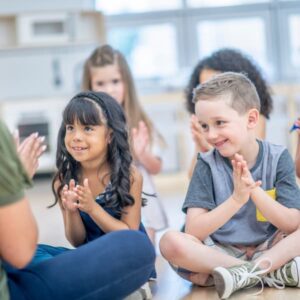
Research shows that Social and Emotional Learning (SEL) is crucial for students’ well-being in school and beyond. The COVID pandemic has added to the need for implementing SEL strategies in every classroom.
by Tiffany Wilson
As teachers, we sometimes forget that learning is as much a part of our job as teaching. Here are five reasons it is important to continue your personal learning journey.
by Kathleen Staten
The educational and emotional needs of our students have been evolving at a rampant pace in recent years. Current research overwhelmingly demonstrates that SEL plays an invaluable role in enhancing student emotional and mental well-being both while in school and into adulthood (CASEL, 2020; Domitrovich et al., 2015; Kuo et al., 2019). The COVID pandemic is a prime example of trauma that has been added onto the backs of both students and teachers, with the overwhelming need for SEL strategy implementation within each educational classroom.
Although SEL is categorized into five specific domains (self-awareness, self-management, responsible decision-making, social awareness, and relationship skills), Edgar (2017) took the five domains and united them into three basic components: identity (focus on self), belonging (focus on others), and agency (focus on decision-making).
The Orff approach is a musical learning experience that focuses on the full student through a scaffolded succession of lessons that promote a journey of collaboration in movement, chant, song, improvisation, literacy, and performance (Long, 2013; Salmon, 2012). The Orff approach and SEL are uniquely interconnected as they both place a strong value on collaboration and communication (Salmon, 2012). Students work in unity together as they compose, improvise, and perform music together. These elements of music-making all require a sense of identity, belonging, and agency.
While studying the unique philosophical connections between SEL and the Orff approach to music education, Wilson (2022) utilized a mixed methods design to implement an SEL-embedded Orff study. One classroom received a semester of SEL-embedded Orff lessons, while the other fourth-grade classroom received a strictly Orff-only music education curriculum (2022). Wilson focused on three key elements of student learning: musically mindful, SEL-aware, and musically aware. The term mindfully musical is defined as the process in which both the SEL strategies and student musicality unite together to create both a cognitive and emotionally moving music-making experience for students (Wilson, 2022). The term musically aware focuses on the technical development of the music-making process. It is measured through predefined standards connected assessments (Wilson, 2022) Lastly, the term SEL-aware refers to the awareness of development and personal achievement in emotional abilities and capacities (Wilson, 2022).
Data tools for this study included student and parent focus groups, student surveys, field notes, and performance rubrics, Wilson’s research brought forth incredible findings. Wilson utilized both quantitative coding and qualitative coding to interpret the data. Findings were broken down by research questions.
The research results for all three research questions demonstrated clear and positive growth within the SEL-embedded Orff classroom. The parent and student focus groups, student artifacts, surveys, performance rubrics, and researcher-teacher field notes demonstrated a difference in mindfully musical behavior. SEL-aware behavior, and musically aware behaviors. Data documented connections between student performances and their specific emotional connections to the music which were connected to their collaborative teamwork. The experimental group showed a stronger understanding and further application of SEL-aware behaviors and language. They demonstrated a commitment to teamwork as they worked alongside each other collaboratively as encouraged and built upon each other’s strengths. Overall, the findings demonstrated that an SEL-embedded Orff approach works to change the mindset of the students as they evolve into a deeper understanding of how music is interconnected with the thoughts, feelings, and behaviors of both themselves and their peers. While both classes grew in their musical skills, the experimental group demonstrated a more substantial progression of growth along with cohesive, inclusive, and collaborative behaviors.
These research results are incredibly valuable as they show the data-backed value of an SEL-embedded Orff approach to music education. The findings demonstrate that a music program that focuses on not only musicianship but also the mental health of our students. When the musicality of the Orff approach and SEL strategies are uniquely embedded together, they create a mindfully musical level of music-making. Students move into a place of emotional connection and oneness with their music-making performance.
To create this musical feat, SEL-embedded strategies must be implemented into Orff lessons. Outlined below are key strategies that will guide the implementation of an SEL-embedded Orff curriculum.
Research: Phase 1
Utilize websites, books, articles, and podcasts that focus on SEL strategies. These do not need to be music-focused resources, as sole SEL resources provide excellent strategies that seamlessly fit into an Orff lesson framework.
Compile a database so all resources are at your fingertips and can easily be implemented into various music lesson topics/standards. This phase is the most important time frame, as it focuses on your resources and knowledge of SEL strategy implementation. The more familiar you are with the strategies and categories (Identity, Belonging, Agency), the more effective the next two phases will become.
Deconstruction: Phase 2
Beginning with 1-2 grade levels, take apart each Orff lesson and strategically insert SEL strategies/activities within each lesson that specifically connects with the lesson content, topics/standards, and activities. Hone in on Edgar’s three categories of Identity, Belonging, and Agency. Make a goal to cover each of the three categories within each lesson. For example, to cover the Identity category, implement a Q & A discussion on how each student can contribute to a collaborative composition project and write down the list of ideas. At lesson completion, circle back to the brainstorming of ideas and verify if the list was achieved. To cover the domain of Belonging, students can create a chant/movement composition that describes the positive attributes of each student in the classroom. Lastly, to cover the Agency category, students can create an instrumental improvisation circle in which students take turns improvising a rhythmic pattern that the class echoes.
Implementation: Phase 3
Begin utilizing these SEL-embedded Orff lessons in your classroom. Over time, the deconstruction and implementation phases will become second nature as SEL strategies organically weave into the Orff lessons. As all teachers know, some lessons will successfully sail upon the first launch, while others will need a few more tweaks to stay afloat. Do not view this process as an “all or nothing” procedure. Any and all SEL strategies will make a positive impact on the lives of your students. It is absolutely acceptable to start out small and build as your comfort level develops.
CASEL. (2020). CASEL. https://casel.org/
Cristiano, J., Cunha, R., & Carvalho, S. (2012, July 23-28). Experienced emotions through the Orff-Schulwerk approach in music education – A Case Study Based on Flow Theory – [Paper presentation]. The 12th International Conference for Music Perception and Cognition, Thessaloniki, Greece. (PDF) Experienced Emotions through the Orff-Schulwerk Approach in Music Education – A Case Study Based on Flow Theory – (poster) (researchgate.net)
Custodero, L. (2010). Seeking challenge, finding skill: Flow experience and music education. Arts Education Policy Review, 103(3), 3-9. https://www.tandfonline.com/doi/abs/10.1080/10632910209600288
Domitrovich, C. E., Weissberg, R., & Gullotta, T. (2015). Handbook of social and emotional learning: Research and practice. The Guilford Press.
Edgar, S. N. (2017). Music education and social emotional learning: The heart of teaching music. GIA Publications.
Edgar, S. N., (2021). Portraits of music education and social emotional learning. GIA Publications.
Kim, H. K., & Kemple, K. (2011). Is music an active developmental tool or simply a supplement? Early childhood preservice teachers’ beliefs about music. Journal of Early Childhood Teacher Education, 32, 135-147. https://doi.org/10.1080/10901027.2011.572228
Kupana, M. N. (2015). Social emotional learning and music education. Journal of Art Education, 3(2), 75-88. https://doi.org/10.7816/sed-03-01-05
Kuo, Y.-L., Casillas, A., & Allen, J. (2019, June). Examining moderating effects of social emotional learning factors on achievement gains (Publication No. R1848). ACT Research and Policy. https://files.eric.ed.gov/fulltext/ED596121.pdf
Long, A. (2013). Involve me: Using the Orff approach within the elementary classroom [Master’s thesis, Eastern Illinois University] Student Theses & Publications at The Keep. http://thekeep/eiu.edu/honors/6|
Salmon, S. (2012). Musica Humana-Thoughts on humanistic aspects of Orff-Schulwerk. The Three Pillars of Orff-Schulwerk, p. 13-19. https://www.researchgate.net/publication/259812732_MUSICA_HUMANA_-_Thoughts _on_humanistic_aspects_of_Orff-Schulwerk
Varner, E. (2021). General music and SEL: A matter of equity. General Music Today. https://doi.org/10.1177/10483713211018451
Wilson, T., (2022). Impact of social emotional learning and the Orff approach [Doctoral dissertation, Alverno College]. Doctorate in Education, Higher Education.
Committees for Children. (2022). Second step. https://www.secondstep.org/free-sel-resources/elementary
Domitrovich, C. E., Weissberg, R., & Gullotta, T. (2015). Handbook of social and emotional learning: Research and practice. The Guilford Press.
Edgar, S. N. (2017). Music education and social emotional learning, student workbook. GIA Publications.
Edgar, S. N. (2017). Music education and social emotional learning: The heart of teaching Music. GIA Publications.
Edgar, S. N., (2021). Portraits of music education and social emotional learning. GIA Publications.
Edgar, S. N., (2021). The ABC’s of my feelings and music. GIA Publications.
Edgar, S. N., (Producer). (2021-Present). Teaching social emotional learning through music [Audio podcast]. Music for All. https://podcasts.apple.com/us/podcast/teachingsocial-emotional-learning-through-music/id1550632967
Move this World. (2022). The 9 best SEL podcasts. https://www.movethisworld.com/social-emotional-learning /2019-8-2-7-best-podcasts-to-learn-more-about-social-emotional-learning/
Petillo, L. & Rizutto K. C. (2021). Integrating music into social emotional learning. Edutopia. https://www.edutopia.org/article/integrating-music-social-and-emotional-learning
Scully, K. (2018, March 15). 25 Ways to integrate social emotional learning. Pathway 2 Success. https://www.thepathway2success.com/25- ways-to-integrate-social-emotional-learning/.

Contributor
As a nineteen-year music educator veteran, Dr. Tiffany Wilson holds a bachelor’s degree in vocal performance, a master’s degree in music education, and a doctorate degree in higher education. Her passion for music education is evident to all who know…
Discover more from Tiffany Facebook
 Twitter
 Pinterest
 LinkedIn
 Email
Email Print
Print