Summary
Teaching on a cart can be tricky, but using some smart strategies can make it easier. Learn how you can manage your classroom better and make your teaching more effective.
by Rebecca Brink





Teaching on a cart can be tricky, but using some smart strategies can make it easier. Learn how you can manage your classroom better and make your teaching more effective.
by Rebecca Brink
Art and Music on the Go! Get some valuable tips for teaching music and art on a cart.
by Jenna Mahr
Classroom management can be challenging, especially in middle school, and especially when teaching on a cart. After years of having my own classroom, I found myself in a new position which required teaching in multiple spaces including teaching middle school in a social studies classroom shared amongst several other teachers. This arrangement made instruction tricky, but I felt it had an even greater impact on classroom management. Faced with this challenge, I decided to embark on some independent research by reading everything I could on the subject, talking to colleagues and visiting other classrooms. I discovered some helpful strategies and tools which can be grouped into four categories: building relationships, technological tools, seating, and owning the space.
Relationships and trust in the teacher-student relationship are always important, but middle school presents its own unique challenges and opportunities. It’s crucial for students at this time to know and feel that their teacher care about them as individuals and are committed to helping them succeed. This process takes time, but there are some simple ways you can incorporate this into your classroom structure and begin to build relationships.
Using technology to your advantage will be crucial in ensuring that your classroom runs smoothly, and management techniques are implemented consistently. I begin by putting my entire lesson on a presentation (usually Google slides). Not only does this make it simple and straightforward for me, especially if I’m using different spaces, but it also makes it easy to put lessons online. Google Classroom is a fantastic way for students who were absent to catch up on missed content but can also be used to flip the classroom and give students more ownership and choice during class time.
There are also many fantastic digital tools out there for classroom management. I used a digital “marble jar” for my classes working towards a whole class reward. It is important to have tools that you can access anywhere without worrying that they will be moved or changed when you are out of the room.
I found giving students assigned seats to be extremely beneficial. At first it felt a bit silly to ask students to move to a different seat in the same classroom, but ultimately it helped define the classroom as a music learning space and mark the transition from social studies or homeroom to music.
If you cannot give assigned seats, or seating groupings change because of sharing the space, there are still ways you can provide structured seating. For example, write musical words (or notation) on index cards. Make two of each card (two cards that say adagio, two cards that have quarter notes written on them, and so on). One card is placed on the desk or table, and one is given to each student as they enter the room. The cards determine student seating arrangements. I love this idea because it can be completely random, or as the teacher, you can exercise some control when handing out the cards. Additionally, it allows you to greet students as they enter the room and reinforce musical concepts or vocabulary.
Reach out to the teachers with whom you share the room and find a space in the room that you can devote to music. If you have enough room, make a word wall with learning goals where you can share any written student work: poster projects, written scores, listening sheets, etc. Not only does this remind them of what they’ve learned, but it also helps validate the space as a musical learning space and show the students that you care.
Even if it’s small, it’s worthwhile to create a music space in a shared classroom. Ideally, this space should be a “perch” where you can see all students and be seen by all students to deliver whole group instructions or model musical activities. This way students can see you in your space rather than as a push-in. You can also use this space for storing items and creating systems for getting resources (pencils, instruments, etc.) and returning work. You may need to be creative and put music posters up on a storage cabinet, bookshelf or a cart to create that music “space.” You might even consider engaging the students in thinking about how they want to make the room more musical. It may not be the ideal situation, but the visual presence of music in the space is important to get the student buy-in that is so crucial in middle school.
Teaching on a cart or in a shared space can be challenging, but with creativity, caring and consistency, small changes can make a big difference and lead to a successful and supportive classroom.
Contributor
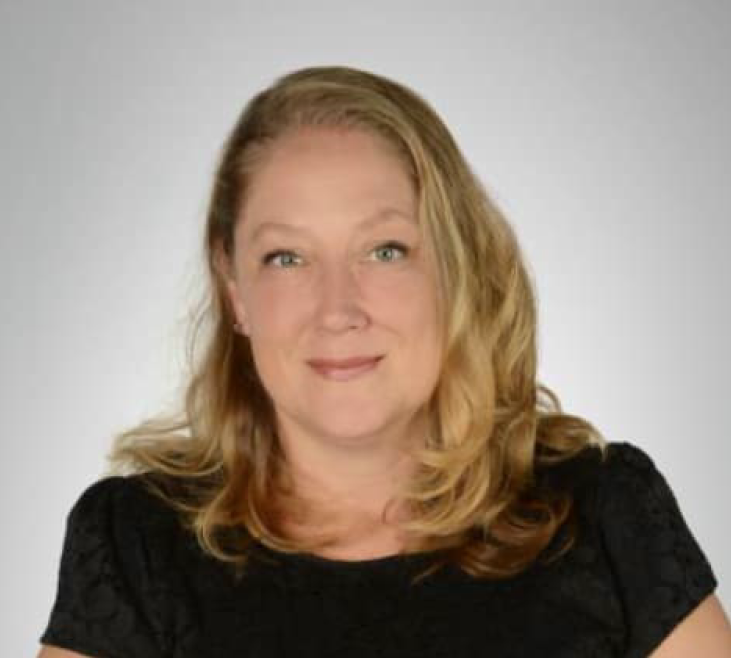
Rebecca Brink is a vocalist and performing arts teacher raised in Rochester, NY. After completing a MusB in vocal performance and a BA in linguistics at Boston University, she went on to complete a Masters in Music in Music…
Discover more from Rebecca Facebook
 Twitter
 Pinterest
 LinkedIn
 Email
Email Print
Print