SUMMARY
No instruments, no problem. Ideas on how to teach without instruments while building the instrumentarium in your music room.
by Jessica Peresta





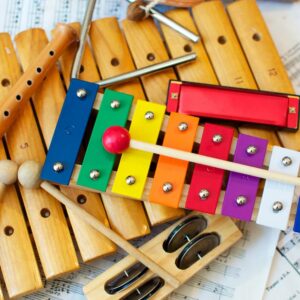
No instruments, no problem. Ideas on how to teach without instruments while building the instrumentarium in your music room.
by Jessica Peresta
It’s tough to teach music without enough instruments. But, it’s not impossible. I started my elementary music teaching career with one broken hand drum. That was it. Although it was frustrating at times, I still taught music to my students.
Sometimes it’s not about what you don’t have but teaching with what do you have. Over time, instruments can be purchased and your classroom developed. This blog post explores strategies for successful music teaching while you work toward these instrument goals.
Oh yeah, and make sure you listen to podcast episode 194 of The Elementary Music Teacher podcast, where I talk about my thoughts behind all of this even further.
You may not have a lot of instruments (or any at all), but focus on what you do have. First of all, your students have bodies and voices. So, if nothing else, start there. Your students can do many movement activities, sing all types of songs, participate in music with body percussion, and do lots of speech pieces. If a song instructs you to use several mallet and rhythm instruments, replace these parts with body percussion, for example. If you have a few instruments but not enough for the whole class, definitely use these.
If you have a few instruments for students to use, there are several ways to get creative in using them. The first is by having students rotate. When you teach students a song, students will learn the words and sing them. Then, some students can sing and do movement, others can do a body percussion ostinato, and other students can participate in an instrument part. If you have enough time in class for students to rotate parts, do that. But if you don’t, students can learn that sometimes they’ll get to play instruments, and sometimes they won’t, but they’ll always get to participate in music somehow.
Another way to get creative is by doing centers. If centers are new to you, my best advice is to set up 4-6 stations with different activities. That way, students will be doing instruments when it’s their turn at that center. You can have melodic and rhythm instrument centers with different instructions.
If you teach elementary music without enough instruments, think about what you can substitute for the real thing. Bucket drumming is a fantastic way to bring drumming to your students. 5-gallon buckets can be purchased at your local hardware store. As for rhythm sticks, students can use non-sharpened pencils. If you have access to technology, there are amazing virtual xylophones, Boomwhackers™, and drums to explore. One of my absolute favorite sites is Scratch.
Another option is to do a trade-off with another music teacher. Do they have instruments you don’t have and vice versa? Can you beg, borrow, and steal? When thinking of how to substitute instruments, you can use instrument replacements and borrow from a friend.
As a music teacher, the good news is that each year gets better and more manageable. So, although you may not have enough instruments right now, it doesn’t mean you can’t plan for the future. Make a list of what instruments you need for your classroom, then begin thinking of ways you can acquire these instruments. Is it writing a grant? Will your PTO help you out in purchasing instruments? Are you given a budget that you can use towards the purchases? Please don’t focus on getting everything you need at once, but break it down year by year, think through what you want first, and start there.
Blog post originally appeared on The Domestic Musician – reprinted with permission.

Contributor
Jessica Peresta graduated from Oral Roberts University with her Bachelor of Music Education in 2004 and earned the top music educator award. She built a music program from scratch at a low-income school in Tulsa, OK, earning the Teacher…
Discover more from Jessica Facebook
 Twitter
 Pinterest
 LinkedIn
 Email
Email Print
Print