SUMMARY
In 2019, over 672,000 children were in foster care. For children who move frequently, have poor attendance, or attend various schools, how can someone like a music teacher help? Become a facilitative teacher.
by Karen Stafford





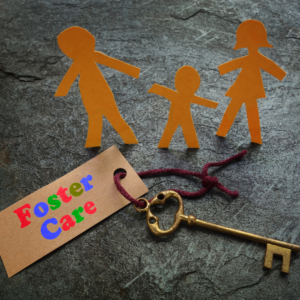
In 2019, over 672,000 children were in foster care. For children who move frequently, have poor attendance, or attend various schools, how can someone like a music teacher help? Become a facilitative teacher.
by Karen Stafford
When I retired, I became a CASA (Court Appointed Special Advocate) volunteer. I work with 8- and 3-year-old brothers. They have been in about five different foster homes in 10 months. Currently, they are living in different placements. The oldest boy is showing some problematic behaviors and is now facing yet another move. It breaks my heart.
In 2019, over 672,000 children were in foster care. Physical abuse and neglect are two of several highly stressful, potentially traumatic experiences known as “adverse childhood experiences,” which can result in pulling children from their homes (CASA, 2021).
These children frequently move from one foster home to another (Administration on Children, Youth, & Families, 2021). Due to these compounding adversities, children in the foster system are at a higher risk for the following set-backs (American SPCC; NCSL, 2021):
So, if a child moves frequently, has poor attendance, or attends various schools, how can someone like a music teacher help? We’re not counselors. Scott Edgar even points this out in his well-known book Music Education and Social-Emotional Learning: The Heart of Teaching Music (Edgar, 2017).
BUT we do have the academic discipline to contribute to positive social and emotional learning, no matter how long the child remains at our school. We know that one of the essential elements of music is its ability to tap emotions and be a release.
Teachers can help students grow emotionally through the building of teacher/student relationships. Edgar calls practice facilitative teaching (as cited by Wittmer & Myrick, 1980). Facilitative teachers become guides, encourage student ownership and honest discussion, and use challenges as learning opportunities (as cited by Elam & Duckenfield, 2002, p. 8). Does any of this sound familiar?
You can be that facilitative teacher. It just takes a tiny bit of preparation on your part, and lots of patience, because foster kids don’t know who they can trust. As a teacher, you have the right to:
If a child is 1-2 grades behind or has a history of poor school attendance, they might be working with an IEP. Make sure you get a copy of those documents. You are legally permitted to do so (Stafford, 2019). Use this information as another tool to get an idea of the child’s academic background. Most likely, this will be an IEP from a previous school.
Once you have this information, you are ready to become a facilitative teacher. Here are some suggestions I have from experience:
Despite the “strikes” they already have against them, foster kids can become some of your favorite students. As a facilitative teacher, you can provide them with an outlet for what they need: stability and a reason to feel proud.
Administration on Children, Youth, and Families. (2021, October 21). Foster care statistics, 2019. https://www.childwelfare.gov/pubpdfs/foster.pdf.
American Society for the Positive Care of Children (2021, October 21). Impact of foster care. https://americanspcc.org/impact-of-foster-care/.
Edgar, S.N. (2017). Music education and social, emotional learning: The heart of teaching music. G.I.A. Publications.
Individuals with Disabilities Education Act, 34 C.F.RC.F.R. §7801.11 (2003).
National CASA/GAL Association (2021, October 21). Addressing the effects of abuse, neglect, and other trauma. https://nationalcasagal.org/our-impact/the-lasting-effects-of-abuse-and-neglect/.
National Conference of State Legislatures (2021, October 21). https://www.ncsl.org/Portals/1/Documents/cyf/Social_Emotional_WellBeing_Newsletter.pdf.
Contributor
Karen Stafford is a retired elementary music specialist, church music director, Teachers Pay Teachers seller, and adjunct professor from Union, Missouri. Dr. Stafford obtained her BME and MA from the University of Central Missouri and her Ph.D. from the…
Discover more from Karen Facebook
 Twitter
 Pinterest
 LinkedIn
 Email
Email Print
Print