In these two engaging snow-themed activities, students will explore treble clef note patterns through an interactive game and a matching activity that pairs note names with their images on the staff.
by Meghan Kennedy
Treble Clef Snow Sort Blueprint
This winter-themed activity helps students review Treble Clef notes. It includes two options: a worksheet for matching Treble Clef note images with their names and a printable snowflake activity for matching. Both are great for centers and suitable for a substitute teacher!
#4 — Analyze, interpret, and select artistic work for presentation. #7 — Perceive and analyze artistic work. #8 — Interpret intent and meaning in artistic work. #9 — Apply criteria to evaluate artistic work.
Objectives
Identify and read line and space notes in the Treble Clef.
Perform identified notes on classroom instruments (extension activity).
Create short melodic patterns using identified notes (extension activity).
Materials
Paper
Pen/Printer Ink (depending on if you want to hand write or print resources)
2 images of each note on the staff on separate pieces of paper
Line notes – E, G, B, D, F, space notes – F, A, C, E
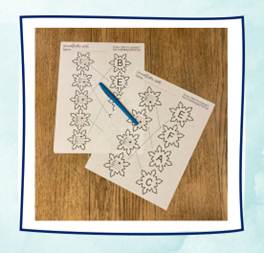
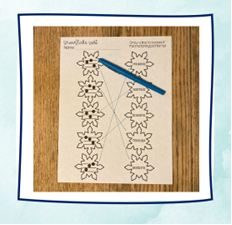
Snowflake Sort Worksheets
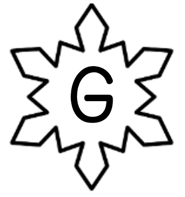
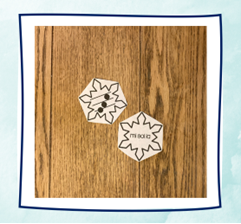
Image of each note in the Treble Clef on a snowflake
Image of each note NAME in the Treble Clef on a snowflake
Worksheet with 3-5 images of notes in the Treble Clef on the left side and 3-5 images of note names in the Treble Clef on the right side (they should all be able to be matched with each other)
Overview
In these two snow-themed lesson activities, students will identify single note patterns in the treble clef. They will play a hands-on game that requires students to recall note locations. They will also participate in an activity that asks them to match note names and images of notes on the staff. These seasonal activities create an engaging context for music literacy practice and can be adapted to include instrumental performance as an extension.
Suggested Teaching Process
Part 1: Snowball Sort
Print or write out images of each single note in the Treble Clef (line notes – E, G, B, D, F, space notes – F, A, C, E, you can also include notes above and below the staff based on your students’ learning progress). They will need to be on separate pieces of paper and you will need two copies of each note.
Crumple up each piece of paper into a ball. These are your snowballs!
Have students sit in a circle.
Toss the snowballs into the middle of the circle.
Split the circle in half so that students are in two teams.
They can remain seating, they just need to know which team they are on.
Each round will include one student from each team. At the start of a round, name a note that you want students to look for.
Teacher Note: Be sure to clarify line or space notes. For example E on the line, or E in the space.
Students race to uncrumple snowballs to find the note they’re looking for.
Teacher Tip: Remind students to re-crumple papers that don’t contain the note they’re searching for.
The first student to find the correct image of the note wins a point for their team!
Continue until all students have taken a turn. Alternate which note is chosen for each round.
Possible Extension – you can have students play the note from each round on instruments before or after the correct snowball has been found.
Part 2: Snowflake Sort
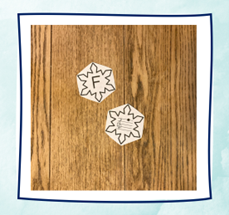
Print and cut images of snowflakes with Treble Clef notes on them (line notes – E, G, B, D, F, space notes – F, A, C, E, you can also include notes above and below the staff based on your students’ learning progress).
Teacher Tip: The Snowflake Sort Worksheets provide ready-made materials for this activity.
For each Treble Clef note image, you will also need the name of each note. For example:
Please note that you will need two E’s and two F’s for the line and space notes.
Break students into small groups (you will need multiple copies of each set of snowflakes)
Teacher Note: This activity also works well as one station in a centers-based classroom approach.
In small groups, students will match each image of the note on the staff to its’ correct note name.
As each group works, move around the room and monitor work for correctness.
Teacher Note: Individual worksheets can be collected as a formative assessment of student understanding.
Create a matching work sheet with 3-5 notes on each sheet (include images of the notes on the staff on the left side of the paper and note names on the right side of the paper). b. Students draw a line to connect the note name with the correct image
Possible Extension – students can create short 3-4 note patterns to play on instruments when they have finished their matching activity
Extension: Modifications
These two activities can be modified to work with any other melodic or rhythmic element. Snowball Sort
Rhythm Practice – Print/write images of rhythms on each sheet. During the game, clap a rhythm for students to find. Alternatively, you can give a description of the rhythm: “Find a rhythm that is four sounds on one beat” (students would find sixteenth notes).
Solfege Practice – Print/write the name of a solfege note on each sheet. During the game, show the hand sign of the note that you want students to find.
Snowflake Sort
Rhythm Practice – On one snowflake print/write an image of a rhythm. On the matching snowflake print/write the rhythm syllables associated with reading that rhythm. Ex. Quarter note image and the word “ta”
Solfege Practice – On one snowflake print/write the image of a 3 note pattern on the staff. On the matching snowflake print/write the 3 note names in the correct order
Meghan Kennedy is in her eighth year of teaching music in Georgia. She has taught PK-5 General Music, 3rd-5th Chorus, 4th-5th Band, and High School Marching Band. Meghan earned her Bachelor of Music Education from Gettysburg College, where she…







 Facebook
 Twitter
 Pinterest
 LinkedIn
 Email
Email Print
Print