



How often do music teachers have to sit through literacy PD sessions that they struggle to apply in their music rooms? If you’re me – pretty frequently. I try – I really do – to apply some of the literacy concepts to music instruction. While some concepts are more of a stretch (and don’t necessarily translate to better musicianship,) word walls were one idea I implemented pretty early in my career.
My music room word walls have evolved quite a bit over the years. Some of my word wall experiments were flops – like the time I thought I’d start with a blank wall, and then I’d hang up the word as we learned it throughout the year, so that by the end of the year the wall would be filled with music term knowledge! Cut to my sad wall, with 5 words posted on it and a basket filled with words I never hung up. The problem wasn’t just that I forgot to hang them up – but it got confusing. First grade might be learning about “form” one week, but no one else focused on that yet…so will hanging it up confuse the other grades? Turns out no, it wouldn’t – because the kids never looked at the word wall anyway. Hanging the word on the wall didn’t help the kids recognize the concept in their music. Hanging words on the word wall was another chore for me that created a resource that didn’t help the students.
If I wanted the students to use the word wall, I had to make it more use-able. Many music terms on my list of word wall words were associated with symbols. I realized if I was hanging the word up on the wall, it was because I wanted the students to recognize the symbol and call it by name – or, when they forgot what I was talking about, be able to look over at the wall and remind themselves what the symbol I was talking about looked like. Step 1: add pictures to the words on the word wall.
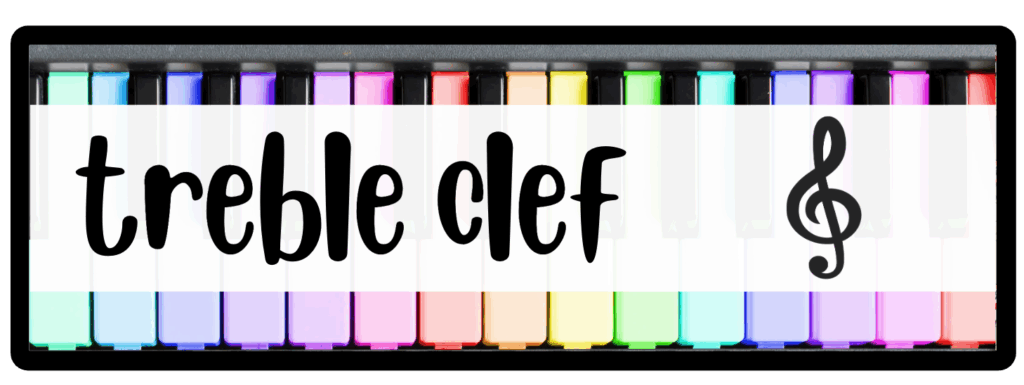
Why wait to learn about these symbols? I hung them all up on the wall before school started and left them up all year. Right away I noticed curious students would ask questions about symbols we hadn’t learned about yet – and when I introduced new symbols I’d hear “I saw that on the wall! I wondered what that meant!” Bingo.
But that was just the tip of the symbol wall iceberg. I wanted them to use is as a resource – and use the words as we discussed and described music. I stopped accepting wrong answers in conversation.
Student: “The ta is too loud.”
Me: “Which note is too loud?”
Student: (glances at wall to remember) “The quarter note is too loud.”
Double bingo.
The visuals were also a huge win for my struggling readers and ELL students. Honestly, I felt horrible realizing how long it took me to support them in this manner. My aunt and uncle adopted two of my cousins from Korea when they were toddlers. I remembered how my aunt hung English words on items around the house to help them learn the names of things. She didn’t hang the words on the kitchen wall – she put them right on the objects. (Yeah, remembering that was a face-palm moment for me.)
Once I got that part of my word wall resource working well, I upped the game. It wasn’t enough to remember the name of the symbol- I also wanted the students to be able to figure out what these symbols and words meant to music. I added a few more resources and visuals to my wall.
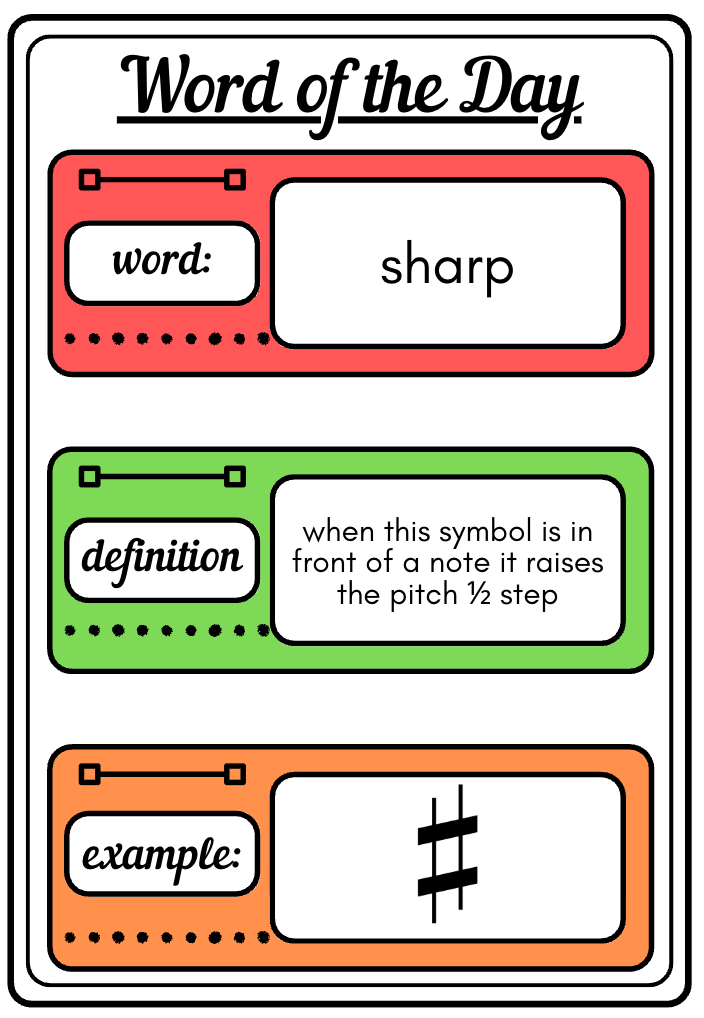
This was shaping up to be the ultimate research resource for my kiddos! The last step was another habit of mine I had to break: I had to stop answering their questions. They’re never going to find the answers to their questions themselves if I keep answering it for them! They’ll always choose asking me instead of looking up the answer. So, when they asked me a question whose answer was hanging on the wall, instead of answering them I’d say “What have you tried so far?” “Is there a resource that can help you answer that question?” I’d stick with them, have them find it and point to it on the wall for me, and I’d make sure they understood it when they read it – but I had to encourage the effort! They had to try to seek out the answer.
This was harder than I thought. It was harder for the kids too. They’d think I didn’t want to help them, that I didn’t care, that I was lazy, that I didn’t like them – all kinds of bonkers stuff. We worked really hard on building that inquisitive climate in our classroom. I frequently reminded them that helping them learn to answer their own questions is the best way I could help them. Learning how to learn is the most important thing we do together at school. It’s literally why school exists (well, one of the reasons.)
Good things are worth the wait! This idea really snowballed in my classroom – before I knew it, I was re-working all our lessons and activities to be more student-led and project based. The students were more engaged, the line of kids asking questions at my desk got shorter, and I heard my name yelled in frustration a lot less throughout the classroom. Instead I heard “Mrs. Crowe! Check this out!” More often, I heard them engaged in conversations that didn’t involve me at all but did involve the music they were creating.
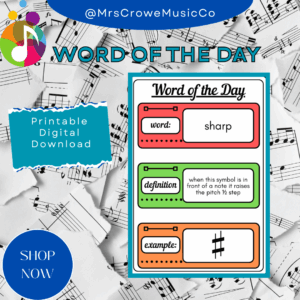
Are you ready to re-vamp your word wall? You can download my Symbol Word cards as well as my “Word of the Day” definition posters from Music ConstructED. Print, hang, and then help your students learn how to learn music.
Blog Post Contributor: Britt Crowe