




I am OBSESSED with board games. Game nights at my house growing up were my absolute favorite–and have become a favorite with my own children too. Azul, Catan, Qwirkle, Sorry, Life (old school), Hotels, and my absolute favorite: Clue! I actually collect Clue games. My favorite version is the Harry Potter Clue–there’s an extra dice that turns house wheels and can open/close secret passages! It adds a fun twist!
It’s funny how these games have become engrained in our family memories: “Oh, not THAT one! Dad always wins!” We have this Hogwarts Battle cooperative card game that we insist we love to play–even thought it always takes at least three hours, involves a lot of yelling and sometimes ends in tears.
During the summers I make my sons sit down to play a game with me while we eat lunch. It serves a dual purpose: it makes them spend time with me (they’re constantly disappearing these days!) AND it ensures they actually sit down and eat a healthy lunch (not just peanut butter pretzels and goldfish crackers.)
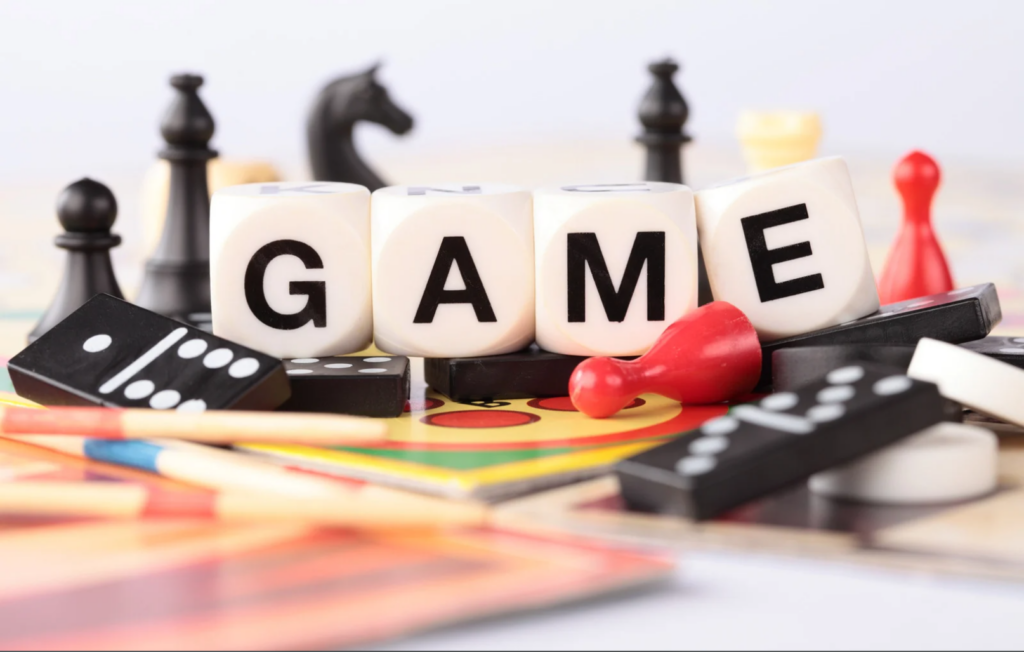
Incorporating board games into your music classroom can have similar effects: increases engagement with the material, makes learning fun, introduces a competitive motivation, builds a sense of community and helps students make memories.
However, over the last few years introducing games has become increasingly problematic. It took me a while before I realized why: most students in my school don’t play board games. They don’t play in the classroom, they don’t play at home, they don’t play for fun. They can’t shuffle cards. They can’t roll dice! Oh, I’ve had a few subs that were unbelievably frustrated watching the kids try to play with dice one day (pro tip: give them a cup to use to roll the dice and a paper plate to use as a target to roll the dice onto–then they don’t go flying around the room.)
At first I was at a loss. Should I stop planning games? Is it causing more problems and distracting from learning? I was heartbroken–but I just couldn’t pull the plug. Supervised game play is desperately needed in school nowadays–to practice what we preach about sportsmanship, sharing, following rules and problem solving (as well as fine motor skills!)
I started looking for games that were more universal and easier to introduce with students of varying experiences. Top of the list: JENGA!

Build a tower with blocks? Got it.
Take turns pulling out a piece? Can do.
Laugh when it falls over? Always!
The wooden Jenga blocks are easy to personalize with a sharpie or paint pen…making them a perfect tool to gamify rhythm reading and composition in the classroom!
@mrscrowemusicco Rhythm Jenga – always fun to watch the kids play this-they get so serious! Lots of extension possibilities too! #generalmusic #elementarymusic #MrsCroweMusicCo #musiceducation #musiced #musicconstructed #creatingmusic #rhythm ♬ original sound – mrscrowemusicco
Best part? You can tailor your Jenga games to your curriculum! I wanted my students to practice rhythms in different time signatures, so as I was notating on my blocks I planned out rhythms in 2/4, 3/4, 4/4 and 5/4. I made sure they included rhythmic values from our curriculum. I also made sure there were some rhythms that repeated–so the students could include repetition or make patterns if they used the blocks for composing!
This is a great activity to use as a station–or as a class in small groups! Check out the printable directions I’ve got for you in my Music ConstructED store!

Blog Post Contributor: Britt Crowe